
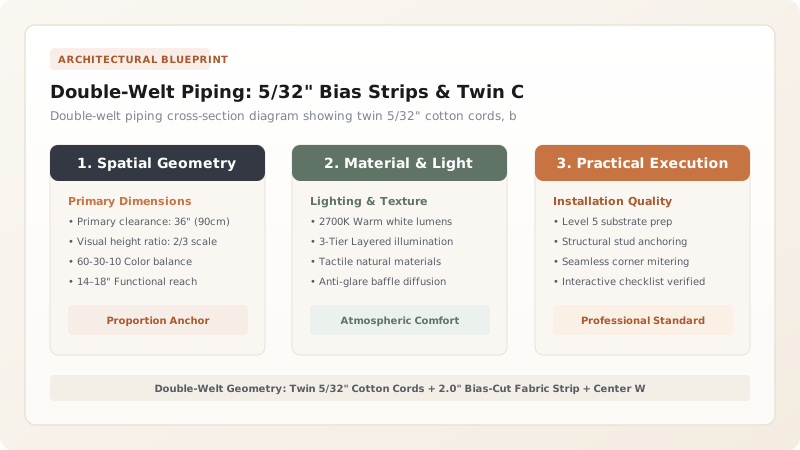
Construct double-welt piping by wrapping twin parallel 5/32-inch cotton cords inside a 2-inch wide strip of fabric cut on a true 45-degree bias. Stitch down the center groove between the two cords using a specialized double-welt sewing machine foot to create flexible, tailored trim that conceals staples on upholstered wood frames.
At a Glance: Key Takeaways
- Twin 5/32-Inch Cotton Cords: Parallel cord profile provides double the width of standard single welt cord.
- 45-Degree Bias-Cut Strips: Cutting fabric on the diagonal bias allows trim to bend smoothly around 90° corners without puckering.
- Conceals Exposed Frame Staples: Glued or blind-nailed directly over raw staple lines on wood bench frames and headboards.
- Walking-Foot Double-Welt Presser Foot: Guides both cords simultaneously with uniform center needle stitching.
1. Textile Physics: The 45-Degree Bias & Radius Elasticity
If you cut fabric strips along the straight grain (warp or weft) to make welt piping, the fabric has zero stretch. When bent around the tight 90-degree corner of a bench or chair arm, straight-grain fabric bunches into ugly diagonal ripples and puckers.
Cutting fabric strips at a True 45-Degree Bias Angle reorients the woven yarn grid into a flexible diamond lattice. The bias-cut strip stretches and contracts smoothly, bending around sharp curves and outside corners with buttery, wrinkle-free perfection.

Welt Cord Piping Types & Applications
Use this reference table to calculate exact physical dimensions, ratios, and specifications before purchasing:
| Piping Trim Style | Cord Diameter & Quantity | Fabric Strip Width (45° Bias) | Primary Upholstery Use |
|---|---|---|---|
| Double-Welt Piping (Optimal) | Twin 5/32" Cotton Cords (Parallel) | 2.0" Bias Strip | Hiding staples on wood frames / headboards |
| Single-Welt Piping (Standard) | Single 5/32" or 6/32" Cord | 1.5" Bias Strip | Seam insertion on boxed bench cushions |
| Jumbo Decorative Welt | Single 1/2" Soft Poly Foam Cord | 3.0" Bias Strip | Bold statement cushions & floor poufs |
| Gimp Braid / Upholstery Ribbon | Flat woven braid (No cord) | N/A (Pre-made trim) | Traditional French antique chair edging |
Piping Cord Water Shrinkage Constraints
Every successful decoration project must account for physical and environmental constraints:
Cotton Welt Cording Shrinking and Puckering Cushion Seams When Washed
Natural raw cotton cording shrinks 5% when wet, permanently puckering cushion seams; for outdoor or washable cushions, strictly specify 'Cellulose / Polyester Tissue-Core Welt Cord' which will not shrink or rot when wet.
How to Sew and Install Double-Welt Piping
Execute this professional sequence to achieve flawless results without backtracking:
Cut 45-Degree Bias Fabric Strips
Use a rotary cutter and 45° acrylic ruler to slice 2.0-inch wide strips on the fabric bias.
Join Strips with Mitered Seams
Sew strip ends at 90° angles with 1/4" seams and press flat to create a continuous long ribbon.
Position Twin 5/32" Cotton Cording
Wrap the fabric strip around both cords, tucking the raw edge under the second cord.
Stitch Center Groove with Double-Welt Foot
Sew down the center ditch between the two cords using a specialized double-welt presser foot.
Fasten Over Staple Line with Hot Glue
Apply a thin bead of high-temperature upholstery hot melt glue and press double-welt firmly over raw staples.
Common Mistakes & Countermeasures
Avoid these costly errors that compromise aesthetics, ergonomics, and budget:
Using Low-Temperature Craft Hot Glue to Fasten Double-Welt Trim
Project Execution Checklist
Track your physical progress. Checkboxes persist automatically on this device:
Frequently Asked Questions
How do you finish the ends of double-welt piping cleanly?
Where the two ends meet, trim the internal cotton cords so they butt flush with zero overlap. Fold the fabric end under by 1/2 inch to create a crisp folded hem, wrap over the butt joint, and glue securely.


