
Build a professional bench cushion by cutting a 3-inch thick 2.8-lb high-density foam core (45 ILD), wrapping it in 1-inch bonded Dacron batting to create a crowned top. Add diamond button tufting spaced 6 inches apart on-center, and finish perimeter box edges with 5/32-inch double-welt cord piping.
At a Glance: Key Takeaways
- 2.8-Lb High-Density Foam (45 ILD): Prevents 'bottoming out' when seated on hard built-in wood benches.
- 1-Inch Dacron Crown Wrap: Fills cushion corners tightly, eliminating loose, baggy fabric wrinkles.
- Diamond Tufting Mathematical Formula: Adds 1.5" fabric allowance per diamond fold to accommodate deep button depressions.
- Double-Welt Cord Piping (5/32"): Conceals perimeter seam stitches and provides a crisp, tailored architectural outline.
- Concealed Rear YKK Zipper: Continuous zipper along back boxing allows easy foam extraction for dry cleaning.
In-Depth Guides in this Directory
Explore specialized subtopic blueprints, technical dimensions, and execution checklists:
Cushion Crowning: Dacron Wrapping & 45 ILD Foam Math
Master bench cushion crowning engineering: 45 ILD high-density foam cores, 1-inch bonded polyester Dacron wraps, silk-film vacuum stuffing, and eliminating fabric wrinkles.
Diamond Tufting Math: 1.5" Depth Allowances & Twine
Master diamond button tufting mathematics: calculating 1.5" fabric fold allowances, foam hole core-drilling, waxed nylon tufting twine tensioning, and pleated diamond symmetry.
Double-Welt Piping: 5/32" Bias Strips & Twin Cording
Master upholstery double-welt cord piping: 45-degree bias-cut fabric strips (1.5" to 2.0" width), twin 5/32" cotton welt cording, zipper-foot sewing, and raw staple concealment.
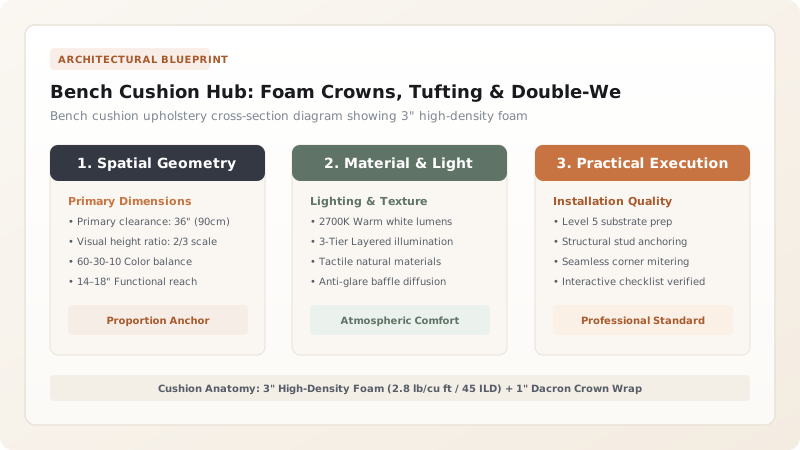
1. Ergonomic Physics: Bottoming-Out Resistance vs Cushion Crowning
When an adult sits on a flat wood banquette bench, their entire upper body weight is concentrated onto two small anatomical points: the Ischial Tuberosities (sit bones), exerting over 35 PSI of point pressure.
Standard 1.5 lb/cu ft foam collapses completely under this load, causing uncomfortable bottoming-out against hard plywood in under 15 minutes. Professional upholstery utilizes 2.8 lb/cu ft High-Density Polyurethane Foam (45 ILD) wrapped in 1-inch thermal-bonded Dacron, creating an ergonomic Crowned Apex that distributes weight evenly across thighs and buttocks.

Bench Cushion Construction Types & Performance
Use this reference table to calculate exact physical dimensions, ratios, and specifications before purchasing:
| Cushion Style | Foam Core Specification | Fullness Wrap | Best Built-In Application |
|---|---|---|---|
| Boxed Cushion with Double Welting (Optimal) | 3" - 4" HR-45 Foam | 1.0" Poly-Dacron Wrap | Kitchen banquettes & breakfast nooks |
| Deep Diamond Tufted Cushion | 3" High-Density Foam | 1.5" Dacron Batting | Formal bay window seats & foyer benches |
| French Tufted / Mattress Stitch | Layered Wool & Latex Core | Cotton Batting | Casual English Country / Farmhouse benches |
| Knife-Edge Flat Cushion (Budget) | 2" Low-Density Foam | No wrap (Flat foam) | FAILS: Wrinkles and bottoms out quickly |
Banquette Spill Liquid Barrier Constraints
Every successful decoration project must account for physical and environmental constraints:
Spilled Coffee and Drinks Soaking into Foam Core of Kitchen Banquettes
Liquid spills rot internal polyurethane foam; specify Crypton or Sunbrella indoor performance textiles, or sew a waterproof breathable polyurethane barrier liner beneath the decorative fabric before inserting the foam.
How to Build a Custom Boxed Bench Cushion
Execute this professional sequence to achieve flawless results without backtracking:
Cut 2.8-Lb High-Density Foam Core
Cut 3" HR-45 foam with an electric carving knife, sizing exactly to bench dimensions.
Glue 1" Dacron Batting Crown
Spray top and bottom with 3M adhesive; wrap batting around front boxing for a seamless bullnose.
Cut Fabric Panels with 1/2" Seam Allowances
Cut top and bottom plates 1" smaller than foam dimensions (ensures a tight, wrinkle-free fit).
Sew 5/32" Double Welt Piping Around Perimeter
Stitch bias-cut welt cording along top and bottom boxing seams using a piping zipper foot.
Install Heavy YKK Zipper in Rear Boxing
Sew a long continuous zipper across the back boxing panel and wrap 4 inches around side corners.
Stuff Foam Core with Silk Film Vacuum Technique
Wrap foam in thin dry-cleaner plastic, vacuum air out to compress foam by 70%, slide inside cover, and release vacuum.
Common Mistakes & Countermeasures
Avoid these costly errors that compromise aesthetics, ergonomics, and budget:
Cutting Fabric Covers the Exact Same Size as the Raw Foam Core
Project Execution Checklist
Track your physical progress. Checkboxes persist automatically on this device:
Frequently Asked Questions
How do professional upholsterers stuff thick foam into tight fabric covers easily?
Wrap the foam core in thin plastic film (like dry-cleaner bags) and insert a shop-vac hose. Turning on the vacuum compresses the dense foam to 30% of its original volume, allowing it to slide effortlessly into the tight cover. Once positioned, turn off the vacuum, and the foam expands drum-tight into every corner.


