
Choose Strand-Woven Bamboo for heavy-traffic flooring, stair treads, and kitchen countertops because its hydraulic fiber-compression manufacturing achieves an incredible Janka hardness of 3,000+ (2.5x harder than red oak). Choose Horizontal Grain Bamboo for modern cabinetry and wall paneling.
At a Glance: Key Takeaways
- Strand-Woven (Janka 3,000+): Shredded bamboo fibers fused under 2,500 tons of pressure; virtually dent-proof.
- Horizontal Grain (Janka 1,380): Flat-laminated strips displaying distinct horizontal bamboo growth knuckles.
- Natural vs Carbonized: Natural blonde is steam-processed; Carbonized caramel is pressure-steamed (sugars caramelize).
- Pet & Heel Durability: Strand-woven bamboo is immune to large dog claws and high-heeled shoe dents.
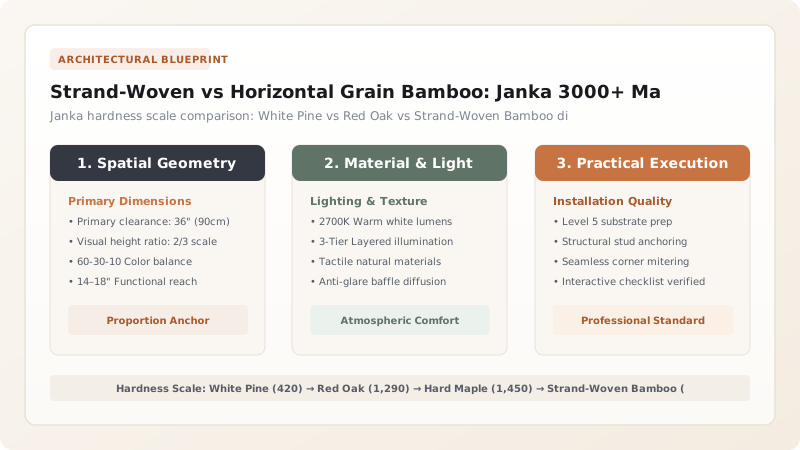
1. Manufacturing Physics: Shredded Strands vs Planed Strips
Traditional horizontal bamboo is manufactured by gluing solid rectangular bamboo strips side-by-side. While beautiful, its hardness is limited to the natural wood density (\(1,380\text{ Janka}\)).
Strand-Woven Bamboo shreds raw bamboo culms into individual fibrous strands, saturates them in eco-resins, and compresses them inside heated hydraulic presses under 2,500 metric tons of force. The resulting material has a density of \(1,100\text{ kg/m}^3\) (denser than water) and a Janka rating exceeding \(3,200\text{ psi}\).

Strand-Woven vs Horizontal vs Vertical Bamboo Comparison
Use this reference table to calculate exact physical dimensions, ratios, and specifications before purchasing:
| Bamboo Grain Structure | Janka Hardness | Density (kg/m³) | Best Interior Application |
|---|---|---|---|
| Strand-Woven (Cold Pressed) | 3,200 - 3,500 Janka | 1,150 kg/m³ (Ultra Dense) | High-traffic commercial floors, dog homes, kitchen counters |
| Vertical Grain (Edge Grain) | 1,450 Janka | 750 kg/m³ | Sleek modern kitchen cabinets, architectural slats |
| Horizontal Grain (Flat Grain) | 1,380 Janka | 700 kg/m³ | Dining tables, credenzas, decorative wall paneling |
| Carbonized Strand-Woven | 2,800 - 3,000 Janka | 1,100 kg/m³ | Rich dark caramel/walnut tone flooring and desks |
Carbonization Softening Heat Loss Constraints
Every successful decoration project must account for physical and environmental constraints:
Carbonized Bamboo Being Softer than Natural Blonde Bamboo
Pressure-steaming bamboo to caramelize sugars darkens the color but reduces cellular tensile strength by 10-15%; if specifying carbonized bamboo for heavy commercial use, strictly select Strand-Woven carbonized rather than horizontal.
How to Select the Right Bamboo Grain Type
Execute this professional sequence to achieve flawless results without backtracking:
Assess Foot Traffic and Pets
If the home has large dogs or heavy foot traffic, mandate Strand-Woven bamboo.
Evaluate Design Aesthetic
Select Horizontal for visible knuckles, Vertical for pinstripes, or Strand for marbled teak looks.
Choose Color Processing
Select Natural (Blonde) for maximum hardness or Carbonized (Amber) for rich warmth.
Check Formaldehyde Certification
Verify FloorScore or GREENGUARD Gold indoor air quality certification.
Common Mistakes & Countermeasures
Avoid these costly errors that compromise aesthetics, ergonomics, and budget:
Expecting Horizontal Bamboo to Resist Dog Nails Like Strand-Woven
Project Execution Checklist
Track your physical progress. Checkboxes persist automatically on this device:
Frequently Asked Questions
Can strand-woven bamboo flooring be sanded and refinished?
Yes! Solid strand-woven bamboo can be sanded down and refinished 3 to 4 times over its 50+ year lifespan using standard hardwood floor sanding equipment.


