
Antique newly carved limestone mantels by softening sharp 90-degree edges with coarse riffler rasps and wire brushes to simulate two centuries of wear. Etch the surface with a dilute potassium carbonate (potash) wash, apply a natural walnut husk and yellow ochre mineral glaze in crevices, and seal with hand-buffed warm carnauba beeswax.
At a Glance: Key Takeaways
- Edge Softening & Hand-Hept Distressing: Rounding sharp edges with stone rasps simulates centuries of domestic contact.
- Potassium Carbonate (Potash Lye) Etching: Mildly oxidizes surface minerals to create soft, velvety antique chalkiness.
- Natural Walnut Husk (*Brou de Noix*) Glaze: Organic brown-gold botanical pigment settles into low carved crevices.
- French Ochre Earth Pigments: Adds subtle golden-amber tones characteristic of sun-drenched Provence quarries.
- Warm Carnauba & Beeswax Sealing: Nourishes porous stone, locking in mineral pigments with a subtle satin sheen.
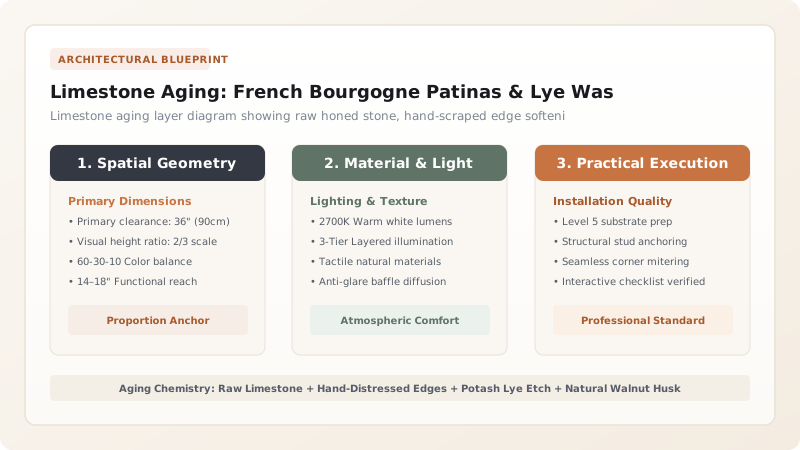
1. Artisanal Masonry: Softening Geometry & Simulating Historic Wear
Modern CNC-milled stone has razor-sharp, mechanical edges and flat, machine-honed faces that look sterile and new. Genuine 18th-century French mantels have soft, undulating edges rounded by generations of domestic life.
Craftsmen use Coarse Curved Riffler Rasps and Silicon Carbide Stones to gently round all 90-degree corners, softening base plinths and corbel scrolls with subtle irregular hand-chiseled boucharde marks. Learn Campagnarde proportions in Campagnarde arched lintel geometry.

2. Botanical & Mineral Chemistry: Brou de Noix & French Ochres
Never use modern acrylic wood stains or chemical paints on limestone: synthetic pigments seal the stone's pores and look like painted plastic. Master restorers apply traditional Botanical and Mineral Washes:
- Brou de Noix (Walnut Husk): Natural organic dye extracted from boiled green walnut shells, producing rich amber-brown historic shading.
- Roussillon Yellow Ochre: Natural clay earth pigment from French quarries that imparts warm golden sun-bleached tones.
Finish by buffing with warm beeswax and carnauba wax. Pair with cast iron firebacks.
Limestone Patination Formulations
Use this reference table to calculate exact physical dimensions, ratios, and specifications before purchasing:
| Aging Treatment | Active Chemical / Ingredient | Application Method | Visual Effect |
|---|---|---|---|
| Surface Softening Etch | 5% Potassium Carbonate (Potash) | Brush on, wait 10 mins, rinse | Creates velvety chalky historic texture |
| Deep Crevice Shading | Brou de Noix (Boiled walnut husk) | Sponge into carvings, wipe high points | Dark antique amber shadow in recesses |
| Sun-Bleached Provencal Warmth | Roussillon Natural Yellow Ochre | Dilute water wash across entire mantel | Warm golden limestone honey glow |
| Protective Satin Luster | Pure Carnauba & Beeswax Paste | Warm rub with cotton cloth & buff | Silky water-repellent museum finish |
Chemical Darkening Over-Staining Constraints
Every successful decoration project must account for physical and environmental constraints:
Applying Walnut Husk Stain Too Concentrated Turning White Limestone Muddy Brown
Limestone is extremely porous and sucks up pigment instantly; test all stain washes on scrap stone first, diluting walnut extract to 1:10 with distilled water; build color in multiple whisper-thin layers rather than one heavy dark wash.
How to Distress and Patinate French Limestone
Execute this professional sequence to achieve flawless results without backtracking:
Soft-Round Sharp Edges with Rasps
Use coarse stone rifflers to bevel sharp 90° edges into soft, gentle 1/4" irregular pencil-round profiles.
Simulate Micro-Boucharde Tool Marks
Tap high-wear zones with a pointed bush-hammer to create subtle micro-pitted historic texture.
Wash with Mild Potash Lye Solution
Sponge 5% potassium carbonate over stone to break surface sheen; rinse with clean water and let dry.
Layer Dilute Brou de Noix into Carvings
Brush dilute walnut husk wash into carved recesses, immediately wiping high reliefs with damp cloth.
Mist with Yellow Ochre Mineral Glaze
Spray ultra-fine mist of French yellow ochre water over entire mantel to impart golden warmth.
Apply Warm Beeswax and Buff to Satin Luster
Warm stone with hot air gun, rub clear beeswax into pores, and hand-buff with flannel cloth.
Common Mistakes & Countermeasures
Avoid these costly errors that compromise aesthetics, ergonomics, and budget:
Using Modern Petroleum-Based Polyurethane Sealers on Antique Limestone
Project Execution Checklist
Track your physical progress. Checkboxes persist automatically on this device:
Frequently Asked Questions
Can cast stone be aged using these same limestone techniques?
Yes! High-grade ASTM C1364 dry-tamped cast stone contains natural crushed limestone aggregate, allowing it to react identically to walnut husk stains, ochre glazes, and beeswax buffing.


