
Paint a dark accent wall by selecting rich hues (deep charcoal, midnight navy, or dark olive) with an LRV below 15 in a dead-matte or velvet sheen. Pair the dark backdrop with warm timber furniture and brass lighting to prevent a sterile look.
At a Glance: Key Takeaways
- LRV Target: Select paint with a Light Reflectance Value between 5 and 12.
- Dead-Matte Sheen: Ultra-matte finishes absorb light reflections, giving rich velvety depth.
- TV Camouflage: Mounting black flat-screen TVs against charcoal walls makes the screen disappear.
- Warm Contrast: Pair dark walls with natural walnut wood, cognac leather, and warm brass fixtures.
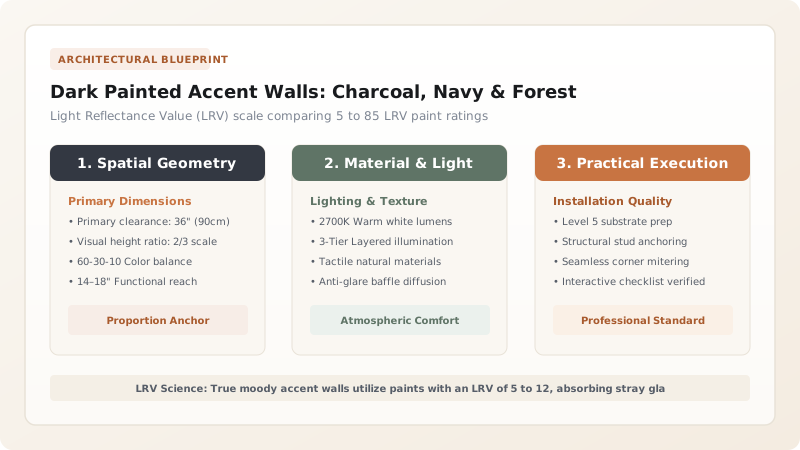
1. The Light Reflectance Value (LRV) Formula
The secret to a sophisticated dark accent wall lies in Light Reflectance Value (LRV)—the percentage of light a paint color reflects. Standard white walls measure LRV 80–90, while deep dramatic accent walls require an LRV between 5 and 14.

Top Dark Accent Color Palettes
Use this reference table to calculate exact physical dimensions, ratios, and specifications before purchasing:
| Color Family | Typical LRV Range | Recommended Wood Pairing | Atmospheric Mood |
|---|---|---|---|
| Deep Charcoal / Slate Black | LRV 6 - 9 | Natural Walnut & Light Oak | Modern architectural, masculine elegance |
| Midnight Navy / Indigo | LRV 8 - 12 | Caramel Leather & Brass | Classic tailored, calm contemplative |
| Deep Forest / Moss Green | LRV 9 - 14 | Raw Teak & Woven Rattan | Biophilic organic, cozy cocooning |
| Smoked Aubergine / Burgundy | LRV 7 - 11 | Polished Travertine & Gold | Dramatic vintage luxury, intimate dining |
Drywall Texture & Imperfection Constraints
Every successful decoration project must account for physical and environmental constraints:
Drywall Flaws Showing Through Dark Paint
Dark colors in semi-gloss or satin highlight every dent, taped seam, and nail pop; always use dead-matte or flat enamel sheen to absorb reflections and hide flaws.
How to Paint a Flawless Dark Accent Wall
Execute this professional sequence to achieve flawless results without backtracking:
Apply Gray Primer
Use a dark gray tinted primer so the deep topcoat covers in 2 coats.
Cut Edges with Blue Tape
Seal painter's tape edge with a smear of clear matte medium for crisp lines.
Roll with 3/8-Inch Microfiber
Roll paint vertically in full floor-to-ceiling strokes without stopping.
Install 2700K Warm Lighting
Wash wall with warm 2700K light to bring out deep undertones.
Common Mistakes & Countermeasures
Avoid these costly errors that compromise aesthetics, ergonomics, and budget:
Using High-Gloss Paint on a Dark Accent Wall
Project Execution Checklist
Track your physical progress. Checkboxes persist automatically on this device:
Frequently Asked Questions
Will a dark accent wall make my room look smaller?
No. In fact, dark matte colors visually recede into the distance, blurring room boundaries and making the wall appear farther away, which adds perceived depth.


