
Design an accent wall by selecting the room's natural architectural anchor (the headboard wall in bedrooms, or the TV/fireplace wall in living rooms). Apply rich contrasting paint (LRV under 15), vertical timber slats, or botanical wallpaper, and illuminate with 30-degree ceiling grazing lights.
At a Glance: Key Takeaways
- Focal Rule: Choose the solid wall you see first upon entering the room.
- Color Contrast: Deep hues (Charcoal, Navy, Forest Green) require Light Reflectance Value (LRV) below 15.
- Material Layering: Acoustic wood slats add sound absorption and vertical height.
- Lighting Integration: Graze textured accent walls with 3000K recessed directional spots.
In-Depth Guides in this Directory
Explore specialized subtopic blueprints, technical dimensions, and execution checklists:
Dark Painted Accent Walls: Charcoal, Navy & Forest Green Formulas
Master dark painted accent walls: Light Reflectance Value (LRV under 15), dead-matte sheen selection, TV camouflaging, and warm wood contrast.
Wallpaper Accent Walls: Mural Sizing, Peel-and-Stick & Pattern Scale
Master wallpaper accent walls: large-scale botanical murals vs geometric repeats, peel-and-stick renter methods, pattern matching, and surface prep.
Wood Slat Accent Walls: Acoustic Panels, Spacing & Timber Finishes
Master acoustic wood slat accent walls: felt backing soundproofing (NRC 0.85), timber spacing ratios, black screw fastening, and integrated LED channels.
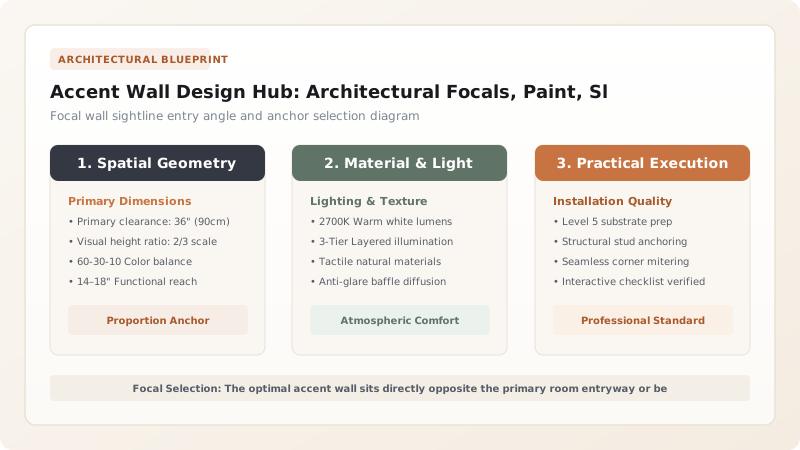
1. Architectural Focal Selection & Sightline Physics
An accent wall is not merely a painted drywall slab; it is the dominant visual anchor that establishes the room's hierarchy. Selecting the wrong wall—such as a wall broken by multiple windows, doors, or radiators—creates chaotic visual competition.
Select a continuous solid wall that commands attention: the wall behind the master bed headboard, the fireplace breast, or the wall centered directly opposite the main room entryway.

Accent Wall Material Selection Matrix
Use this reference table to calculate exact physical dimensions, ratios, and specifications before purchasing:
| Material Type | Installation Difficulty | Acoustic / Sound Benefit | Best Room Application |
|---|---|---|---|
| Deep Matte Paint (Navy/Charcoal) | Low (DIY weekend) | Minimal | Bedrooms, living room TV walls |
| Vertical Acoustic Wood Slats | Moderate (Screws / Adhesive) | High (NRC 0.85 sound absorption) | Home theaters, offices, dining rooms |
| Botanical Wallpaper Mural | Moderate (Paste / Peel & stick) | Low | Powder rooms, entry foyers, nursery |
| Picture Frame Box Moulding | Moderate (Miter saw & nails) | Moderate (Wall weight) | Formal living rooms, master bedrooms |
Natural Light & Undesired Glare Constraints
Every successful decoration project must account for physical and environmental constraints:
Window Side Wall Flashing
Placing dark accent paint on a wall directly adjacent to a bright window causes extreme glare contrast; place dark accent walls on the wall opposite or perpendicular to light sources.
How to Plan an Accent Wall Project
Execute this professional sequence to achieve flawless results without backtracking:
Identify Primary Anchor Wall
Stand at room entrance and note the natural visual focal point.
Test Large 24x36 Swatches
Paint large test boards and observe in morning, noon, and night light.
Prep Surface Flatness
Patch screw holes and sand drywall smooth with 120-grit sandpaper.
Install Perimeter Trim First
Paint baseboards or install matching trim before applying slats/paper.
Common Mistakes & Countermeasures
Avoid these costly errors that compromise aesthetics, ergonomics, and budget:
Choosing a Wall Interrupted by Multiple Doors and Windows
Project Execution Checklist
Track your physical progress. Checkboxes persist automatically on this device:
Frequently Asked Questions
Should an accent wall be darker or lighter than the other walls?
An accent wall should generally be noticeably darker than surrounding walls to create depth and draw the eye forward. For subtle organic looks, an accent wall with rich textural variation (like lime-wash or wood slats) can share similar color tones.


