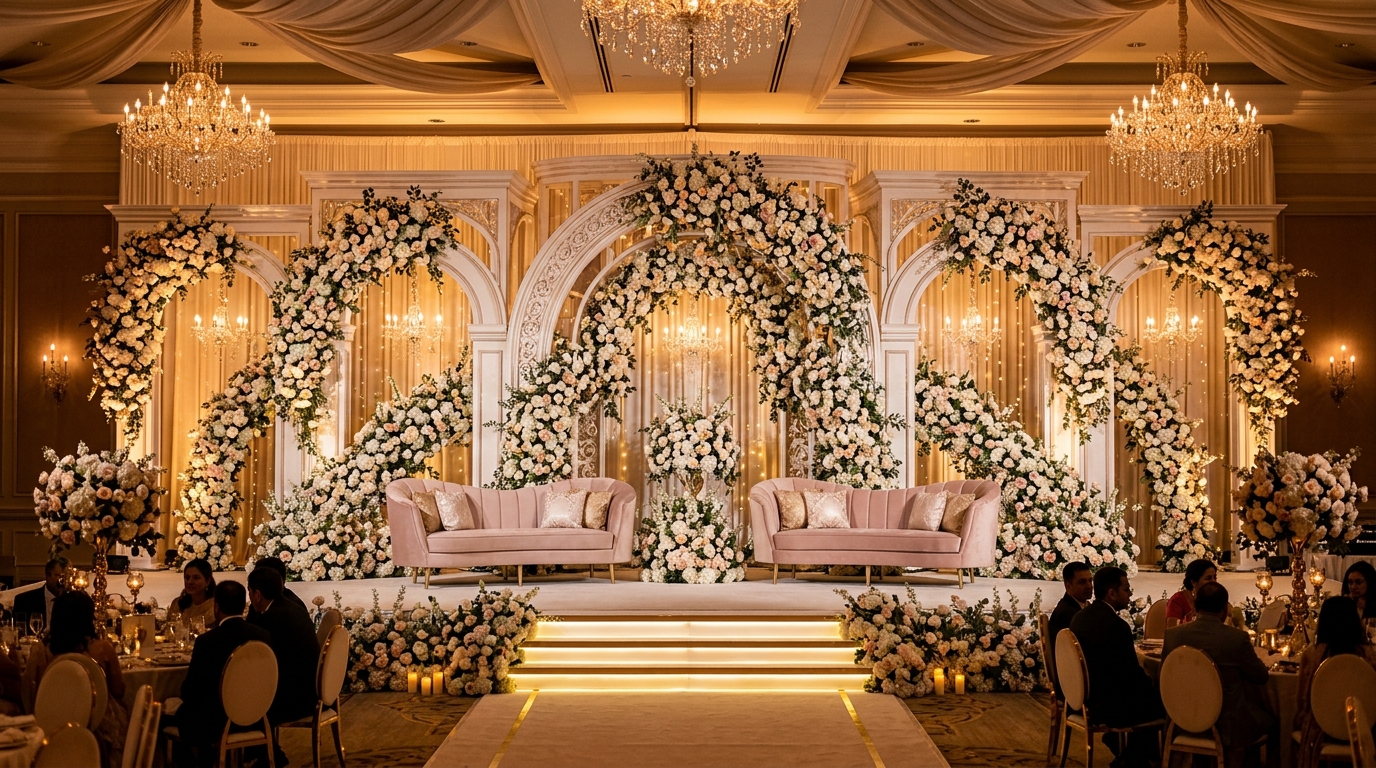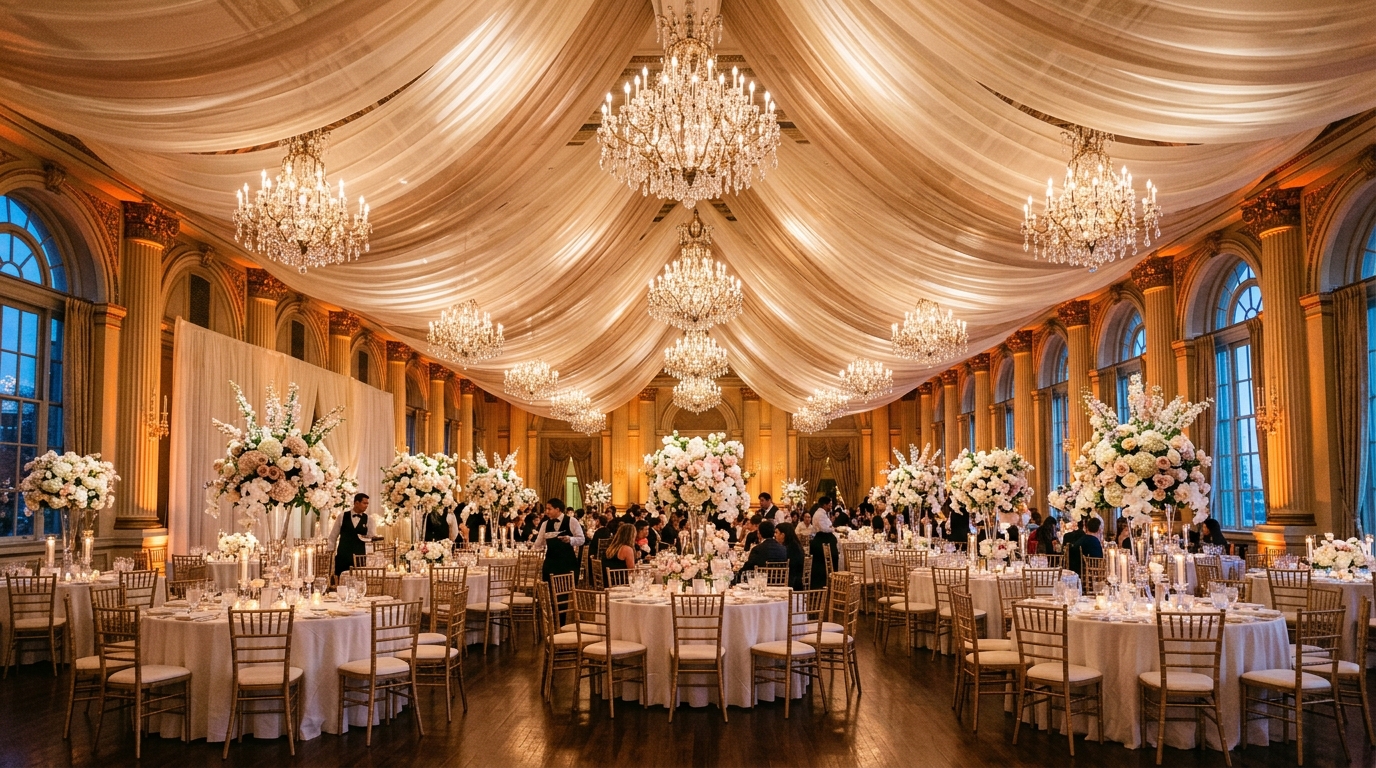
The most common wedding decoration mistakes are: 1) Centerpieces in the 'dead zone' (14 to 22" high) that block dinner conversation, 2) Narrow stage backdrops (<16 ft) that reveal exit doors in group photos, 3) Cold blue/purple LED wash lights that ruin skin tones, 4) Unweighted arches that tip in wind, and 5) Narrow bridal aisles (<6 ft) that crowd dresses.
At a Glance: Key Takeaways
- Never build centerpieces between 14" and 22" high; keep them strictly under 12" or elevate above 24".
- Stage backdrops must be at least 18 to 24 feet wide to frame 12-person group photos without exposing bare walls.
- Eliminate cold blue/purple face lighting; use strictly 2700K–3000K warm white with high CRI (>90).
- Enforce 60 inches of clearance between banquet tables to prevent catering and guest traffic gridlock.
1. The 14-to-22 Inch Centerpiece 'Dead Zone'
The number one complaint from wedding dinner guests is the inability to converse with people across the table. This is caused by the dreaded Centerpiece Dead Zone:
- When seated upright in a banquet chair, human eye level sits between 14 and 22 inches above the tabletop.
- Any floral arrangement or vase built within this 14-to-22 inch zone creates a solid visual wall, forcing guests to bob their heads sideways to speak.
- The Rule of Two Extremes: Keep centerpieces strictly LOW (under 12 inches / 30 cm) using low ceramic bowls and garlands, or elevate them strictly HIGH (above 24 inches / 60 cm) on ultra-slender glass or gold metal trumpets where all blooms sit above seated eye level.
2. The 'Narrow Backdrop' Photographic Catastrophe
Couples often spend thousands on a beautiful 10-foot wide floral stage backdrop, only to be heartbroken when they receive their wedding album:
- When the bride, groom, parents, and bridal party stand together for group portraits (10 to 16 people wide), a 10-foot backdrop is completely blocked by the couple in the center.
- The people standing on the ends are framed by ugly banquet hall exit signs, emergency fire alarms, and bare beige drywall.
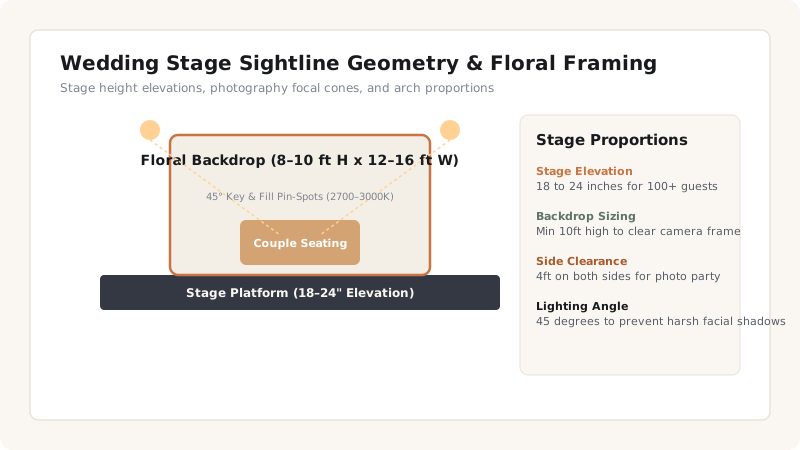
- The Fix: All wedding stage backdrops must measure at least 18 to 24 feet (5.5 to 7.3 m) in total width to provide a continuous, luxurious background for wide group portraits.
3. Harsh Lighting Sins & Dangerous Unweighted Arches
Two critical production errors that compromise beauty and safety:
- The 'Alien Nightclub' Blue/Purple Wash: Blasting deep blue or purple LED uplighting directly onto the couple's faces distorts bridal makeup, creates harsh contrast, and makes skin look bruised and gray in photography. Always use 2700K–3000K high-CRI warm white for face lighting.
- The Unballasted Arch Hazard: A free-standing 8x8 floral arch carrying 50 lbs of flowers acts like a sail. Without base weights, a minor wind gust or a guest bumping the frame can bring the entire heavy structure crashing down. Every vertical upright must have at least 20 kg (45 lbs) of solid base ballast.
Top 10 Wedding Decoration Mistakes & Professional Fixes
Use this reference table to calculate exact physical dimensions, ratios, and specifications before purchasing:
| Common Mistake | Visual / Safety Hazard | Professional Standard Fix | Cost to Fix |
|---|---|---|---|
| Centerpieces 14–22" High | Blocks guest eye contact & conversation | Keep <12" or elevate >24" on thin pedestals | Zero Cost |
| Narrow Stage Backdrop (<12 ft) | Exposes hall doors in wide group photos | Build backdrops min 18–24 ft wide | Low-Medium ($$) |
| Blue / Purple Face Lighting | Bruised skin tones in professional photos | Use 2700K–3000K warm white (CRI >95) | Zero Cost (Settings) |
| Unweighted Entrance Arch | Tipping hazard onto arriving guests | Anchor each base with 20 kg ballast | Low ($) |
| Banquet Tables <48" Apart | Catering gridlock, bumping chair backs | Enforce strictly 60" edge-to-edge spacing | Zero Cost (Layout) |
| Narrow Bridal Aisle (<5 ft) | Voluminous dress gets crushed by chairs | Design aisle strictly 6 to 8 ft wide | Zero Cost (Layout) |
Wedding Mistake Prevention Constraints
Every successful decoration project must account for physical and environmental constraints:
Venue Delivery Windows
Venues with tight 2-hour morning access cannot accommodate complex on-site floral construction; pre-assemble garland headers in the florist workshop to snap into place in 20 minutes.
Floral Preservative Hydration
Hydrangeas and garden roses on outdoor stages wilt within 3 hours without water; every fresh stem in structural arches must be inserted into sealed floral water tubes or soaked Oasis foam.
Emergency Fire Exit Obstruction
Never hang decorative drapes over illuminated red EXIT signs; local fire marshals can shut down the wedding reception immediately if exits are concealed.
10-Step Wedding Decoration Quality Audit Protocol
Execute this professional sequence to achieve flawless results without backtracking:
Audit Centerpiece Heights with a Tape Measure
Verify all table arrangements sit strictly under 12" or above 24" on clear stands.
Measure Stage Backdrop Width (Min 18–24 Ft)
Ensure backdrop spans wide enough to frame a 14-person standing group photo.
Check 20 kg Base Ballast on All Arches
Physically push upright pillars to verify zero wobble or tipping risk.
Verify 60-Inch Spacing Between Banquet Tables
Walk between all table rows to confirm clear catering and guest passage.
Check 6–8 Foot Width on Central Bridal Aisle
Ensure the bride and escort can walk comfortably abreast without brushing chairs.
Audit Light Fixture Kelvin Ratings (2700K)
Check that all face wash and uplights are set to warm gold (2700K CRI >90).
Tape Down All Aisle Runners and Floor Cables
Secure every carpet edge and electrical wire with heavy-duty gaffer tape.
Verify All Fire Exits Remain 100% Unobstructed
Ensure clear 6-foot paths to all marked emergency exits.
Perform Flash Test Shots with Wedding Photographer
Check photos for hot spots, background clashes, or dark facial shadows.
Confirm 15-Minute Ceremony-to-Reception Move Plan
Assign team members to relocate ceremony arch and aisle lanterns to reception.
Common Mistakes & Countermeasures
Avoid these costly errors that compromise aesthetics, ergonomics, and budget:
Scented Candles on Banquet Dining Tables
Leaving Wedding Favors as an Afterthought
Short Tablecloths That Expose Metal Table Legs
Project Execution Checklist
Track your physical progress. Checkboxes persist automatically on this device:
Frequently Asked Questions
What size tablecloth do I need for a 60-inch round banquet table?
A 120-inch round tablecloth is required. This provides a full 30-inch drop on all sides, gracefully brushing the floor and completely concealing the table legs.
How can I prevent guests from getting lost in a large wedding venue?
Install clear, calligraphed directional easel signs at every architectural transition (Entryway -> Ceremony -> Cocktail Terrace -> Banquet Hall -> Restrooms).
How far in advance should wedding decor be set up?
All structural staging, draping, lighting, and table linens should be completed 2 to 3 hours before guest arrival, with fresh floral arrangements placed 60 to 90 minutes before doors open.