
Quartersawn White Oak (*Quercus alba*) is produced by cutting logs into quarters and sawing radially toward the center at 60 to 90-degree angles to the growth rings. This exposes the tree's natural medullary nutrient rays as shimmering, ribbon-like 'ray flecks' (tiger grain) while providing 50% greater dimensional stability than plain-sawn lumber.
At a Glance: Key Takeaways
- Medullary Ray Flecks: Ribbon-like cellular rays that transport sap horizontally from tree core to bark.
- Vertical Growth Rings (60-90°): Radial sawing guarantees vertical end-grain that resists cupping and twisting.
- 50% More Dimensionally Stable: Expands half as much as plain-sawn oak, making it ideal for cabinet doors.
- Ammonia Fuming Finish: Natural reaction between tannic acid and ammonia creates deep, luminous golden-brown tones.
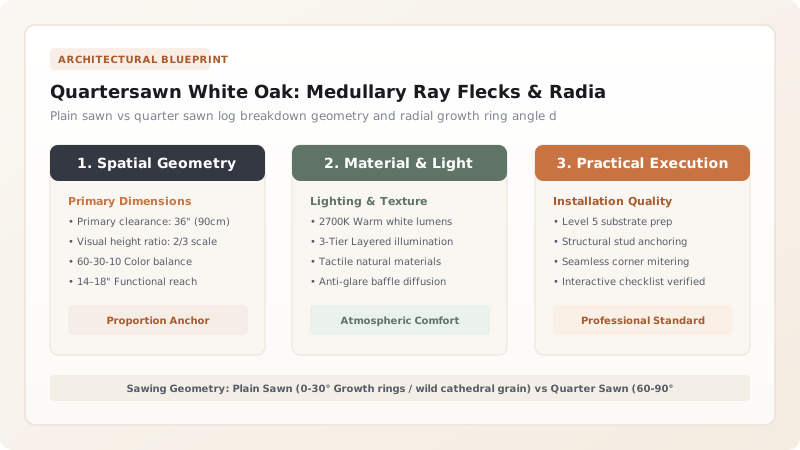
1. Sawmill Geometry: Radial Quartering vs Tangential Plain Sawing
When a sawyer cuts a log in standard Plain Sawn (Flat Sawn) passes, the blade cuts tangentially across the growth rings, creating wild flame-shaped cathedral arches. However, plain sawn boards cup and twist easily during seasonal humidity changes.
To produce True Quartersawn Lumber, the log is quartered, and boards are sawn radially toward the log's center axis. Because the cut runs parallel to the tree's horizontal nutrient capillaries (Medullary Rays), the surface displays dramatic, shimmering silver-gold ribbons of figured grain known historically as 'Tiger Oak'.

Oak Lumber Sawing Methods & Technical Attributes
Use this reference table to calculate exact physical dimensions, ratios, and specifications before purchasing:
| Sawing Technique | Growth Ring Angle | Medullary Ray Flecks | Dimensional Stability (Shrinkage) |
|---|---|---|---|
| True Quarter Sawn (Optimal) | 60° - 90° Vertical to Face | Prominent dramatic shimmering flecks | Maximum (0.10% radial expansion; never cups) |
| Rift Sawn (Straight Grain) | 30° - 60° Diagonal to Face | Zero flecks (Pure linear pinstripes) | High (Ultra-clean modern architectural grain) |
| Plain Sawn (Flat Sawn) | 0° - 30° Tangential to Face | Zero flecks (Wild flame cathedrals) | Low (Prone to cupping, twisting, and bowing) |
| Live Sawn (Euro / French Cut) | Contains All Angles (0°-90°) | Flecks in center; cathedrals on edges | Moderate (Wide European plank aesthetic) |
Red Oak Stain Pigment Muddying Constraints
Every successful decoration project must account for physical and environmental constraints:
Contractor Substituting Cheaper Red Oak That Looks Pink and Muddy
Red oak has open porous vascular tubes that absorb stain into black muddy lines and lacks white oak's closed tyloses; strictly specify 'Quartersawn Northern White Oak (*Quercus alba*)' with verified closed-cell tyloses.
How to Finish Quartersawn White Oak to Highlight Flecks
Execute this professional sequence to achieve flawless results without backtracking:
Sand to 180-Grit Only
Do not over-sand past 180-grit, which polishes wood pores and prevents deep stain penetration.
Apply Dye Stain Base
Wipe with a water-based amber dye stain to penetrate deep into wood fibers without muddying grain.
Apply Dark Pigment Wiping Stain
Wipe a dark walnut oil stain over the dye; the dense medullary rays resist the pigment while open grain darkens.
Wipe Flecks Clean with Mineral Spirits
Lightly wipe ray flecks with a rag dampened in mineral spirits to make them pop in high-contrast gold.
Seal with Satin Hardwax Oil or Lacquer
Apply 2 coats of non-yellowing satin lacquer or plant-based hardwax oil.
Common Mistakes & Countermeasures
Avoid these costly errors that compromise aesthetics, ergonomics, and budget:
Using Thick Gel Stains That Cover and Hide the Shimmering Medullary Rays
Project Execution Checklist
Track your physical progress. Checkboxes persist automatically on this device:
Frequently Asked Questions
Why is quartersawn white oak more expensive than plain-sawn oak?
Quartersawing requires turning the log multiple times and produces narrower boards with more sawmill scrap waste, making true quartersawn lumber 30% to 50% more expensive than plain-sawn oak.


