Smoke channel engineering dictates the thermal efficiency, combustion safety, and draft velocity of a Russian pechka. Internal ducts—termed oboroty—channel exhaust gases through vertical or horizontal masonry labyrinths to absorb thermal energy before releasing gases into the chimney stack. To ensure consistent draft across changing seasonal atmospheric conditions, a traditional pechka utilizes a dual-damper control system. The summer damper (letnyaya zadvizhka) provides a direct bypass straight from the hearth to the chimney for hot-weather cooking without charging the massive heating channels. The winter damper (zimnyaya zadvizhka) forces gases through the multi-pass thermal storage ducts. Cleanout ports (prochistnye dvertsy) placed at every direction turn allow periodic sweeping of soot and fly ash to prevent chimney fires.
At a Glance: Key Takeaways
- Flue Channel Type: Multi-turn vertical passes (oboroty) or bell-type chambers (kolpaki)
- Channel Cross-Section: 260 x 130 mm (full brick by half brick) or 260 x 260 mm
- Optimal Chimney Height: Minimum 5.0 meters above firebox hearth for positive draft
- Exhaust Gas Temp: 120°C to 150°C at chimney exit (prevents condensation)
- Damper Hardware: Precision cast-iron sliding gate valves (zadvizhki)
- Cleanout Maintenance: Cast-iron cleanout doors or dry knock-out 'brick plugs'
Fluid Dynamics & Aerodynamic Resistance in Smoke Channels
The internal convective heat-exchange channels of a Russian pechka (dymooboroty) are an exercise in precision fluid dynamics. As hot combustion gases leave the firebox, their temperature is between 600°C and 800°C. If these gases are vented directly through a straight flue, up to 80% of the energy is wasted into the outdoor atmosphere. Conversely, if internal channels are made too long, narrow, or convoluted, aerodynamic friction causes excessive draft loss.
When aerodynamic resistance exceeds the natural buoyancy draft produced by the chimney stack, combustion stalls: the firebox smokes back into the room, combustion temperatures plunge, and unburned hydrocarbons deposit sticky, highly flammable creosote along the flues. Master stove builders size internal channels with cross-sectional areas of at least 260 x 130 mm (one brick by half brick) and round off all internal 90-degree channel corners with smooth curved brick chamfers (zakrugleniya) to maintain laminar gas flow.
The Summer Bypass: Dual-Mode Seasonal Architecture
In an agrarian rural environment, the pechka was required every single day of the year for baking bread, cooking soups, and boiling water. In July and August, however, heating a 3-ton masonry stove to full thermal capacity would make living inside the timber cabin insufferably hot.
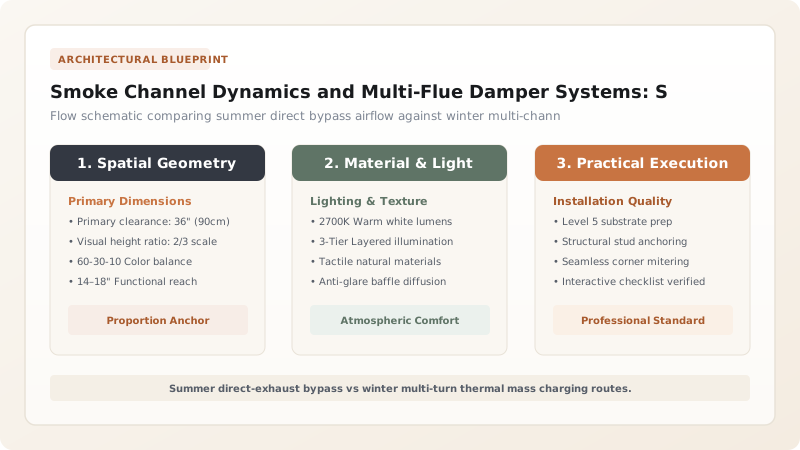
To solve this operational dilemma, stove engineering introduced the summer bypass damper (letnyaya zadvizhka). When this heavy cast-iron sliding damper is pulled open, it creates a short-circuit pathway directly from the stove throat (khailo) into the main vertical chimney flue, bypassing the internal thermal storage channels entirely. The stove cooks food with exceptional draft velocity while keeping the room cool. In autumn, closing the summer damper redirects exhaust gases through the tortuous winter passages, charging the mass and warming the living quarters.
Cast-Iron Sliding Dampers & Carbon Monoxide Prevention
Traditional pechkas utilize two sequential damper mechanisms in the upper chimney collector: the vyushka (a double-cover cast-iron seal consisting of an internal pancake lid and outer bowl) and the zadvizhka (a precision machined sliding iron blade in a cast frame).
These dampers serve a critical heat-retention role: once firing is complete and all glowing charcoal has fully consumed its volatile gases, the dampers are closed tightly. This shuts off the chimney draft, trapping thousands of kilowatt-hours of stored thermal energy inside the masonry core rather than allowing cold outdoor air to sweep through the hot flues. However, closing the dampers prematurely—before blue carbon monoxide flames have completely vanished from the coals—poses a lethal hazard. Russian folklore and stovecraft establish strict protocols: the charcoal bed must be raked forward, inspected under bright ambient light, and only sealed when reduced to dark red ash with zero visible blue luminescence.
Smoke Channel Configuration Types in Masonry Heaters
Use this reference table to calculate exact physical dimensions, ratios, and specifications before purchasing:
| Channel Type | Draft Resistance | Thermal Extraction Efficiency | Soot Accumulation Tendency |
|---|---|---|---|
| Vertical Multi-Pass (3 to 5 flues) | Moderate to high | Very high (82-86%) | Moderate; cleanout doors required at each lower turn |
| Horizontal Serpentine Channels | Extremely high | High (80-84%) | Severe; soot settles rapidly on horizontal shelves |
| Bell-Type Chambers (Kolpakovye) | Very low (natural stratification) | Exceptional (85-90%) | Low; self-regulating gas stagnation traps heat naturally |
| Direct Single Flue (Summer Mode) | Zero resistance | Extremely low (15-20%) | Minimal; high exhaust velocity sweeps soot |
Practical Constraints
Every successful decoration project must account for physical and environmental constraints:
Critical Condensation Temperature (Dew Point)
Extracting too much heat in the flues causes exhaust gas temperatures to drop below 100°C, condensing acidic moisture that destroys chimney masonry. Mitigation: Design channel lengths so that exhaust gas exits the top chimney pot between 120°C and 150°C under steady firing conditions.
Execution Blueprint & Craftsmanship Sequence
Execute this professional sequence to achieve flawless results without backtracking:
Calculating Duct Cross-Sections
Calculate channel cross-sections based on firebox volume (standard minimum 260 x 130 mm). Mark duct paths on the masonry level using plumb lines.
Laying Division Bricks on Edge
Construct dividing walls between channels using solid red bricks laid on edge or flat. Chamfer all internal corners to a 45-degree radius to minimize gas turbulence.
Setting Doors at Lowest Flue Bends
Mount cast-iron cleanout doors (or fit dry removable brick plugs) at the base of every vertical down-pass to allow seasonal vacuuming of fly ash.
Bedding Cast-Iron Frame in Refractory Mortar
Bed the summer damper frame in clay mortar wrapped with ceramic fiber tape. Verify smooth sliding action without binding against expanding brickwork.
Securing Final Airtight Throat Gate
Install the primary chimney sliding damper (zadvizhka) at the chimney base. Connect to the brick stack, verifying 380 mm clearances to roof timber rafters.
Common Mistakes & Countermeasures
Avoid these costly errors that compromise aesthetics, ergonomics, and budget:
Creating Sharp 90-Degree Angles at Flue Turns
Neglecting Cleanout Ports in Lower Flue Pockets
Project Execution Checklist
Track your physical progress. Checkboxes persist automatically on this device:
Frequently Asked Questions
What is the difference between a traditional channel stove and a modern bell stove (kolpak)?
Channel stoves force gases through narrow, forced-path masonry ducts requiring high draft. Bell stoves (developed by I. Podgorodnikov and I. Kuznetsov) use open dome chambers where hot gases naturally float to the top and linger until cooled, reducing draft resistance and preventing cold air from sweeping the heat away even if dampers are left slightly open.
Why do my dampers stick or jam after a hot fire?
Cast-iron dampers expand when heated. If the damper frame is mortared tightly against bricks with zero expansion clearance, the expanding metal binds and cracks the surrounding masonry. Always wrap the perimeter frame with 3 to 5 mm of compressible ceramic fiber rope before mortaring.