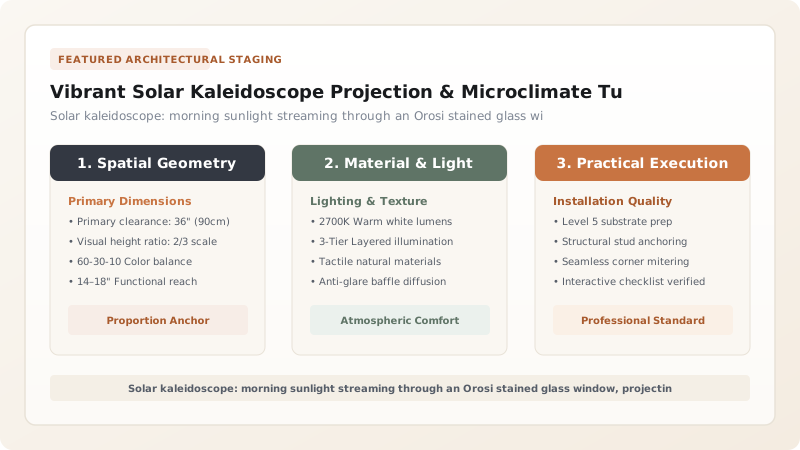
Vibrant solar kaleidoscope projection and microclimate tuning represent the sensory and ecological genius of Persian Orosi glazing. Using mouth-blown pot-metal glass colored with metallic oxides (cobalt blue, copper red, iron amber, chromium green), Orosi windows transform intense desert sunlight into dynamic chromatic carpets that sweep across interior plasterwork. Simultaneously, the stained glass filters blinding glare, reduces solar infrared heat gain by up to 6°C, and repels desert insects.
At a Glance: Key Takeaways
- Optical Effect: Dynamic Solar Projection (Kaleidoscopic Carpet of Light)
- Glass Chemistry: Mouth-Blown Pot-Metal Glass with Mineral Metallic Oxides
- Primary Colors: Lapis Cobalt Blue, Ruby Red, Turquoise, Amber Yellow
- Thermal Reduction: 4°C to 6°C Reduction in Peak Daytime Interior Temperature
- Entomological Role: UV Spectral Filtration Repels Mosquitoes and Flying Desert Pests
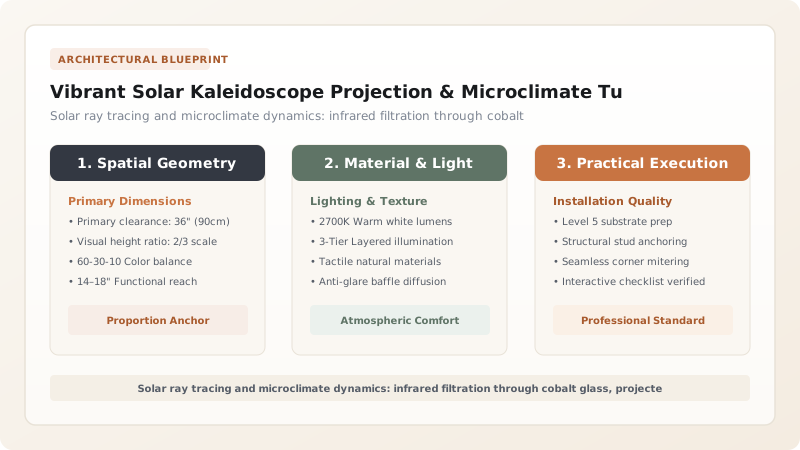
Optics of the Persian Solar Kaleidoscope: The Moving Light Carpet
In traditional Persian architecture, a window is never a static frame; it is a dynamic optical instrument that interacts with the cosmos. In the grandest reception halls (orosi-khaneh) of Shiraz, Isfahan, and Kashan, the defining sensory wonder is the phenomenon of the moving light carpet.
As early morning sunlight strikes the eastern or southern facade of an Orosi window, the thousands of polygonal stained glass facets act as optical filters and micro-prisms. The intense direct solar beams pass through the geometric Gereh lattice, projecting a vivid, jewel-toned replica of the window's mathematical star patterns across the white polished plaster walls and hand-knotted wool floor carpets. As the earth rotates, this kaleidoscopic tapestry of cobalt blue, ruby red, amber, and turquoise light sweeps across the room, shifting in scale and geometry with the solar azimuth. For the inhabitants, this transformed the passage of time into an immersive spiritual spectacle of light, color, and cosmic rhythm.
Pot-Metal Glass Chemistry: Metallic Oxides and Wavelength Absorption
The luminous depth of historic Orosi glass is the result of ancient metallurgical glass chemistry. Unlike modern industrial colored glass—which is often created by applying thin organic lacquers or plastic films onto the surface of clear float glass—authentic Persian Orosi utilized pot-metal stained glass.
In pot-metal glass, coloring agents are pure metallic oxides dissolved directly into the molten quartz batch within fireclay crucible pots (pot-furnaces). To produce the iconic lapis lazuli blue (abi-ye lajevardi), glassblowers added cobalt oxide; brilliant ruby reds were created using cuprous oxide (copper ruby) or colloidal gold; emerald greens were synthesized from chromium and copper oxides; and rich amber yellows were derived from iron oxides and antimony. Because the color is distributed throughout the entire three-dimensional body of the mouth-blown glass, it is completely immune to ultraviolet degradation, retaining its vivid spectral purity across centuries of relentless desert sun.
Bioclimatic Tuning: Solar Heat Gain and Infrared Attenuation
Beyond its visual splendor, the Orosi was a masterwork of passive bioclimatic design developed for the hostile desert climate of the Iranian plateau. In regions where ambient summer temperatures exceed 45°C, unshaded clear glass windows turn interior rooms into unbearable thermal ovens through the greenhouse effect.
The Orosi solves this through selective spectral filtration. The combination of dense hardwood Gereh Chini struts (which physically block 40 to 60 percent of direct solar radiation like an architectural brise-soleil) and metallic-oxide stained glass dramatically attenuates near-infrared (NIR) radiation—the primary wavelength range responsible for solar heat transfer. In particular, cobalt blue and green glass absorb and reflect significant portions of the heat spectrum while admitting visible light. Field measurements in historic Kashan mansions demonstrate that salons protected by Orosi windows remain 4°C to 6°C cooler during peak daytime hours compared to identical rooms glazed with modern clear glass.
Entomological and Psychological Harmony in Desert Architecture
The chromatic palette of the Orosi window also addressed crucial biological and psychological dimensions of desert domestic life. Central Iranian oasis cities suffer from intense seasonal swarms of biting desert insects, including mosquitoes and sandflies (vectors of cutaneous leishmaniasis). Persian master builders observed that flying insects navigate primarily by sensing ultraviolet and near-ultraviolet light spectra.
By filtering incoming daylight through heavy cobalt blue and ruby red stained glass, the window eliminates the ultraviolet spectrum from interior rooms. Flying pests approaching the window from the courtyard garden are repelled and disoriented by the high-contrast chromatic reflections, effectively creating a natural optical insect barrier without requiring fine mesh wire screens. Psychologically, the deep cobalt and emerald green tones induced a profound sensation of cool, subterranean oasis tranquility (kashaneh), providing restorative sanctuary to the human nervous system after hours spent under the blinding, monochromatic white glare of the desert sun.
Orosi Stained Glass Colors, Metallic Oxides & Bioclimatic Properties
Use this reference table to calculate exact physical dimensions, ratios, and specifications before purchasing:
| Color Hue | Coloring Metallic Oxide | Wavelength Filtered (nm) | Thermal / Optical Property | Psychological / Cultural Role |
|---|---|---|---|---|
| Cobalt Blue (Lapis / Abi) | Cobalt Oxide (CoO) | Filters 600–700 nm (Infrared heat) | Absorbs heat; creates sensation of coolness | Spiritual contemplation, water & divine sky |
| Ruby Red (Ghermez / Yaghut) | Cuprous Oxide (Cu2O) or Colloidal Gold | Transmits 620–750 nm (Warm light) | Stimulates morning energy in winter | Vitality, royal majesty & sacred warmth |
| Emerald Green (Zomorrod) | Chromium Oxide (Cr2O3) & Copper | Transmits 500–550 nm (Mid-spectrum) | Restful to eyes; softens high desert contrast | Nature, paradise gardens & spiritual life |
| Amber Yellow (Zard-e Kahroba) | Iron Oxide (Fe2O3) & Antimony | Transmits 570–590 nm (Golden warmth) | Penetrates morning dust haze; softens glare | Solar illumination, wisdom & harvest bounty |
Practical Constraints
Every successful decoration project must account for physical and environmental constraints:
High Thermal Shock Fractures in High-Absorption Red and Dark Glass
Dark colored glass facets absorb significant solar radiation, expanding faster than pale adjacent glass. Mitigation: Ensure generous expansion tolerances in wooden channels and avoid placing dark glass in tight corner angles.
Severe Color Fading of Non-Mineral Glass Additives
Imitation stained glass colored with organic dyes bleaches into transparent white within months. Mitigation: Test glass samples with UV radiation and laboratory spectrometry to verify inorganic metallic oxide formulation.
Execution Blueprint & Craftsmanship Sequence
Execute this professional sequence to achieve flawless results without backtracking:
Solar Azimuth and Trajectory Analysis
Calculate the sun's seasonal transit angles across the room to predict where colored light projections will fall on floors and walls.
Pot-Metal Glass Sourcing
Procure mouth-blown cylinder glass colored in the melt with cobalt, copper, and iron oxides, inspecting for authentic seed bubbles.
Color Harmony Mapping
Map the chromatic distribution across the Gereh star pattern, placing cobalt blue along upper zones and warm tones toward the base.
Diamond Scoring and Facet Snapping
Score glass sheets into precise polygons, smoothing sharp edges with diamond hand stones to prevent stress-concentration cracks.
Glueless Assembly into Timber Struts
Slide glass facets into the 2 mm grooves of the hardwood struts, ensuring uniform 0.5 mm expansion clearance around perimeter.
Sash Installation and Sealing
Mount the glazed sash into the counterweighted window frame, testing vertical glide and sealing tracks against dust infiltration.
Integrating Cross-Ventilation Airflow
Coordinate the lower sash lift with opposing high-level clerestory vents or windcatcher (badgir) flues for passive cooling.
Measuring Photometric and Thermal Performance
Record interior illuminance levels and ambient room temperatures at midday, confirming 4–6°C cooling and shadow-free diffusion.
Common Mistakes & Countermeasures
Avoid these costly errors that compromise aesthetics, ergonomics, and budget:
Using surface-painted or film-tinted glass instead of solid pot-metal stained glass
Using only dark, opaque colored glass across the entire window surface
Positioning Orosi windows on deep northern exposures lacking direct sunlight
Project Execution Checklist
Track your physical progress. Checkboxes persist automatically on this device:
Frequently Asked Questions
How do Orosi windows project moving "light carpets" across the floor?
As the direct sun moves across the sky from morning to late afternoon, solar beams pass through the geometric stained glass facets at continuously shifting angles. The thousands of colored glass pieces project a sharp, vibrant geometric replica of the window pattern across white plaster walls and Persian carpets, moving and breathing with solar time.
How does colored glass keep a desert room cooler?
Pot-metal stained glass contains dissolved metallic oxides that absorb and reflect significant portions of the near-infrared solar spectrum (the primary cause of solar heat gain). Cobalt blue and green glass filter out long-wave heat rays, allowing visible light to enter while keeping the interior masonry up to 6°C cooler than rooms with clear glass.
Why do Persian mosques like Nasir al-Mulk have Orosi windows only on one side?
At the Nasir al-Mulk Mosque in Shiraz, the monumental Orosi facade faces strictly east. This captures the cool, angled morning sun rays, projecting breathtaking rainbow carpets across the pink-tiled interior during morning prayer hours, while sheltering the hall from scorching afternoon western sun.