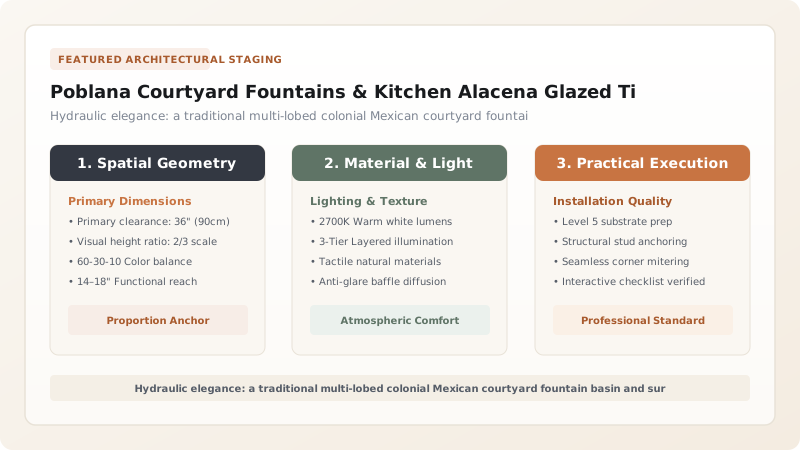
Courtyard fountains and kitchen alacenas represent the most intimate domestic architectural applications of Talavera Poblana. In colonial Mexican courtyards (patios), multi-lobed water fountain basins clad in frost-proof Talavera azulejos celebrate hydraulic engineering and cool desert air. In historic convent and palace kitchens (such as Puebla's Santa Rosa), vaulted cooking hearths, tiled charcoal stoves (fogones), and recessed cupboard niches (alacenas) combine fireproof ceramic hygiene with breathtaking Baroque grandeur.
At a Glance: Key Takeaways
- Architectural Contexts: Colonial courtyards (patios), convent kitchens (cocinas de convento), dining alacenas
- Hydraulic Component: Multi-lobed fountain basins, water spouts (mascarones), curved coping tiles
- Thermal Component: Charcoal-fired masonry stove benches (fogones / braseros) and cooking hoods
- Substrate Mortar: Hydraulic slaked lime, volcanic pozzolan (tepetate), and marble dust
- Poblano Landmark: Cocina del Ex-Convento de Santa Rosa, Puebla (birthplace of Mole Poblano)
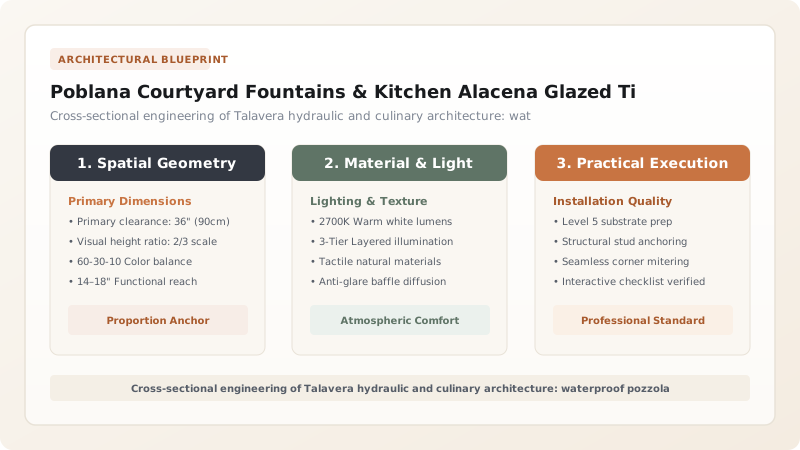
The Hydraulic Sanctuary of the Mexican Colonial Patio
In the urban architecture of New Spain, domestic life was organized around the introverted tranquility of the patio central (central courtyard). Enclosed by high volcanic stone walls and shaded by arcaded porticoes (corredores), the courtyard was the environmental and sensory core of the family residence. At the exact geometric center of this paved stone oasis sat the fuente—a monumental water fountain clad in gleaming Talavera Poblana tiles.
These fountains served vital practical, civic, and microclimatic functions. Connected to city aqueducts through underground lead and clay pipes, the fountain provided fresh drinking and wash water for the household. Architecturally, basins were designed with lobed, scalloped, or star-shaped Baroque contours that multiplied the linear perimeter of the water's edge. As water splashed from central ceramic pedestals or carved stone lion masks (mascarones) onto the glazed azulejos, the continuous evaporative cooling dramatically lowered ambient courtyard temperatures, transforming dry, hot Mexican afternoons into a tranquil, mist-cooled sanctuary.
Hydraulic Engineering and Waterproof Lime Mortars
Installing ceramic tiles in an environment subject to continuous water submersion and hydrostatic pressure requires rigorous hydraulic engineering. Historic Puebla builders understood that standard lime mortars would quickly dissolve or soften under water. To build fountain basins, they developed a specialized hydraulic mortar system.
The structural basin was erected from dense red clay brick. The interior was rendered with a multi-layered waterproof tanking coat composed of aged high-calcium slaked lime combined with washed river sand and pulverized tepetate—a natural volcanic pozzolan rich in reactive silica and alumina. When mixed with lime, pozzolan forms insoluble calcium silicate hydrates that cure and harden even underwater. Tiles were soaked in water for several hours prior to installation to prevent them from sapping moisture from the mortar bed, and set with 100% full-bed coverage (doble encolado) to ensure that no hollow air pockets remained behind the tiles where trapped water could cause spalling or loosen the bond.
The Convent Kitchen: Grandeur of the Tiled Fogón
While courtyard fountains celebrated water, the grand kitchens of Puebla celebrated fire and gastronomy through Talavera tile. In the seventeenth and eighteenth centuries, the wealthy religious convents of Puebla—most famously Santa Rosa, Santa Mónica, and Santa Inés—developed an extraordinary culinary and architectural culture, inventing legendary Mexican dishes like Mole Poblano and Chiles en Nogada.
To support this monumental culinary production, convent kitchens were engineered as vast, vaulted halls dominated by the fogón. The fogón was a massive stepped masonry cooking counter constructed from brick, housing dozens of individual circular hollows (hornillas) fueled by glowing oak charcoal. Rather than leaving the brick exposed, the entire surface of the stove bench, the surrounding walls, the vaulted ceiling, and the enormous conical smoke hoods were sheathed completely in glazed Talavera azulejos. Impervious to boiling oil, red chili splatters, and heavy smoke, the glazed tiles could be washed down effortlessly with water at the end of each day, marrying aristocratic Baroque luxury with absolute clinical hygiene.
The Alacena: Recessed Ceramic Wall Pantries
Complementing the tiled cooking hearths was the alacena. Carved deeply into the thick perimeter adobe and brick walls of dining rooms and kitchens, these built-in cupboard niches were framed by ornate sculpted Talavera tile architraves featuring undulating pilasters, shell pediments, and foliate borders.
The interior of the alacena was lined with decorative azulejos depicting culinary still-lifes: hanging game birds, baskets of seasonal fruits, clay chocolate pitchers (chocolateras), and geometric stars. Deep within the thick, thermal-mass masonry walls, these tiled alcoves remained naturally cool and dry, providing pest-proof storage for delicate spices, medicinal herbs, silver chocolate service sets, and precious Chinese export porcelain. Combining practical food preservation with spectacular visual display, the Talavera alacena remains one of colonial Mexican interior design's most enchanting and enduring architectural features.
Talavera Tile Specifications by Domestic Architectural Zone & Environmental Exposure
Use this reference table to calculate exact physical dimensions, ratios, and specifications before purchasing:
| Architectural Zone | Primary Environmental Stress | Recommended Tile Body Thickness | Mortar / Bedding Specification | Maintenance Protocol |
|---|---|---|---|---|
| Submerged Fountain Basin | Continuous hydrostatic pressure & water saturation | 14 mm to 16 mm dense bisque | Hydraulic lime + volcanic pozzolan (zero voids) | Biannual scrub with soft horsehair brush; drain in freeze |
| Fountain Basin Coping (Rim) | Splashing water, sunlight & mechanical sitting loads | 16 mm to 20 mm curved boleado | High-strength lime-sand bed with stainless tie anchors | Check grout joints annually; apply breathable siloxane seal |
| Kitchen Stove Face (Fogón) | Radiant heat from charcoal & boiling oil splatter | 12 mm to 14 mm standard tile | Heat-resistant lime-chamotte mortar | Wipe down with warm water and neutral degreasing soap |
| Pantry Cupboard (Alacena) | Atmospheric humidity, shelving abrasion & food contact | 10 mm to 12 mm fine glaze tile | Standard breathable lime-sand mortar | Periodic dry dusting and damp cloth wipe down |
Practical Constraints
Every successful decoration project must account for physical and environmental constraints:
Algae and Mineral Scaling in Submerged Fountain Environments
High mineral content in Mexican well water precipitates calcium carbonate scale over vibrant cobalt glazes, while sunlight breeds green algae. Mitigation: Install submerged water-circulation pumps with ultraviolet clarifiers and execute gentle monthly cleanings with soft nylon brushes.
Thermal Shock on Historic Kitchen Stove Benches (Fogones)
Rapid heating from red-hot charcoal pots adjacent to cold earthenware tiles induces thermal stress fractures across tile planes. Mitigation: Isolate the iron charcoal pots (hornillas) from the decorative tiled apron using a 25 mm refractory silicate insulation collar.
Execution Blueprint & Craftsmanship Sequence
Execute this professional sequence to achieve flawless results without backtracking:
Hydraulic Basin Masonry Framing
Construct the fountain basin walls from solid red clay brick bedded in hydraulic lime mortar, laying out symmetrical lobed curves following colonial Baroque geometries.
Waterproof Pozzolanic Rendering
Render the interior basin with a 15 mm scratch and float coat composed of slaked lime, washed silica sand, and finely ground volcanic ash (tepetate) to create a waterproof tanking shell.
Fountain Coping and Overflow Engineering
Install brass water feed lines, bronze gargoyle spouts (mascarones), and bottom drainage valves. Scribe and dry-fit curved bullnose Talavera coping tiles along the basin rim.
Full-Bed Submerged Tile Setting
Soak glazed tiles in water. Apply rich hydraulic lime mortar to both the wall and tile back (back-buttering), tapping each tile home with a rubber mallet to achieve 100% solid bedding.
Kitchen Fogón Core Construction
In the kitchen, build the stepped brick masonry stove bench (fogón). Cast recessed circular hollows for iron charcoal braziers, venting each through small flue channels into the main chimney hood.
Alacena Recessed Niche Framing
Rout or construct arched wall cupboards (alacenas) set deeply into thick colonial masonry walls, profiling internal shelves with curved timber ledgers or cantilevered bricks.
Kitchen Tile Application and Grouting
Sheathe the entire fogón bench, backsplash, and alacena interiors with hand-painted azulejos, filling joints with a dense grout of hydraulic lime and marble dust.
Curing, Sealing, and Water Commissioning
Allow mortar assemblies to cure for 28 days. Fill the fountain basin slowly with fresh water, verifying watertightness and admiring the dancing reflections of cobalt tiles beneath the water.
Common Mistakes & Countermeasures
Avoid these costly errors that compromise aesthetics, ergonomics, and budget:
Leaving hollow air voids behind tiles in submerged fountain basins
Tiling active charcoal fireboxes with decorative Talavera tiles
Using acidic vinegar or lemon juice to descale hard water deposits on fountain tiles
Project Execution Checklist
Track your physical progress. Checkboxes persist automatically on this device:
Frequently Asked Questions
Why is the kitchen of the Convent of Santa Rosa in Puebla considered an architectural wonder?
The kitchen of the Ex-Convento de Santa Rosa (where legend recounts the creation of Mole Poblano by Dominican nuns) is completely sheathed from floor to vaulted ceiling in hundreds of square meters of handcrafted Talavera tiles. The multi-tiered brick stove bench (fogón), sweeping conical exhaust chimneys, and storage alacenas form a breathtaking, gleaming cathedral of glazed ceramic hygiene and Baroque beauty.
How do Talavera courtyard fountains cool the microclimate of a Mexican home?
In colonial Mexican architecture, the central courtyard (patio) is surrounded by high stone walls. The splashing water of the Talavera fountain continuously wets the glazed ceramic basin and copings. As desert winds blow across the courtyard, the evaporation of this water absorbs thermal heat, dropping ambient patio temperatures by 5 to 8 degrees Celsius and circulating cool air into surrounding rooms.
What is an 'alacena' in a traditional Mexican kitchen?
An alacena is a built-in recessed cupboard or wall niche carved directly into the thick masonry walls of a colonial residence. Framed with decorative Talavera tile architraves and lined inside with glazed azulejos, alacenas were used to store precious copper cookware, clay cazuelas, spices, and fine ceramic tableware, keeping food cool and protected from pests.
Can antique Talavera tiles withstand the boiling grease and smoke of a working kitchen?
Yes. Fired at 1,050°C into an impervious glass, Talavera glazes are completely non-porous, fireproof, and grease-resistant. Splatters of cooking fat, chili paste, and soot can be wiped away effortlessly with a damp soapy cloth, which is precisely why wealthy colonial households and religious convents sheathed entire cooking halls in azulejos.