Sterling silver and pewter architectural mirror framing is the synthesis of master carpentry and hammered metalwork in Mexican colonial decor. Artisans construct rigid hardwood-splined pine carcasses featuring arched crestings (coronas), wrap hand-chased repujado metal sheets around the timber profiles, and secure them with decorative silver tacks, framing heavy beveled mirrors.
At a Glance: Key Takeaways
- Frame Style: Mexican Colonial Baroque (Espejo Colonial con Corona y Orejas)
- Wooden Carcass: Kiln-dried Michoacán white pine (Pinus pseudostrobus) or cedar
- Metal Cladding: Chased sterling silver (.925) or 22-gauge architectural pewter sheets
- Joinery Method: Mitered corners reinforced with internal hardwood splines & blind screws
- Glass Specification: 6 mm heavy plate mirror glass with 25 mm hand-ground bevel edge
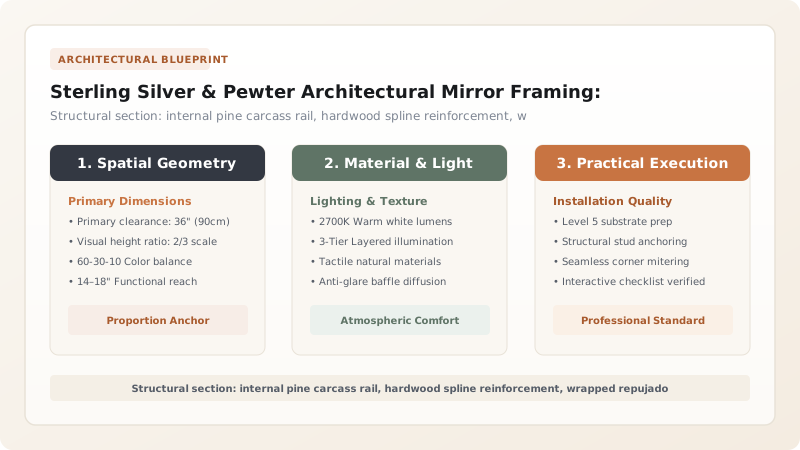
Architectural Mirror Carcass Design in Native Pine and Cedar
In traditional Mexican interior architecture, an arched colonial mirror is not merely an accessory; it is a monumental structural portal that anchors the entire room. To support the considerable weight of heavy plate glass and hand-chased metal cladding, craftsmen begin with a robust timber foundation. The carcass must be built from dimensionally stable, kiln-dried native timbers—predominantly Michoacán white pine (Pinus pseudostrobus) or aromatic Spanish cedar (Cedrela odorata).
Master carpenters mill wide structural rails measuring 80 to 120 millimetres across. At the corners, 45-degree miter joints are cut with high precision and reinforced with internal hardwood splines or mortise-and-tenons glued with moisture-resistant resins. Around the inner perimeter, the artisan routs a deep 12-millimetre rabbet designed to cradle heavy 6-millimetre beveled glass. The timber is sanded, eased at all external edges, and coated with a protective sealer to prevent moisture exchange that could warp the frame over seasonal shifts.
Wrapping Chased Metal Sheets: Mitered Corners and Blind Tacking
Once the timber carcass is assembled, the metalworker steps in to execute the cladding. Sheets of .925 sterling silver or lead-free architectural pewter—chased with classical running borders of scrolling acanthus, spiral volutes, and floral rosettes—are custom-cut to match the width of the wooden rails, with an extra 20 millimetres of margin left along each side for wrapping.
The artisan positions the chased metal over the wooden face, using shaped wooden bending sticks and leather mallets to dress the malleable sheet smoothly around the front contour and over the timber edges. The metal is pulled tightly around the rear face and secured using blind tacking—driving flat-head brass or copper nails through the back edge where they remain invisible from the front. At the mitered corners, artisans neatly overlap the metal seams, finishing them with hand-chased square corner bosses (rosetas) that celebrate the structural joint while concealing raw edges.
Crown Pediments (Coronas), Scalloped Crestings, and Pierced Tin Filigree
The signature glory of the Mexican colonial mirror is its corona (crown pediment). Rising majestically above the upper horizontal rail, this sculptural cresting transforms a standard rectangular mirror into a theatrical Baroque altar. Carpenters shape the core of the corona from thick timber planks, cutting dramatic parabolic arches, volutes, and central pediment horns using bandsaws and hand rasps.
The metal cladding for the corona is hammered on the pitch bowl with supreme artistic freedom. High-relief repoussé shells (conchas), sunbursts, and heraldic medallions explode outward from the center. Along the undulating crest margins, artisans frequently integrate pierced tinplate or silver filigree (calado)—cutting delicate openwork lace patterns with jewelers' piercing saws. When illuminated from behind by candlelight or wall sconces, these openwork filigree crests cast enchanting filigree shadows across the surrounding plaster walls.
Soldered Corner Seams, Convex Glass Integration, and Wall Mounting Anchors
Resolving the mechanical transitions of complex mirror frames requires precision soldering and glazing. In silver frames, corner seams and applied three-dimensional rosettes are joined using silver brazing alloys with propane-oxygen torches. In pewter frames, smiths utilize low-temperature tin-bismuth solders applied with thermostatically controlled electric irons, using specialized zinc chloride fluxes to produce seamless, invisible joints that resemble solid cast metal.
Finally, the frame receives its glass and hanging hardware. Authentic colonial mirrors utilize thick beveled plate glass (5 to 6 millimetres) with a hand-ground 25-millimetre perimeter bevel that refracts light like a cut prism. The glass is bedded against felt cushions within the timber rabbet and secured by a solid timber backer board screwed into the rails. Heavy, hand-forged iron D-rings or French cleats are bolted directly into the hardwood frame carcass, ensuring that this monumental synthesis of carpentry and metallurgy hangs safely for generations.
Mexican Mirror Frame Components, Materials & Structural Roles
Use this reference table to calculate exact physical dimensions, ratios, and specifications before purchasing:
| Frame Component | Structural Material | Cladding Specification | Fabrication Technique | Architectural Function |
|---|---|---|---|---|
| Main Perimeter Rails | Kiln-dried Michoacán pine (80×25 mm) | Repujado chased silver/pewter bands | Mitered splined corners with wrapped flanges | Forms primary structural chassis carrying mirror weight |
| Arched Crown (Corona) | Solid sculpted pine or laminated cedar | High-relief repoussé cresting sheet | Bandsaw-profiled with relief chisel carving | Crest monumentalizes frame height and centers wall focus |
| Flanking Ears (Orejas) | Sculpted timber side scroll projections | Matching embossed foliate scroll covers | Doweled and glued into side frame rails | Flairs lateral visual weight into Spanish Baroque silhouette |
| Beveled Glass Reveal | 6 mm silvered plate glass with 25 mm bevel | Recessed behind metal-clad inner lip | Held by timber cleats in 12 mm rear rabbet | Reflects ambient room light with crystalline optical depth |
| Backing & Mounting | 9 mm marine plywood or cedar backer | Felt-lined with heavy forged iron D-rings | Countersunk steel screws into primary rails | Distributes 20+ kg hanging loads safely into wall studs |
Practical Constraints
Every successful decoration project must account for physical and environmental constraints:
High Structural Weight of Combined Timber, Glass, and Metal
Large architectural colonial mirrors can weigh 25 to 45 kilograms; improper mounting hardware will rip out of drywall or adobe walls. Mitigation: Install heavy-duty through-bolted iron hanging brackets and mandate anchoring directly into structural wall studs or masonry anchors.
Differential Thermal Expansion Between Metal and Timber
Sheet metal expands and contracts at a significantly higher rate than the underlying timber core, causing buckling in direct sunlight. Mitigation: Leave 1.5 mm expansion gaps at corner joints and avoid gluing the central face of the metal to the wood, allowing it to float.
Execution Blueprint & Craftsmanship Sequence
Execute this professional sequence to achieve flawless results without backtracking:
Milling the Timber Carcass Rails
Plane seasoned Michoacán pine boards to 80 mm width by 25 mm thickness. Rout a 12 mm deep by 15 mm wide rabbet along the rear inner edge to seat the beveled glass.
Cutting Miters and Inserting Splines
Miter frame corners at 45 degrees. Cut internal slots in the miter faces using a biscuit joiner or slot cutter, inserting dense oak or mahogany splines with waterproof wood glue.
Profiling the Arched Crown and Side Ears
Trace the Baroque arched corona and side scroll ears onto timber blanks. Cut shapes using a bandsaw, rasp smooth, and anchor to the upper frame rail using doweled joints.
Chasing the Decorative Repujado Border Sheets
Cut sheets of silver or pewter to match frame rail dimensions plus 20 mm wrapping allowance. Chase running acanthus friezes and floral medallions on the pitch bowl.
Wrapping Metal Sheets Around Frame Profiles
Position the chased metal sheets over the timber rails. Carefully dress the metal around the outer and inner edges using leather mallets and wooden bending blocks.
Securing with Hand-Forged Tacks and Corner Bosses
Fasten the metal along the rear edge using round-headed tacks. Solder or tack decorative embossed corner bosses (rosetas) over the miter joints to conceal seams.
Fitting the Crown Finial and Pierced Filigree
Mount the chased metal crest over the wooden corona. Add pierced tinplate or silver filigree borders along the crest perimeter, tacking them flush into place.
Installing Glass, Backer Board, and Hanging Hardware
Drop the 6 mm beveled glass mirror into the rear rabbet. Back with felt and a heavy timber panel screwed into the rails. Mount forged iron D-rings for wall hanging.
Common Mistakes & Countermeasures
Avoid these costly errors that compromise aesthetics, ergonomics, and budget:
Cladding sheet metal over green, unseasoned lumber carcasses
Fastening sheet metal exclusively with modern contact adhesive or glue
Installing lightweight 2 mm window glass in large colonial mirror frames
Project Execution Checklist
Track your physical progress. Checkboxes persist automatically on this device:
Frequently Asked Questions
Why do Mexican colonial mirror frames feature "coronas" and "orejas"?
The arched crown (corona) and side ears (orejas) are signature elements of Spanish Colonial Baroque architecture, mirroring the ornamental crestings found above cathedral portals and palace doorways. These decorative silhouettes add vertical grandeur, break boxy room geometry, and transform a functional mirror into a monumental architectural statement.
How are corner miter joints concealed on chased metal frames?
Because wrapping complex three-dimensional relief around a 45-degree miter often leaves visible seams, Mexican craftsmen fabricate decorative chased corner rosettes (rosetas) or scalloped corner bosses. These embossed metal squares are tacked or soldered directly over the miter joint, concealing the seam while adding rich visual hierarchy.
What type of wood is best for the internal carcass of a metal-clad mirror?
Kiln-dried Michoacán white pine (pino blanco) and Spanish cedar (cedro) are the preferred timbers. They are lightweight yet dimensionally stable, hold screws and tacks firmly without splitting, and have low resin content that will not react chemically with silver or pewter cladding.
How do you clean and maintain a hammered pewter or silver mirror frame?
Dust regularly with a soft horsehair brush or microfiber cloth. Never use harsh chemical metal polishes (such as Brasso) on antiqued repujado frames, as chemicals will strip the dark sulfide patina out of the deep chasing recesses. If the high relief needs brightening, lightly buff with a dry cotton cloth treated with a touch of pure carnauba wax.