
Dancheong Bovine Hide Glue Binder and Pine Timber Preparation form the vital structural bridge between living wood and mineral color. The longevity of Dancheong depends on preparing seasoned Korean red pine timbers—scraping loose lignin, leaching volatile resins, and filling checks with pine-flour putty. The binder is ahgyo (아교), a refined bovine collagen gelatin glue boiled from cattle hides. When blended with mineral pigments, ahgyo provides an elastic, breathable protein lattice that flexes with the wood's seasonal expansion without blistering or peeling.
At a Glance: Key Takeaways
- Bovine Collagen Glue (Ahgyo): Purified hide glue delivering high tensile adhesion and natural wood grain breathing.
- Korean Red Pine (Geumgangsong): High-density, slow-grown pine timber seasoned to < 15% equilibrium moisture content.
- Resin Neutralization: Leaching resinous knots with alcohol or slaked lime wash to prevent bleed-through.
- Chobang Initial Sizing: Penetrating hide-glue wash regulating timber porosity and binding loose fibers.
- Perilla Oil Finishing (Deul-Gireum): Natural cold-pressed oil sealing the cured Dancheong against driving rains.
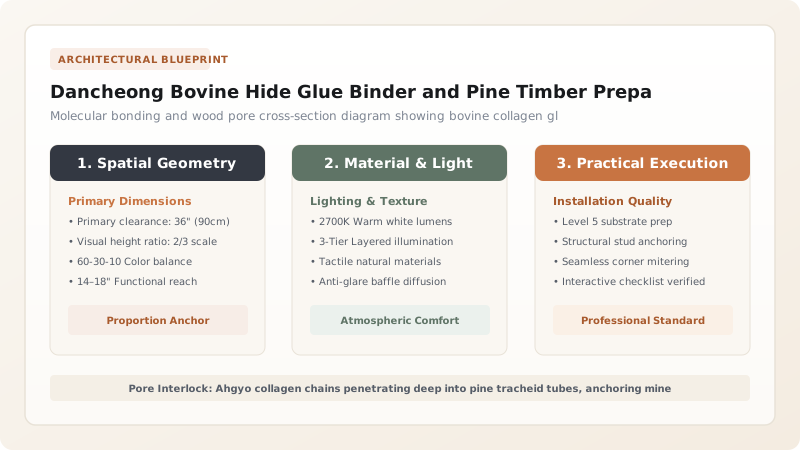
1. Chemistry and Extraction of Bovine Hide Glue (Ahgyo)
In traditional Dancheong, synthetic polymers and plant gums are strictly avoided. The universal binder is ahgyo (아교), a natural protein adhesive derived from bovine connective tissue and hides.
Fresh cattle skins are de-haired, washed in running mountain streams, and simmered gently in water for 12 to 16 hours at 70°C. The extracted collagen breaks down into long-chain gelatin proteins. When dried into transparent amber sheets or sticks, ahgyo possesses extraordinary tensile strength (over 30 MPa). When reconstituted with warm water, it creates an elastic protein film that expands and contracts in perfect harmony with the underlying timber.
2. Preparing Seasoned Korean Red Pine (Geumgangsong)
Historic Korean monumental architecture utilizes Geumgang-song (Korean red pine). Sourced from the mountainous eastern coast of Gangwon province, this timber is dense and saturated with natural terpene resins.
If unseasoned pine is painted, expanding sap will rupture the paint film within weeks. Timbers must air-season under shaded eaves for 3 to 5 years until core moisture drops below 15%. Knots and pitch pockets are treated with hot irons to melt and extract excess rosin, then sealed with a double wash of concentrated shellac or slaked lime putty.
3. The Chobang Sizing and Perilla Oil Curing System
Before applying colored Dancheong, the bare pine undergoes chobang (sizing). A dilute 3% to 5% solution of warm hide glue is flooded across the timber.
Capillary action draws the liquid collagen deep into the wood tracheid tubes, hardening loose surface fibers and preventing the wood from sucking the binder out of subsequent paint layers. After all mineral paint layers have dried and cured for 30 days, exterior bracket sets are lightly buffed with raw cold-pressed perilla oil (deul-gireum). The perilla oil polymerizes into a natural water-repellent linoxyn glaze, shedding torrential monsoon rains without trapping moisture.
Dancheong Bovine Glue Formulation & Application Ratios
Use this reference table to calculate exact physical dimensions, ratios, and specifications before purchasing:
| Process Stage | Glue Concentration (% w/v) | Working Temp (°C) | Application Method | Functional Role |
|---|---|---|---|---|
| Chobang Wood Sizing | 3% - 5% Ahgyo in Water | 50°C - 55°C | Broad horsehair wash brush | Penetrating pore seal & grain consolidation |
| Check & Crack Putty | 12% - 15% Heavy Ahgyo | 45°C - 50°C | Kneaded with fine pine sawdust | Filling checks & knot voids flush |
| Mineral Paint Binder | 6% - 8% Balanced Ahgyo | 50°C - 55°C | Hand-kneaded with dry mineral pigment | Pigment cohesion & substrate adhesion |
| Gold Size Adhesive | 15% Dense Ahgyo + Garlic | 40°C - 45°C | Fine script brush | High-tack sizing for 24k gold leaf |
Biological & Environmental Constraints
Every successful decoration project must account for physical and environmental constraints:
Bacterial Putrefaction of Glue
Liquid hide glue spoils and rots within 48 hours at room temperature; batches must be mixed fresh daily or preserved with natural thymol.
Winter Gelation
In sub-zero temperatures, liquid glue freezes or gels into jelly before wetting the wood; work areas must be heated to at least 15°C.
Protocol for Preparing Pine Timbers and Applying Dancheong Primer
Execute this professional sequence to achieve flawless results without backtracking:
Timber Moisture & Crack Inspection
Measure timber core moisture using electrical resistance pins; verify < 15% EMC; blow away loose dust with compressed air.
Resin Pitch Pocket Scorching
Heat resinous pine knots with copper iron; scrape weeping rosin away; wash area with ethanol to neutralize grease.
Check Filling with Pine Putty
Blend 15% warm hide glue with fine 100-mesh pine wood flour; pack deep drying checks with putty knife; sand flush after 48 hours.
Chobang Hide-Glue Sizing Flood
Trowel or brush warm 5% ahgyo sizing across entire timber surface; allow 24 hours for deep capillary penetration and cure.
White Clay (Goehwaseok) Ground Skim
Apply thin skim of pulverized white clay and 6% hide glue; rub smooth with damp linen rag to provide silky, non-porous ground.
Perilla Oil Monsoon Protection
After final Dancheong painting cures for 30 days, wipe exterior timbers with cold-pressed perilla oil on linen cloth; buff dry.
Common Mistakes & Countermeasures
Avoid these costly errors that compromise aesthetics, ergonomics, and budget:
Applying thick, concentrated hide glue (> 12%) as the initial sizing coat
Applying boiled linseed oil containing heavy metallic driers over cured Dancheong
Project Execution Checklist
Track your physical progress. Checkboxes persist automatically on this device:
Frequently Asked Questions
Why is bovine hide glue better than synthetic PVA wood glue for Dancheong?
Ahgyo bovine hide glue has zero plasticizers, cures via reversible physical hydrogen bonding rather than irreversible chemical cross-linking, allows timber to breathe water vapor freely, and can be completely reversed and reactivated with warm water during historic restorations centuries later.
What is the purpose of adding crushed garlic juice to gold leaf size?
Traditional Korean Dancheong masters crushed fresh garlic cloves into the warm hide glue when preparing size for gold leaf. The natural sugars and sulfur compounds in garlic juice act as a natural humectant, extending the tacky 'open window' of the adhesive so gold leaf can be laid smoothly for hours.


