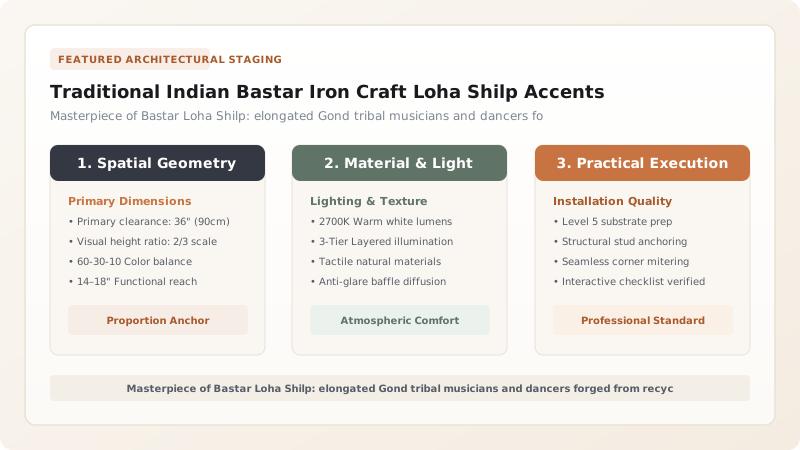
Bastar Loha Shilp (traditional wrought iron craft) is an ancient indigenous metalsmithing art practiced by the Maria, Gond, and Ghadwa tribal blacksmiths (Lohars) of the forested Bastar district in Chhattisgarh, India. Characterized by transforming recycled scrap iron and discarded agricultural implements into slender, elongated figurative sculptures, ritual multi-tiered oil lamps (diyas), and totemic animal deities entirely by hand using open charcoal hearths (bhati), hand anvils (nihai), and hammers without foundry casting or electric welding, each piece is tempered in boiling mustard oil to achieve a lustrous, rust-resistant carbon-black patina.
At a Glance: Key Takeaways
- Indigenous Homeland: Bastar, Kondagaon, and Jagdalpur regions of Chhattisgarh, India
- Artisan Communities: Indigenous Lohar, Gond, and Maria tribal metalsmiths
- Raw Materials: Recycled wrought scrap iron, railway spikes, and discarded ploughshares
- Traditional Forge: Open earth pit hearth (bhati) fueled by dense Sal (Shorea robusta) charcoal
- Protective Finish: Quenched organic mustard oil (sarson ka tel) carbon-black temper
In-Depth Guides in this Directory
Explore specialized subtopic blueprints, technical dimensions, and execution checklists:
Recycled Scrap Wrought Iron Charcoal Forge Hammering: Bhati Hearth Control & Anvil Shaping Techniques
Master recycled scrap wrought iron charcoal forge hammering in Bastar Loha Shilp. Learn bhati hearth thermodynamics, hand bellows control, and anvil drawing.
Slender Tribal Figurine and Lamp Diya Bracket Sculpting: Elongated Human Forms & Ritual Motifs in Bastar Iron
Explore slender tribal figurine and lamp diya bracket sculpting in Bastar Loha Shilp. Learn Maria Gond human forms, ritual oil lamps, and hot-chisel sculpting.
Natural Mustard Oil Tempering and Corrosion Proofing: Traditional Quenching & Lustrous Black Patination
Master natural mustard oil tempering and corrosion proofing in Bastar Loha Shilp. Learn thermal quenching, carbon-black patination, and rustic rust prevention.
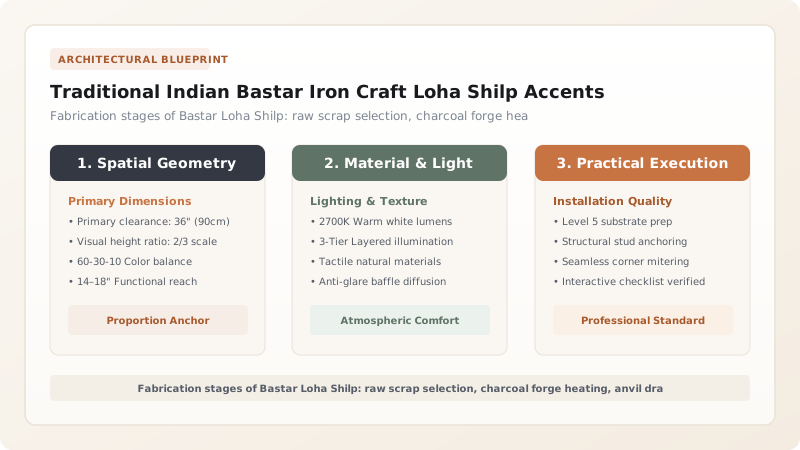
Forest Metallurgy: The Indigenous Heritage of Bastar Blacksmiths
In the dense, sal-forested tribal heartland of Bastar in southern Chhattisgarh, the relationship between fire, iron, and the human spirit has thrived unbroken for millennia. Practiced primarily by the indigenous Lohar blacksmith community—intimately woven into the social fabric of the Gond, Maria, and Muria tribal clans—the tradition of Loha Shilp (wrought iron craft) represents one of the world's most evocative vernacular metallurgical arts. What began as the essential village craft of manufacturing iron ploughshares, hunting axes (tangia), and animal traps evolved into a transcendent sculptural language celebrated worldwide for its pure, expressive modernism.
Unlike industrial foundry casting that pours molten liquid into rigid sand molds, Bastar iron craft is entirely manual, reductive, and forged. Every sculpture begins as a solid bar or scrap fragment of iron, shaped exclusively through the direct thermal application of charcoal fire, anvil resistance, and rhythmic hammer blows. Deeply embedded in tribal animist cosmology, iron is revered as an auspicious, protective metal capable of repelling malevolent forest spirits and safeguarding the household hearth.
Material Resourcefulness: From Scrap Iron to Sacred Art
A defining hallmark of Bastar Loha Shilp is its profound ecological circularity. In historical eras, indigenous iron-smelters (the Agaria clan) extracted iron ore directly from the mineral-rich laterite hills of Bailadila using clay bloomery furnaces. In contemporary practice, Bastar blacksmiths have transformed recycling into a high art, sourcing discarded industrial iron, railway tie offcuts, worn-out agricultural ploughshares, and scrap rods from regional market towns.
This low-carbon wrought iron and mild steel possesses high ductility and tensile toughness, essential for enduring intense thermal cycling and radical drawing out without fracturing. By rescuing discarded industrial waste and transmuting it into graceful votive deities, majestic ritual lamps, and spirited wildlife sculptures, the Bastar blacksmith exemplifies a sustainable ethos that honors the material dignity of metal.
The Ritual Fire: Anatomy of the Bhati Hearth
The technical crucible of Bastar iron craft is the bhati—a humble, ground-level open hearth excavated directly into the earthen floor of the artisan's open-air workshop. Lined with refractory clay tempered with cow dung and rice husk ash, the hearth is fueled exclusively by dense, slow-burning charcoal harvested from the fallen timber of the native Sal tree (Shorea robusta). Sal charcoal burns with extraordinary heat, low smoke, and minimal sulfur, generating the clean 900°C to 1100°C temperatures required to bring tough iron to a luminous plastic state.
Air blast is supplied manually by traditional foot-operated or hand-pumped twin bellows (dhukna), crafted from supple goatskin or cowhide. Sitting cross-legged on the earthen ground, the blacksmith coordinates the rhythmic bellows pumping with long-handled iron tongs (sandasi), manipulating the workpiece within the white-hot charcoal bed with effortless, instinctive precision.
Aesthetic Soul: Slender Silhouettes and Global Modernism
The aesthetic power of Bastar Loha Shilp lies in its radical economy of form. Rather than attempting anatomical realism or heavy classical modeling, the tribal smith distills the human and animal essence into slender, elongated lines, tubular limbs, and dynamic kinetic postures. A tribal Maria drummer is rendered as a sweeping curve of solid iron, a dholak drum slung across lithe shoulders, and a proudly cocked head adorned with stylized bison horns; a forest deer is captured through a tenderly arched neck and delicate, fluted antlers.
This breathtaking visual language—strikingly reminiscent of the twentieth-century modernist sculptures of Alberto Giacometti and Constantin Brâncuși—arose spontaneously from indigenous tribal intuition and manual tool constraints. Finished in a rich, natural carbon-black patina derived from mustard oil quenching, Bastar Loha Shilp brings an arresting organic authenticity, tactile warmth, and timeless cultural soul into contemporary architectural interiors.
Bastar Loha Shilp Artifact Typology & Ritual Significance
Use this reference table to calculate exact physical dimensions, ratios, and specifications before purchasing:
| Artifact Typology | Traditional Form | Fabrication Technique | Tribal Context | Contemporary Interior Role |
|---|---|---|---|---|
| Diyas & Deepaks (Ritual Lamps) | Multi-tiered hanging trees and bird brackets | Dished sheet bowls hot-riveted to slender trunks | Temple offerings to Danteshwari Mata; marriage ceremonies | Architectural entrance lighting and dining room focal accents |
| Tribal Musicians & Dancers | Elongated Maria drummers (dholak) and horn blowers | Drawn solid round bar with twisted extremities | Dussera festival processions and agrarian fertility dances | Minimalist sculptural centerpieces and console table figures |
| Totemic Animal Guardians | Slender deer, horned bison, horses, and scorpions | Solid forged torso with split-chiseled legs and ears | Apotropaic forest deities guarding home entrances | Equestrian desk accents and modern shelf vignettes |
| Architectural Wall Panels | Interlocking silhouettes of tribal life and trees of life | Hot-chiseled flat plate with hammered rivets | Depicting forest foraging, community hunting, and village shrines | Rustic feature wall cladding and spatial room dividers |
Practical Constraints
Every successful decoration project must account for physical and environmental constraints:
High Atmospheric Humidity and Monsoon Rusting
Unsealed wrought iron oxidizes rapidly in humid subtropical climates, forming unsightly orange ferric rust. Mitigation: Perform thorough initial mustard oil hot-tempering and maintain periodically with rubbed beeswax or boiled linseed oil.
Diminishing Forest Sal Charcoal Resources
Ecological protections restrict access to traditional Shorea robusta hardwood charcoal in Bastar reserves. Mitigation: Adopt certified sustainable bamboo charcoal briquettes that achieve comparable clean caloric forge temperatures.
Execution Blueprint & Craftsmanship Sequence
Execute this professional sequence to achieve flawless results without backtracking:
Scrap Iron Sorting and Cleansing
Sort recycled iron scrap, selecting ductile round rods, flat strips, and vintage ploughshares, cleaning away loose scale with wire brushes.
Charcoal Forge Firing and Bellows Operation
Kindle hardwood charcoal in the sunken clay hearth, pumping twin cowhide or goatskin foot bellows (dhukna) to achieve a bright orange forging heat (950°C).
Drawing Out the Slender Torso and Limbs
Grip the glowing iron bar with hand-forged tongs (sandasi), drawing it out along the anvil horn with rhythmic hammer blows to produce the iconic elongated tribal proportions.
Hot-Chiseling and Slitting Extremities
Split the terminal ends of the heated bar using a sharp hot-set chisel, bending and tapering the divided sections to form arms, legs, and musical instruments.
Shaping Expressive Headresses and Features
Flatten the upper rod into a stylized oval face, incising facial features, tribal earrings, and bison-horn headdresses with custom hand punches.
Cold and Hot Rivet Assembly
Punch matching holes through component limbs and torso, inserting hot iron wire pins and peening the heads flat on both sides to achieve seamless mechanical joints.
Thermal Mustard Oil Quenching and Patination
Reheat the entire finished sculpture in the forge to a dull red glow (approximately 600°C), then immediately plunge it into a trough of pure mustard oil or brush oil vigorously over the surface.
Cooling, Wiping, and Beeswax Buffing
Allow the polymerized oil layer to smoke and bake onto the iron skin, wiping away excess residue with coarse jute rags and buffing with natural beeswax.
Common Mistakes & Countermeasures
Avoid these costly errors that compromise aesthetics, ergonomics, and budget:
Using modern electric arc welding or MIG beads to join components
Applying modern synthetic black spray paint or polyurethane lacquer
Employing high-carbon tool steel or cast iron scrap
Project Execution Checklist
Track your physical progress. Checkboxes persist automatically on this device:
Frequently Asked Questions
How did Bastar iron craft originate among forest tribes?
Bastar iron craft (Loha Shilp) originated out of deep utilitarian and spiritual necessity. Historically, the indigenous Lohar community smelted iron from local hematite and laterite ores to forge sickles, axe heads, and arrowheads for hunting and agriculture. Over centuries, they expanded into ritual art, crafting votive iron offerings, lamps, and deity figurines for clan temples to seek the protection of earth spirits (Budha Deo) and forest deities.
Why does Bastar iron sculpture have such distinctively slender, elongated forms?
The iconic elongated silhouette is rooted in both material efficiency and tribal aesthetics. In ancient times, smelted iron was a scarce and precious commodity; blacksmiths conserved metal by beating it out as thin and long as structurally possible. Aesthetically, the elongated, tubular limbs capture the lithe, graceful physical grace of tribal dancers and forest hunters with striking modernist minimalism.
How can one distinguish authentic hand-hammered Bastar iron from factory imitations?
Authentic Bastar ironwork exhibits visible hammer facets, subtle organic asymmetry, hand-peened rivet heads, and wrapped collar joints rather than machine welds. Factory imitations often reveal smooth, uniform machine-bent rods, electric MIG weld puddles, and a uniform chemical powder-coat or spray paint rather than the rich, hand-rubbed mustard oil carbon patina.
How should Bastar iron pieces be maintained in contemporary homes?
Bastar iron requires minimal maintenance. Keep the sculpture away from direct rain or pooling water. Dust with a soft, dry natural brush. Once or twice a year, apply a tiny drop of pure mustard oil or clear paste beeswax onto a cotton cloth and rub the surface lightly; this maintains the deep charcoal-black luster and ensures lifelong rust resistance.