
Select Schluter metal tile profiles by choosing SCHIENE L-angle profiles for flush equal-height transitions, or RENO-U sloped ramp profiles when transitioning tile down to lower carpet. Match the profile thickness (e.g. 3/8" / 10mm) to your exact tile thickness.
At a Glance: Key Takeaways
- SCHIENE L-Profile: Minimalist 1/8" top reveal; creates an ultra-clean metallic divider line.
- RENO Sloped Profile: Creates a smooth ADA-compliant ramp down to lower flooring surfaces.
- Sizing Rule: Choose profile height (e.g. 10mm / 3/8") matching exact tile thickness (never smaller).
- Trending Finishes: Brushed Antique Brass, Matte Black, Anodized Satin Nickel, Stainless Steel.
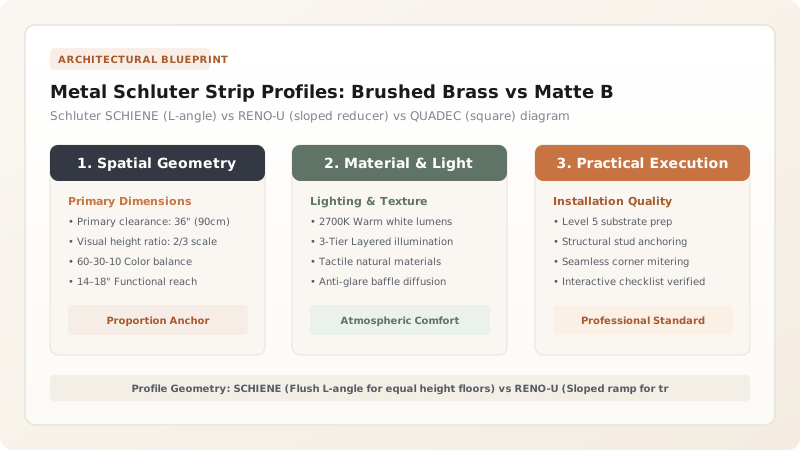
1. Profile Anatomy & Sizing Mathematics
In high-end tile installation, traditional bullnose ceramic trim pieces have been entirely replaced by extruded architectural metal profiles (Schluter Systems). These profiles feature an anchored, perforated base leg that locks permanently into the thin-set mortar under the tile.
To ensure the tile sits 100% flush with the metal top reveal, the profile height must equal the exact thickness of the tile. If your porcelain tile is 3/8-inch (10mm) thick, specify a 10mm (3/8") profile.

Schluter Tile Profile Selection Matrix
Use this reference table to calculate exact physical dimensions, ratios, and specifications before purchasing:
| Schluter Profile Model | Cross-Section Shape | Height Application | Best Transition Scenario |
|---|---|---|---|
| Schluter-SCHIENE | Straight L-Angle (1/8" lip) | Equal height (Flush) | Tile to Hardwood (Equal elevation) |
| Schluter-RENO-U | Sloped 25° Ramp Profile | Unequal height (Down to floor) | Tile transitioning down to lower vinyl/concrete |
| Schluter-RENO-TK | T-Shape with Under-lip | Tile down to carpet | Tile transitioning down to stretch carpet edge |
| Schluter-QUADEC | Square 90° Box Edge | Corner & border trim | Shower curbs, wall edges, niche box frames |
Metal Height Undersizing Constraints
Every successful decoration project must account for physical and environmental constraints:
Tile Sitting Higher Than Metal Profile Edge
Buying an 8mm metal trim for a 10mm tile leaves a sharp, exposed 2mm tile edge that chips immediately; always size the profile height equal to or 1mm larger than the tile thickness.
How to Install a Schluter Transition Trim
Execute this professional sequence to achieve flawless results without backtracking:
Check Tile Thickness
Measure tile thickness with calipers (e.g. 3/8" tile requires 10mm profile).
Trowel Mortar Along Border
Comb polymer thin-set mortar along the transition threshold line.
Press Perforated Leg into Mortar
Embed the metal profile into mortar until thin-set oozes through holes.
Butter Tile & Slide Flush
Slide tile tight against the metal vertical spacer, ensuring tile face is 100% flush with metal.
Common Mistakes & Countermeasures
Avoid these costly errors that compromise aesthetics, ergonomics, and budget:
Cutting Aluminum Profiles with an Abrasive Metal Grinder Wheel
Project Execution Checklist
Track your physical progress. Checkboxes persist automatically on this device:
Frequently Asked Questions
Can you use brushed brass Schluter profiles in wet bathroom floors?
Yes! Anodized aluminum and solid brass Schluter profiles are 100% rustproof and corrosion-resistant, making them ideal for curbless shower transitions and wet bathroom floors.


