
Maintain authentic Japanese Hinoki cypress tubs by leaving the wood completely untreated with chemical varnishes. Drain the tub after daily use, wipe the interior with a dry cotton cloth, ensure continuous bathroom ventilation, and clean weekly with fine sea salt or sodium bicarbonate using a natural soft tawashi palm fiber brush.
At a Glance: Key Takeaways
- Kiso Hinoki Timber (*Nagano Prefecture*): Sourced from slow-growing 200-year-old trees with dense 20+ growth rings per inch.
- Phytoncide & Hinokitiol Essential Oils: Natural biochemical compounds that kill bacteria, prevent black mold, and lower human heart rates.
- Solid Copper Tension Hoops: Hand-hammered copper bands expand and contract with timber during wet-dry soaking cycles.
- Zero Chemical Sealers: Polyurethane and oils ruin the wood; Hinoki relies 100% on natural water-tight expansion swelling.
- Natural Tawashi Brush & Salt Cleaning: Soft palm fiber brushes with sea salt lift oils without scratching the delicate softwood grain.
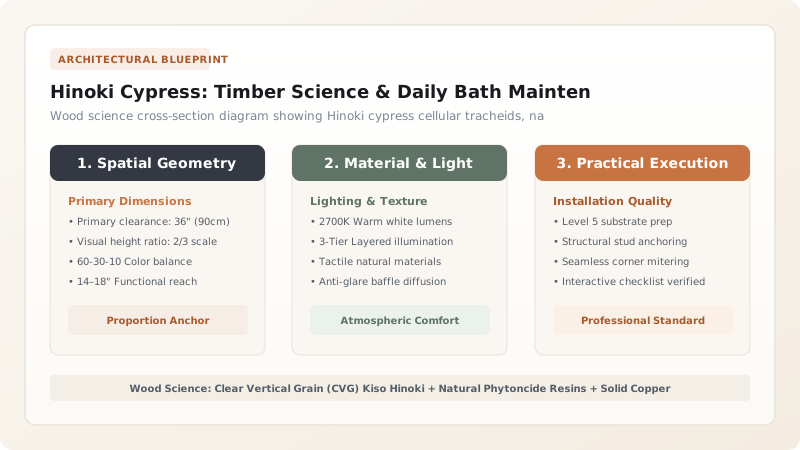
1. Wood Science: Phytoncides, Hinokitiol & Antimicrobial Resilience
For over a millennium, Japanese imperial palaces and Shinto shrines (such as the Ise Grand Shrine) have been constructed from Hinoki Cypress (*Chamaecyparis obtusa*).
The wood contains massive concentrations of Hinokitiol and Alpha-Pinene Essential Oils. When filled with hot water, these natural oils emit a calming forest scent while acting as a powerful natural biocide that suppresses black mold (*Aspergillus niger*) growth. Explore structural framing in floor joist reinforcement.

2. Daily Drainage Protocol & Mineral Salt Scrubbing Maintenance
To prevent water stains and keep the wood golden-blonde, bathers practice a strict daily routine.
Drain water after use, wipe dry with a cotton towel, and open ventilation. For weekly cleaning, rub with Natural Fine Sea Salt. Review filtration systems in recirculating inline heating and explore ofuro soaking tubs hub.
Hinoki vs Western Cedar for Bathtub Construction
Use this reference table to calculate exact physical dimensions, ratios, and specifications before purchasing:
| Timber Species | Origin & Growth Rate | Aromatherapy Profile | Splintering & Surface Softness |
|---|---|---|---|
| Japanese Kiso Hinoki (Optimal) | Central Japan (Ultra-slow growth) | High citrus-pine therapeutic aroma | Silky smooth / Zero splinters |
| Japanese Sawara Cypress | Japan (Faster growth / lighter) | Mild herbal scent | Smooth / High water resistance |
| Western Red Cedar (North America) | Pacific Northwest (Fast growth) | Strong pungent cedar aroma | Moderate / Tannin bleed in water |
| Teak Hardwood (Southeast Asia) | Tropical hardwood | Earthy / High natural oils | Heavy / Very dark amber color |
Chlorine Bleach Destruction Constraints
Every successful decoration project must account for physical and environmental constraints:
Household Bleach or Harsh Detergents Chemically Burning Raw Hinoki Wood
Chlorine bleach and acidic bathroom cleaners chemically strip the natural essential oils from Hinoki, turning the golden wood an ugly oxidized gray; strictly clean Hinoki with pure water, natural sea salt, or baking soda, never applying synthetic cleaners.
How to Maintain and Clean a Hinoki Japanese Ofuro Tub
Execute this professional sequence to achieve flawless results without backtracking:
Drain Water Completely After Each Bathing Session
Pull the bottom brass stopper immediately after soaking; never let water sit stagnant overnight.
Rinse Interior with Clean Warm Water
Use handheld shower wand to rinse all soap residues and shed skin cells off the timber surface.
Wipe Down with Dry Microfiber Cotton Towel
Wipe all standing water puddles off the floor, bench, and tub rim with a soft absorbent towel.
Run Exhaust Fan for 2 Hours to Dry Room
Activate bathroom ventilation fan to lower room relative humidity below 50% for complete timber drying.
Perform Weekly Sea Salt Scrub
Sprinkle fine sea salt over damp wood; scrub gently with a natural palm fiber tawashi brush along grain.
Cover with Wood Slatted Lid When Not in Use
Place Hinoki slatted lid over tub to prevent dust accumulation and maintain optimal internal humidity.
Common Mistakes & Countermeasures
Avoid these costly errors that compromise aesthetics, ergonomics, and budget:
Using Coarse Abrasive Scouring Pads on Soft Hinoki Wood
Project Execution Checklist
Track your physical progress. Checkboxes persist automatically on this device:
Frequently Asked Questions
What should I do if my Hinoki tub develops a resin crystal bubble on the surface?
Resin bubbles (*yani*) are pure natural essential oil crystals and are a hallmark of high-quality authentic Hinoki wood. Do not scrape with metal; simply wipe the crystal gently with rubbing alcohol on a cotton cloth to dissolve the resin flush.


