
Organize study room storage by pairing closed lower lateral filing cabinets for confidential paperwork with open upper bookshelves for active reference books, using uniform fabric bins and brass-labelled magazine holders.
At a Glance: Key Takeaways
- Closed lower cabinets hide tax files, contracts, and bulky binder storage.
- Uniform linen magazine holders line open shelves for a clean architectural look.
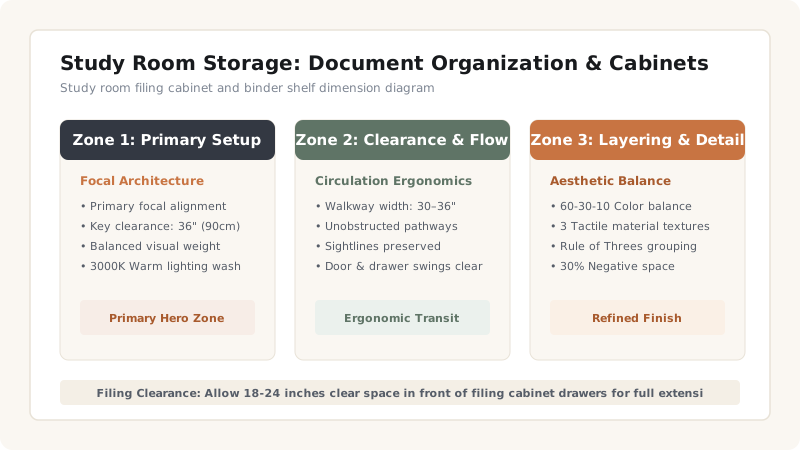
- Lateral filing drawers require 18-24 inches of clear extension space.
- Desk drawer inserts organize pens, staplers, and stationery supplies.
1. The Two-Zone Document Filing System
Paperwork accumulation is the leading cause of visual chaos in study rooms. Establishing a structured filing architecture keeps active projects accessible while archiving historical documents safely.
Study Room Storage Element Guide
Use this reference table to calculate exact physical dimensions, ratios, and specifications before purchasing:
| Storage Unit | Item Capacity | Optimal Location | Security / Visibility |
|---|---|---|---|
| Lateral Filing Cabinet | Hanging letter/legal folders | Under desk or lower wall | Locked / Hidden |
| Linen Magazine Holders | Active magazines & catalogs | Eye-level open shelves | Unlocked / Uniform |
| Modular Storage Baskets | Stationery, cables, supplies | Mid-shelf cubbies | Hidden / Textured |
| Stackable Desk Trays | Daily incoming/outgoing mail | Right desk corner | Visible / Immediate |
Study Storage Constraints
Every successful decoration project must account for physical and environmental constraints:
Heavy File Weight
Hanging paper files are extremely heavy; always anchor file cabinets into studs or use anti-tip wall brackets.
How to Organize Study Room Files
Execute this professional sequence to achieve flawless results without backtracking:
Purge Old Paperwork
Shred outdated utility bills and unnecessary documents.
Label Hanging Folders
Create color-coded hanging file folders (Financial, Medical, Home).
Insert Folders in Cabinet
Place hanging folders inside a lower locked lateral file drawer.
Line Shelf with Holders
Set 4 matching linen magazine holders on open shelf for active manuals.
Common Mistakes & Countermeasures
Avoid these costly errors that compromise aesthetics, ergonomics, and budget:
Storing Paper Loose on Open Shelves
Project Execution Checklist
Track your physical progress. Checkboxes persist automatically on this device:
Frequently Asked Questions
How deep are standard file cabinet drawers?
Standard letter file cabinets are 18 to 22 inches deep, requiring at least 20 inches of clear floor clearance in front for drawers to extend fully.


