
Engineer motorized pergola roofs to withstand 120 to 140 mph winds by using structural 6063-T6 extruded aluminum profiles with 1/8-inch wall thicknesses. Anchor posts to 18-inch diameter concrete piers with 5/8-inch stainless anchor bolts, and equip systems with smart anemometer sensors that automatically open louvers during severe storms to eliminate aerodynamic uplift.
At a Glance: Key Takeaways
- 120 to 140 MPH Wind Rating: Meets Miami-Dade County High-Velocity Hurricane Zone (HVHZ) standards.
- 6063-T6 Structural Aluminum: Aircraft-grade alloy provides immense tensile strength without rust or corrosion.
- Aerodynamic Auto-Open Mode: Rotating louvers to 90° allows hurricane gusts to pass through, reducing uplift by 85%.
- 18-Inch Concrete Pier Footings: Resists 2,000+ lbs of upward suction pull per post during extreme storms.
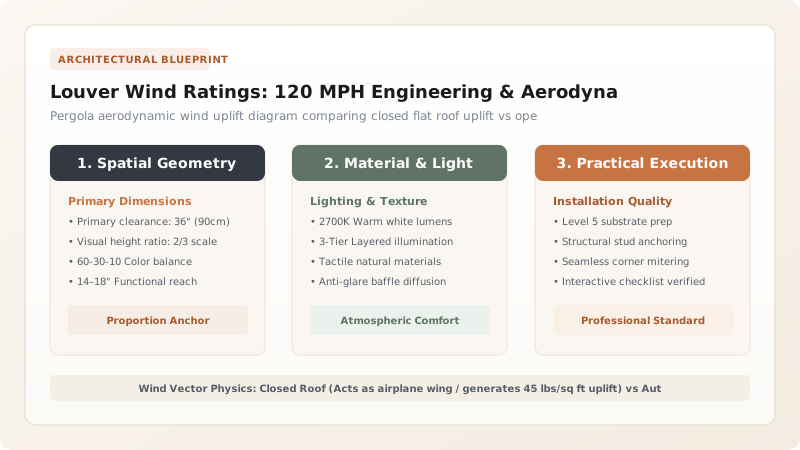
1. Aerodynamic Physics: Bernoulli Uplift & Surface Drag
When high-velocity storm winds blow horizontally across a closed flat pergola roof, air velocity above the roof accelerates while air beneath is trapped. According to Bernoulli's Principle, this creates a massive low-pressure zone above the roof, generating up to 45 lbs per square foot of upward tensile uplift force.
On a \(16\times20\text{-foot}\) pergola, total upward suction reaches 14,400 lbs (over 7 tons of lift!). Automated systems use smart anemometer wind sensors: when sustained winds exceed 40 mph, the louvers automatically rotate to 90 degrees vertical, equalizing pressure and allowing wind to pass freely through the roof.

Pergola Wind Ratings & Structural Anchoring Requirements
Use this reference table to calculate exact physical dimensions, ratios, and specifications before purchasing:
| Wind Zone Category | Sustained Wind Speed | Concrete Pier Footing Spec | Anchor Hardware Spec |
|---|---|---|---|
| HVHZ Hurricane Zone (Florida Coast) | 140 - 160 MPH | 24" Dia × 42" Deep Concrete Pier | Four 3/4" × 12" J-Bolts embedded in cage |
| Inland High-Wind Plain (Optimal) | 110 - 120 MPH | 18" Dia × 36" Deep Pier | Four 5/8" × 8" Wedge Anchors per post |
| Moderate Suburban Zone | 80 - 90 MPH | 16" Dia × 30" Deep Pier | Four 1/2" Stainless Anchors per post |
| Surface Deck Mount (Unanchored) | < 40 MPH (HAZARDOUS) | Deck boards only (NO PIER) | FAILS: High risk of total structural blow-off |
Drive Linkage Rattle Resonance Constraints
Every successful decoration project must account for physical and environmental constraints:
Louvers Clattering and Rattling Loudly in 25 MPH Everyday Breezes
Loose metal linkage pins vibrate in the wind, creating annoying metal clatter; specify pergolas with self-lubricating Delrin nylon pivot bushings and dual-sided tensioned drive bars that eliminate mechanical play.
How to Anchor Pergola Posts for Maximum Wind Resistance
Execute this professional sequence to achieve flawless results without backtracking:
Excavate 18" Pier Holes Below Frost Line
Auger holes 18" wide and 36"–48" deep into undisturbed native soil.
Insert Steel Rebar Cage
Place four #4 vertical rebar tied with #3 horizontal hoops inside the hole.
Pour 4000 PSI Concrete with Anchor Bolts
Pour concrete and embed heavy 5/8" galvanized J-bolt template 8 inches into the wet mix.
Bolt Post Base Flanges with Torque Wrench
Torque heavy stainless nuts over base flanges to 65 ft-lbs, checking post plumbness.
Calibrate Smart Anemometer Sensor
Install wind sensor and program smart controller to open louvers to 90° at 40 mph wind speeds.
Common Mistakes & Countermeasures
Avoid these costly errors that compromise aesthetics, ergonomics, and budget:
Leaving Louvers Flat and Closed During a Major Hurricane
Project Execution Checklist
Track your physical progress. Checkboxes persist automatically on this device:
Frequently Asked Questions
Can motorized louvers be opened manually during a power outage?
Yes! High-end systems feature a manual hex-key emergency crank port on the actuator housing, allowing you to manually rotate louvers open or closed during power blackouts.


