
Identify and select authentic mid-century modern timbers by looking for three iconic species: 1) American Black Walnut (chocolate tones with sweeping cathedral grain), 2) Burmese Teak (golden honey tone with dense natural oils), or 3) Brazilian Rosewood (exotic dark black-brown striping).
At a Glance: Key Takeaways
- American Black Walnut: The signature wood of Herman Miller, George Nelson, and modern architectural millwork.
- Burmese Teak: The heartbeat of Danish Modern design (Hans Wegner, Finn Juhl); rich in silica and natural water-resistant oils.
- Brazilian Rosewood (Jacaranda): High-luxury 1960s executive furniture featuring dramatic dark black-brown veining.
- Finish Rule: Never use thick glossy polyurethane; strictly apply penetrating Danish Oil, teak oil, or satin hardwax.
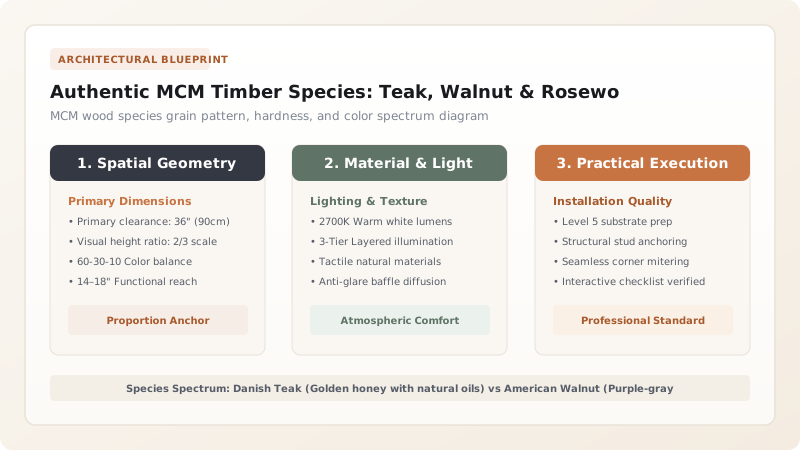
1. Grain Architecture: Walnut vs Teak vs Rosewood
In mid-century modern architecture, wood is not a surface covering; it is the structural and aesthetic hero. Original vintage pieces were crafted from old-growth hardwoods with tight growth rings and rich natural oils that modern plantation lumber struggles to replicate.
Understanding wood grain identification is essential for authentic MCM restorations:
- American Black Walnut (Juglans nigra): Sawn to reveal dramatic 'cathedral' arch grain patterns with deep espresso, chocolate, and subtle purple undertones.
- Danish Teak (Tectona grandis): Straight, uniform grain with a golden amber glow; naturally self-lubricating with dense organic resins.
- Brazilian Rosewood (Dalbergia nigra): Exotic, high-contrast dark chocolate swirls with black ribbon stripes; highly prized on vintage Eames lounge chairs.

Mid-Century Modern Wood Species Comparison
Use this reference table to calculate exact physical dimensions, ratios, and specifications before purchasing:
| Wood Species | Janka Hardness | Natural Color / Grain | Best Historical Application |
|---|---|---|---|
| American Black Walnut | 1,010 (Medium Hard) | Deep chocolate with sweeping cathedral grain | Credenzas, dining tables, architectural wall paneling |
| Burmese Teak | 1,070 (Very Durable) | Golden honey-tan with fine straight grain | Danish dining chairs, desks, floating wall units |
| Brazilian Rosewood | 2,440 (Ultra Dense) | Dark reddish-black with wild ribbon swirls | Executive desks, original 1950s Eames lounge chairs |
| White Birch Plywood | 1,260 (Flexible) | Pale blonde, tight grain, thin veneer plys | Molded plywood chair shells (Eames LCM / DCW) |
Sun Bleaching Walnut Graying Constraints
Every successful decoration project must account for physical and environmental constraints:
Walnut Wood Turning Light Yellow-Orange in Sun
Unlike cherry which darkens in sunlight, natural walnut bleaches lighter when exposed to UV sun rays; apply UV-filtering hardwax oils and keep vintage walnut pieces away from unshaded south windows.
How to Restore Vintage Teak and Walnut Furniture
Execute this professional sequence to achieve flawless results without backtracking:
Clean with Mineral Spirits
Wipe vintage wood with odorless mineral spirits to dissolve 50 years of old wax and dirt.
Gently Rub with 0000 Steel Wool
Buff surface along the grain with ultra-fine 0000 steel wool to remove surface oxidation.
Apply Natural Danish Oil
Flood wood surface with Watco Danish Oil (Natural or Walnut tone) and let soak for 15 min.
Wipe 100% Dry with Cotton Rag
Buff completely dry with clean rags until zero sticky wet residue remains on surface.
Common Mistakes & Countermeasures
Avoid these costly errors that compromise aesthetics, ergonomics, and budget:
Spraying Vintage Walnut with High-Gloss Lacquer
Project Execution Checklist
Track your physical progress. Checkboxes persist automatically on this device:
Frequently Asked Questions
Why is Brazilian Rosewood no longer used in new furniture?
Brazilian Rosewood was over-harvested in the mid-20th century and is now strictly protected under CITES Appendix I international conservation law. New furniture uses sustainably harvested Santos Rosewood or American Walnut.


