
Cork flooring achieves an extraordinary Impact Insulation Class (IIC) rating of 65 to 72 (far exceeding condominium HOA building codes of IIC 50). Its 40 million air-filled cellular suberin chambers act as acoustic shock absorbers, reducing footstep impact noise by up to 22 decibels.
At a Glance: Key Takeaways
- IIC (Impact Insulation Class): Measures resistance to structure-borne impact noise (footsteps, dropped items, furniture drags).
- STC (Sound Transmission Class): Measures airborne sound blockage (voices, television, music).
- HOA Compliance: 6mm cork underlayment easily meets strict condo HOA 55+ IIC acoustic standards.
- 22 dB Noise Reduction: Cork absorbs 20 to 22 decibels of direct impact energy at the source.
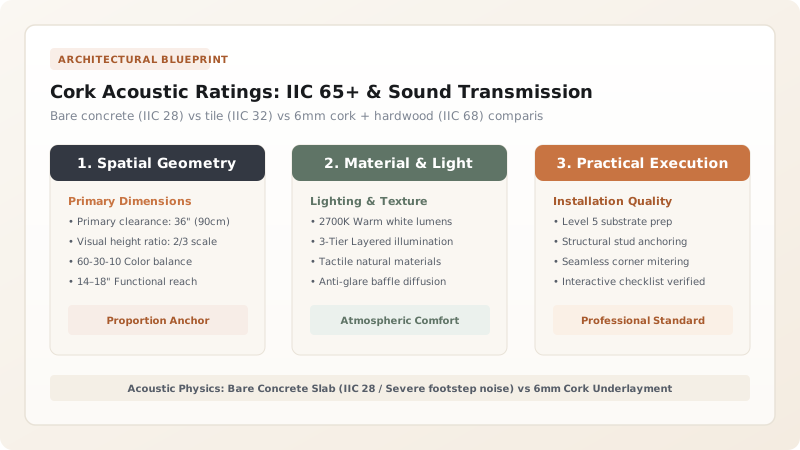
1. The Physics of Impact Sound Waves: IIC vs STC
In multi-family condominiums and multi-story homes, sound travels in two distinct pathways: Airborne Sound (voices, TV soundwaves vibrating through drywall, measured by STC) and Structure-Borne Impact Sound (hard heels clicking on tile, vibrating through solid floor joists, measured by IIC).
Because stone, tile, and solid hardwood are dense and rigid, they transmit 90% of kinetic footstep energy directly into the subfloor. Cork acts as a mechanical dampener: when struck, its microscopic suberin air pockets compress elastically, dissipating kinetic vibration into harmless thermal energy.

Flooring Assemblies & Certified IIC Acoustic Ratings
Use this reference table to calculate exact physical dimensions, ratios, and specifications before purchasing:
| Floor Assembly Structure | Impact Insulation Class (IIC) | Noise Decibel Reduction | HOA Code Compliance |
|---|---|---|---|
| 6mm Cork Underlayment + Engineered Hardwood | IIC 68 - 72 (Ultra Quiet) | -22 dB Noise Reduction | 100% Passes All Luxury HOA Codes |
| 10.5mm Floating Cork Plank System | IIC 65 - 68 (Quiet) | -20 dB Noise Reduction | 100% Passes All HOA Codes |
| Standard Foam Underlayment + Laminate | IIC 52 - 55 (Moderate) | -12 dB Noise Reduction | Barely Meets Minimum HOA Code (50) |
| Ceramic Tile Glued Directly to Concrete | IIC 28 - 32 (Extremely Loud) | -3 dB (Loud footstep echo) | FAILS HOA Code (Severe complaints) |
Acoustic Bridging Baseboard Flanking Constraints
Every successful decoration project must account for physical and environmental constraints:
Baseboard Touching Hardwood and Subfloor Creating Acoustic Flanking
Nailing baseboards tight against both the wall and floor creates an acoustic bridge that bypasses the cork; maintain a 1/8" gap between baseboard bottom and flooring, sealing with flexible acoustic sealant.
How to Install Cork Underlayment for IIC 65+ Compliance
Execute this professional sequence to achieve flawless results without backtracking:
Clean & Vacuum Subfloor
Remove all drywall dust and debris from concrete or plywood subfloor.
Lay 6mm High-Density Cork Rolls
Roll out 6mm (1/4") cork underlayment perpendicular to the finished flooring direction.
Tape Seams with Vapor Barrier Tape
Butt edges tight together and seal seams with acoustic moisture tape.
Leave 1/4" Perimeter Expansion Gap
Keep cork 1/4" away from surrounding walls to prevent acoustic flanking sound bridges.
Install Finished Hardwood or Cork
Float or glue engineered hardwood or cork planks directly over the cork underlayment.
Common Mistakes & Countermeasures
Avoid these costly errors that compromise aesthetics, ergonomics, and budget:
Driving Screws or Nails Through Hardwood Directly Through Cork into Subfloor
Project Execution Checklist
Track your physical progress. Checkboxes persist automatically on this device:
Frequently Asked Questions
What IIC rating is required by most condominium HOA boards?
Most condominium associations mandate a minimum IIC rating of 50 to 55. Installing a 6mm cork underlayment typically yields an IIC of 65 to 70, easily satisfying board approval.


