
Incorporate natural cork flooring and wall tiles to achieve superior acoustic comfort (IIC 65+ impact noise rating and NRC 0.60 sound absorption) and thermal warmth underfoot. Seal cork floors with 3 coats of commercial water-based ceramic polyurethane for 100% water and scratch resistance.
At a Glance: Key Takeaways
- Suberin Cellular Physics: 90% air by volume; naturally resists moisture, fire, mold, and termites.
- IIC 65+ Acoustic Rating: Dramatically dampens footstep impact noise between floors in multi-story homes.
- 3D Acoustic Wall Tiles: Geometric faceted cork tiles eliminate flutter echo and reverberation in home offices.
- Water-Resistant Sealing: High-traffic commercial polyurethane coats make cork durable for kitchens and pet homes.
- Sustainable Harvesting: Harvested from the outer bark of the Cork Oak tree (*Quercus suber*) without cutting the tree down.
In-Depth Guides in this Directory
Explore specialized subtopic blueprints, technical dimensions, and execution checklists:
Cork Acoustic Ratings: IIC 65+ & Sound Transmission Math
Master cork flooring acoustic engineering: Impact Insulation Class (IIC) 65+ ratings, Sound Transmission Class (STC), decibel footstep dampening, and condominium HOA compliance.
3D Cork Wall Tiles: Pinboard Feature Walls & Echo Dampening
Master 3D acoustic cork wall tiles: organic bark finishes, NRC 0.60 sound absorption math, self-healing pinboard utility, and low-VOC contact adhesive installation.
Cork Sealing & Water Resistance: 2-Part Ceramic Polyurethane
Master cork flooring water resistance and durability: two-component ceramic water-based polyurethane (Loba 2K Duo), suberin waterproofing physics, and pet scratch prevention.
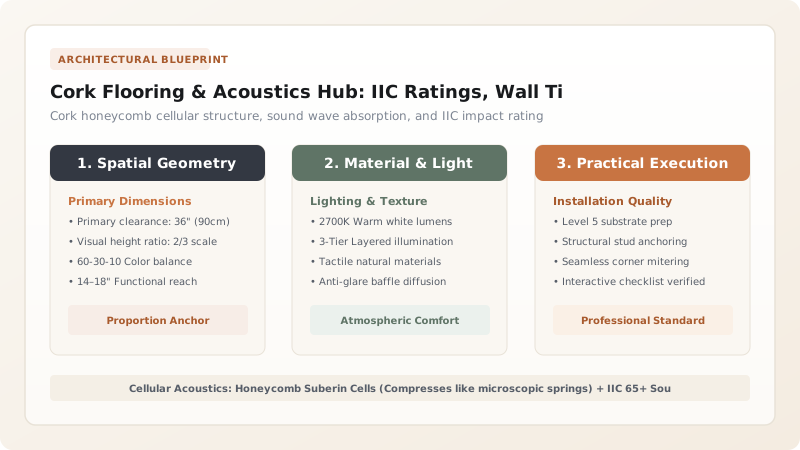
1. Material Science: The Honeycomb Suberin Spring
Cork is one of nature's most extraordinary cellular materials. Sourced from the renewable bark of the Mediterranean Cork Oak (*Quercus suber*), cork is composed of 40 million microscopic 14-sided honeycomb cells per cubic centimeter. Each cell is filled with an air-like gas and coated in suberin, a natural waxy fatty acid.
When you walk on cork, the cellular chambers compress under foot impact, absorbing shock and relieving joint pressure in hips and knees, then bounce back immediately with 95% elastic memory recovery.

Cork Flooring & Wall Formats Comparison
Use this reference table to calculate exact physical dimensions, ratios, and specifications before purchasing:
| Cork Product Format | Thickness | Acoustic / Thermal Rating | Best Application |
|---|---|---|---|
| Glue-Down 100% Solid Cork Tiles | 4mm - 6mm Solid Cork | IIC 68 / 100% Waterproof (Sealed) | Kitchens, bathrooms, high-traffic commercial |
| Floating Cork Planks (Uniclic) | 10.5mm (Cork + HDF Core + Cork) | IIC 65 / Thermal comfort | Living rooms, master bedrooms, kid playrooms |
| 3D Textured Acoustic Wall Panels | 15mm - 25mm Faceted Cork | NRC 0.65 (Sound Absorption) | Home theaters, recording studios, home offices |
| Cork Underlayment Rolls | 6mm - 12mm High-Density Cork | IIC 60 - 72 Sound Barrier | Installed under hardwood, tile, and laminate |
Pet Claw & Heavy Furniture Indentation Constraints
Every successful decoration project must account for physical and environmental constraints:
Heavy Furniture Legs Leaving Permanent Dents in Soft Cork Floors
Concentrated point loads from thin sofa legs can dent cork; use wide 2-inch felt furniture caster pads under all furniture feet, and coat cork floors in ceramic-reinforced polyurethane (like Loba 2K Duo).
How to Install and Seal Glue-Down Cork Flooring
Execute this professional sequence to achieve flawless results without backtracking:
Prep Subfloor to Flatness Standard
Self-level concrete or plywood subfloor to within 1/8" variation over a 10-foot radius.
Apply Water-Based Contact Adhesive
Roll low-VOC contact adhesive (W-240) onto subfloor and the back of 100% solid cork tiles.
Press Tiles and Roll with 100-lb Roller
Lay cork tiles in brick pattern and roll entire floor with a 100-lb three-section floor roller.
Apply 3 Coats of Ceramic Polyurethane
Apply 3 coats of commercial water-based 2-component polyurethane to lock tile seams waterproof.
Common Mistakes & Countermeasures
Avoid these costly errors that compromise aesthetics, ergonomics, and budget:
Installing Floating HDF-Core Cork Planks in Wet Bathrooms
Project Execution Checklist
Track your physical progress. Checkboxes persist automatically on this device:
Frequently Asked Questions
Can you use cork flooring with radiant in-floor heating?
Yes! Cork is fully compatible with radiant floor heating systems, provided surface temperatures do not exceed 82°F (28°C). Its cellular structure retains warmth long after heating turns off.


