
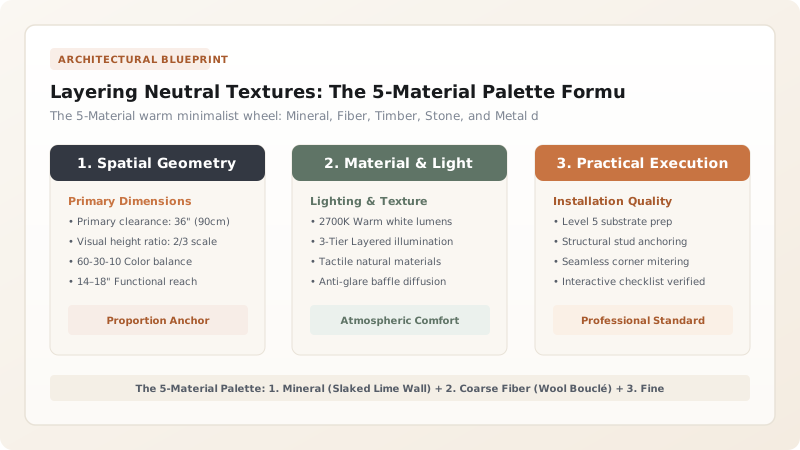
Create deep visual interest in an all-neutral room using the 5-Material Texture Rule: combine 1) Mineral Plaster (limewash walls), 2) Coarse Woven Fiber (wool bouclé), 3) Fine Natural Fiber (slub linen drapes), 4) Wire-Brushed Timber (white oak floors/tables), and 5) Porous Stone (travertine).
At a Glance: Key Takeaways
- The 5-Material Rule: A monochromatic room requires at least 5 distinct tactile textures to prevent visual flatness.
- Light Reflectance Variation: Matte chalky walls absorb light; slub linen filters light; open wood grain scatters light.
- Tonal Micro-Shifts: Blend cream (LRV 80), oatmeal (LRV 65), warm taupe (LRV 50), and dark walnut (LRV 20).
- Zero Pattern Needed: Texture replaces wallpaper patterns completely, delivering calm architectural serenity.
1. Optical Physics: Surface Micro-Shadows vs Flat Pigment
When a room is painted in a single flat latex paint color with flat cotton furniture, the surfaces reflect light uniformly. Without pattern or color contrast, the brain perceives the room as two-dimensional and sterile (the 'white box' effect).
When you introduce high-texture materials (like the looping threads of wool bouclé, the rough pits of travertine, and the microscopic crystals of slaked lime), directional light creates millions of microscopic shadow valleys and highlight peaks. The room feels warm, deep, and luxurious entirely through shadow play.

The 5-Material Neutral Palette Architecture
Use this reference table to calculate exact physical dimensions, ratios, and specifications before purchasing:
| Material Tier | Primary Material | Surface Tactility | Room Application |
|---|---|---|---|
| Tier 1: Mineral Wall (40%) | Slaked Lime Wash / Roman Clay | Chalky-matte, soft crystalline bloom | All drywall surfaces and ceilings |
| Tier 2: Coarse Fiber (20%) | Heavy Wool Bouclé / Shearling | Nubby, looped, high-pile softness | Main sofa, accent swivel chair |
| Tier 3: Fine Fiber (15%) | Washed Belgian Slub Linen | Airy, crisp, organic wrinkle drape | Floor-to-ceiling drapery, throw pillows |
| Tier 4: Open Timber (15%) | Wire-Brushed Natural White Oak | Silky open grain, matte oil finish | Flooring, floating shelves, credenzas |
| Tier 5: Porous Stone (10%) | Unfilled Roman Travertine / Limestone | Porous, cool, heavy architectural stone | Coffee table, side plinth, fireplace mantle |
Monochromatic Matching Clash Constraints
Every successful decoration project must account for physical and environmental constraints:
Matching Whites Exactly Causing One to Look Dirty Yellow
Trying to make every white fabric match 100% makes slightly cooler fabrics look dirty; deliberately vary your shades across a 5-step gradient (Ivory → Cream → Oatmeal → Sandstone → Warm Taupe).
How to Build a 5-Texture Neutral Room
Execute this professional sequence to achieve flawless results without backtracking:
Establish Mineral Plaster Walls
Apply breathable chalky limewash to eliminate flat drywall reflection.
Lay Wire-Brushed Oak Flooring
Install wide-plank matte white oak floors with visible natural wood grain.
Add Coarse Bouclé Seating
Position an oatmeal wool bouclé sofa to introduce heavy fiber texture.
Hang Floor-to-Ceiling Linen Drapes
Install unlined Belgian slub linen ripple-fold drapery on a concealed ceiling track.
Anchor with Travertine Stone
Place a porous unfilled travertine coffee table to add heavy mineral weight.
Common Mistakes & Countermeasures
Avoid these costly errors that compromise aesthetics, ergonomics, and budget:
Using All Smooth Flat Fabrics (Flat Cotton + Smooth Leather + Flat Drywall)
Project Execution Checklist
Track your physical progress. Checkboxes persist automatically on this device:
Frequently Asked Questions
How do you keep an all-neutral home clean with everyday living?
Choose performance fabrics: specify bleach-cleanable Crypton or Sunbrella indoor bouclé, apply commercial stain repellent to linen, and seal travertine with penetrating impregnators so spills wipe off effortlessly.


