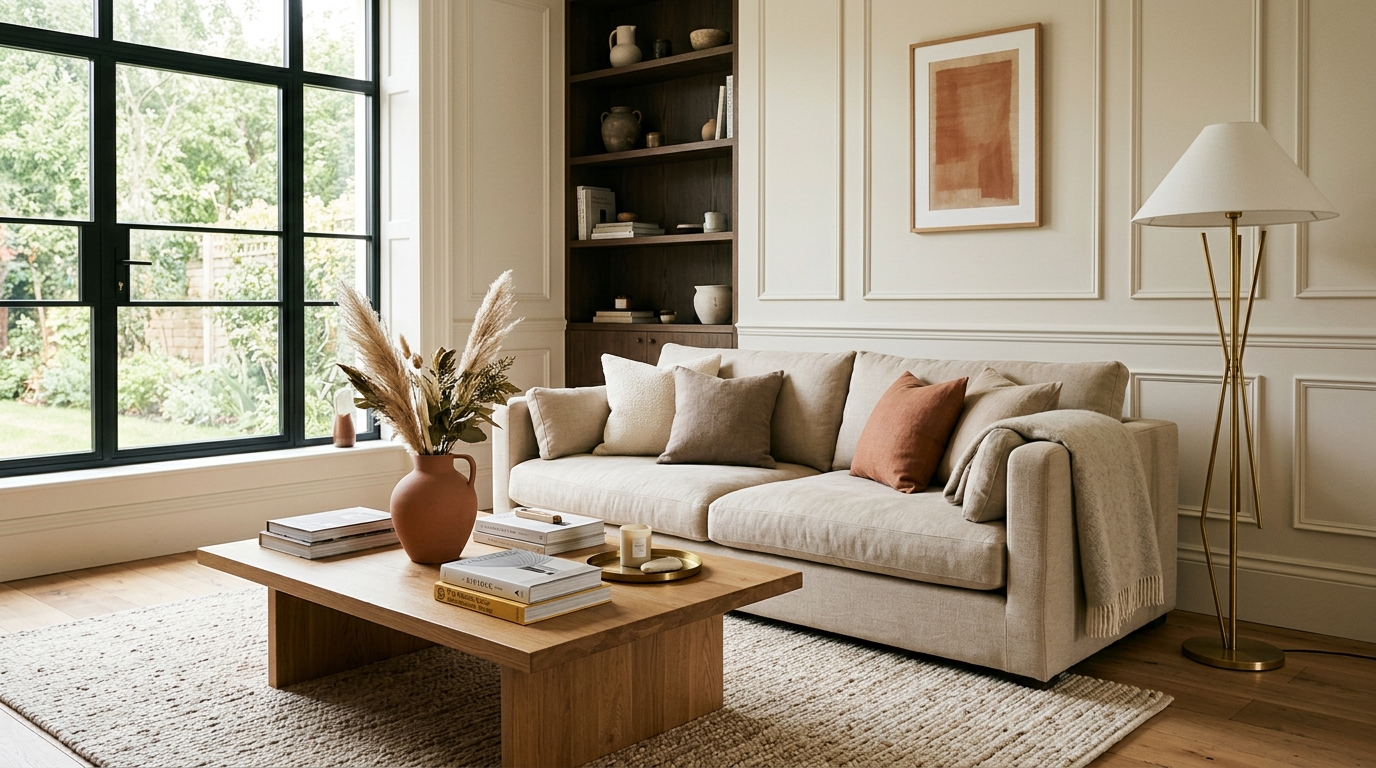
To use accent colors effectively, limit bold colors to exactly 10% of the room's visual surface. Apply the 'Rule of Three Triangulation' by repeating your accent shade in three distinct places (e.g., in a wall art canvas, a pair of throw pillows, and a tabletop ceramic vase) to guide the eye rhythmically around the room.
At a Glance: Key Takeaways
- Confine bold, trendy colors to the 10% accent tier (pillows, throws, ceramics, art).
- Use the Rule of Three: repeat an accent color in at least 3 separate locations in the room.
- Choose complementary colors (opposites on the color wheel) for vibrant, energetic focal contrast.
- Keep accent colors easily swappable between seasons without repainting large walls.
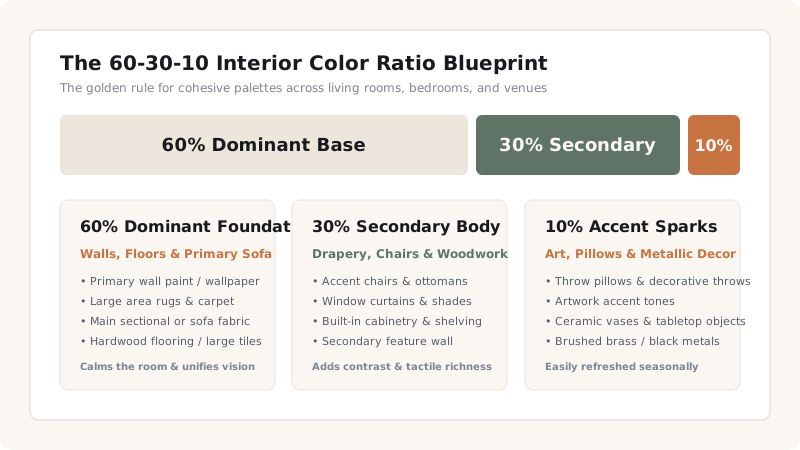
1. The Rule of Three Color Triangulation
A single isolated bright color pop (like a lone orange pillow on a grey sofa) looks like an accidental leftover. Professional interior designers make accent colors feel deliberate through visual triangulation:
- Apex Point (Vertical Plane): A detail in a large framed wall art piece or the fabric trim on a window curtain.
- Mid-Level Point (Seating Plane): A pair of textured velvet throw cushions or a drape throw blanket on the sofa.
- Low/Tabletop Point (Horizontal Plane): A glazed ceramic bowl on the coffee table, a sculptural bookend, or a decorative tray on the console.
When the eye travels between these three points in a triangle across the room, the color feels integrated and harmonious.
Base Neutral to High-Impact Accent Pairings
Use this reference table to calculate exact physical dimensions, ratios, and specifications before purchasing:
| Base 60% Neutral | Recommended 30% Secondary | High-Impact 10% Accent | Color Wheel Relationship | Mood Created |
|---|---|---|---|---|
| Warm Alabaster White | Muted Sage Green | Burnt Terracotta / Rust | Complementary (Red/Green) | Organic Earthy Warmth |
| Soft Charcoal Grey | Crisp Optical White | Mustard Yellow / Ochre | High Contrast Accent | Modern Mid-Century Energy |
| Cream / Linen | Deep Midnight Navy | Brushed Warm Brass / Amber | Warm Metallic Contrast | Timeless Coastal Elegance |
| Mushroom Taupe | Olive Green | Deep Burgundy / Merlot | Analogous Warm Richness | Cozy Moody Sanctuary |
Accent Color Constraints
Every successful decoration project must account for physical and environmental constraints:
Too Many Competing Accent Hues
Introducing red, turquoise, yellow, and purple simultaneously creates visual chaos. Stick strictly to 1 or 2 complementary accent colors per room.
Saturated Paint on Large Walls
Painting an entire 20-foot living room wall neon orange overwhelms the senses. Use rich saturated tones on accent pillows and small art details instead.
Seasonal Transition Flexibility
Invest in neutral core furniture so you can swap warm terracotta autumn accents for cool cobalt summer accents in under 15 minutes.
How to Introduce Accent Colors into a Room
Execute this professional sequence to achieve flawless results without backtracking:
Analyze Your Existing 60% and 30% Colors
Confirm the undertones of your walls, flooring, and primary sofa before selecting an accent.
Select 1 Hero Accent Color
Choose a color opposite or 90 degrees from your secondary tone on the color wheel (e.g., terracotta with sage).
Source Statement Wall Art
Hang a framed art print that incorporates your accent color alongside your base neutrals.
Add 2 Matching Accent Pillows
Place textured pillows in your chosen accent shade on the sofa and armchair.
Place a Tabletop Ceramic Object
Set a glazed ceramic vase or sculptural bowl on the coffee table to complete the triangle.
Common Mistakes & Countermeasures
Avoid these costly errors that compromise aesthetics, ergonomics, and budget:
Buying Identical One-Note Accent Pieces
Project Execution Checklist
Track your physical progress. Checkboxes persist automatically on this device:
Frequently Asked Questions
What is the best accent color for grey walls?
Mustard ochre, burnt terracotta, and forest green are the most effective accent colors for warming up grey walls and adding organic life.
Can you have two accent colors in one room?
Yes, provided they are closely related (analogous, such as mustard yellow and terracotta) or a balanced complementary pair (navy and brass).