
Use nesting coffee tables by choosing a primary table (17-18 inches high) and a lower secondary table (15-16 inches high) that slides partially underneath. Pull the secondary table out to extend drink surfaces during gatherings.
At a Glance: Key Takeaways
- Height Cascade: Primary table at 17-18 inches, secondary tier at 15-16 inches.
- Overlap Ratio: Style with 1/3 to 1/2 of the secondary table tucked under the primary surface.
- Material Contrast: Mix textures (e.g. solid oak top with lower black metal or marble tier).
- Flexibility: Secondary table easily detaches as a side table beside accent armchairs.
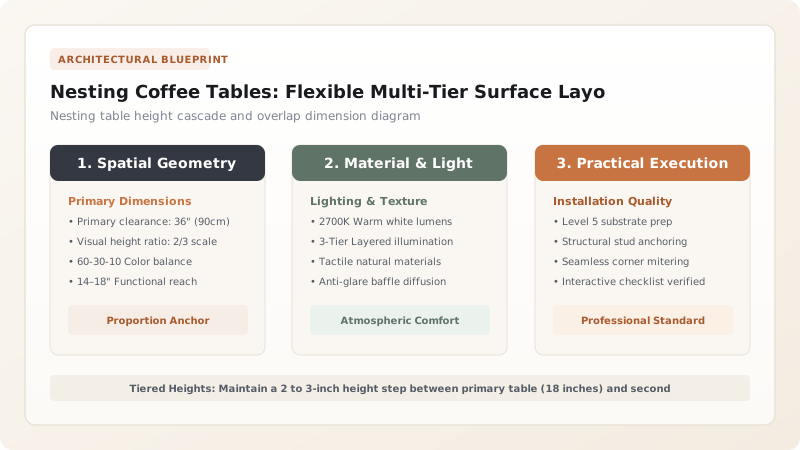
1. Architectural Adaptability for Entertaining
Nesting coffee tables solve the classic dilemma of small-space hosting: daily floor openness versus entertaining surface area. When guests arrive, the secondary tier detaches and glides over to provide an immediate drink surface next to accent seating.

Nesting Table Material Pairing Guide
Use this reference table to calculate exact physical dimensions, ratios, and specifications before purchasing:
| Primary Table Material | Secondary Tier Material | Aesthetic Mood | Durability Feature |
|---|---|---|---|
| Honed White Carrara Marble | Matte Black Steel | Modern Industrial Luxe | Heat & drink ring resistance |
| Natural White Oak | Travertine Stone | Warm Organic Japandi | Tactile texture contrast |
| Smoked Glass | Brushed Antique Brass | Mid-Century Modern | Airy light reflection |
| Dark Walnut Wood | Textured Ceramic Tile | Transitional Contemporary | Scratch-proof lower tier |
Carpet Pile Glide Constraints
Every successful decoration project must account for physical and environmental constraints:
High-Pile Rug Drag
Pulling nesting tables across shaggy high-pile wool rugs can bend slender metal legs; ensure legs feature smooth Teflon or felt glide discs on their base.
How to Style a 2-Piece Nesting Table Set
Execute this professional sequence to achieve flawless results without backtracking:
Position Primary Table
Center the larger table 16 inches from the sofa centerline.
Tuck Secondary Table 35%
Slide the lower table beneath by roughly one-third of its diameter.
Style Primary with Height
Place a ceramic vase with olive branches on the upper tier.
Keep Secondary Clean
Leave the lower tier mostly empty for drinks, remotes, and daily use.
Common Mistakes & Countermeasures
Avoid these costly errors that compromise aesthetics, ergonomics, and budget:
Completely Hiding the Lower Table Daily
Project Execution Checklist
Track your physical progress. Checkboxes persist automatically on this device:
Frequently Asked Questions
Can nesting coffee tables be used as separate end tables?
Yes. One of the greatest benefits of nesting sets is that the smaller table can be moved permanently or temporarily next to a reading chair as a side table.


