
Select resilient tropical rain-forest understory plants for indoor living green walls. The top 5 indestructible species are Golden Pothos (*Epipremnum aureum*), Heartleaf Philodendron (*Philodendron hederaceum*), Bird's Nest Fern (*Asplenium nidus*), Chinese Evergreen (*Aglaonema*), and Arrowhead Vine (*Syngonium*).
At a Glance: Key Takeaways
- Tropical Understory Biology: Naturally adapted to low light, high humidity, and vertical vertical tree-climbing.
- Cascading Trailers: Golden Pothos and Philodendron Brasil grow rapidly, concealing planting pockets in 60 days.
- Architectural Volume: Bird's Nest Ferns and Schefflera provide structural 3D leaf texture.
- Color Pops: Red Chinese Evergreen (*Aglaonema Crete*) and Calathea add rich burgundy and cream variegation.
1. Plant Morphologies: Trailers vs Fillers vs Architectural Anchors
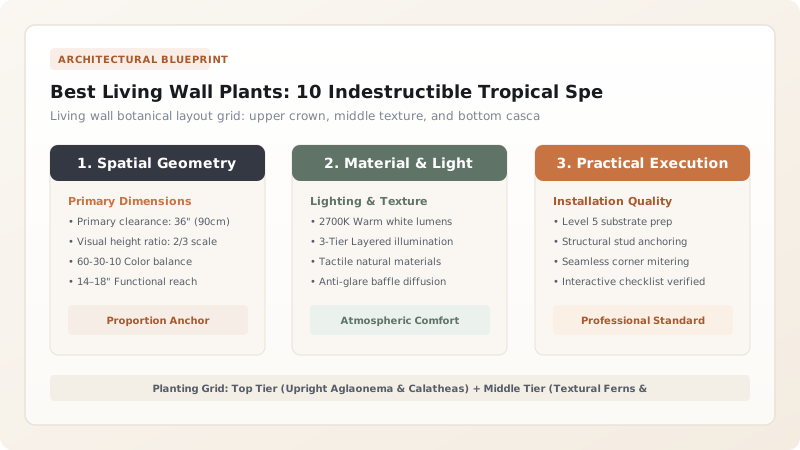
A breathtaking vertical garden is not planted with a single monotonous species; it is curated like a living oil painting. Professional botanical designers group plants into three functional morphological layers:
- 1. Cascading Trailers (60% of Wall): *Epipremnum aureum* (Pothos) and *Philodendron Cordatum* create sweeping green waterfalls that hide plastic hardware.
- 2. Textural Fillers (30% of Wall): *Asplenium nidus* (Bird's Nest Fern) and *Nephrolepis exaltata* (Boston Fern) add feathery volume.
- 3. Color & Focal Anchors (10% of Wall): *Aglaonema* (Chinese Evergreen) and *Maranta leuconeura* (Prayer Plant) inject burgundy, lime, and pink accents.

Top 10 Living Green Wall Plant Species Matrix
Use this reference table to calculate exact physical dimensions, ratios, and specifications before purchasing:
| Plant Species (Botanical Name) | Growth Habit | Moisture Tolerance | Foliage Color / Texture |
|---|---|---|---|
| Golden Pothos (*Epipremnum aureum*) | Cascading fast trailer | High (Tolerates wet & dry) | Glossy green with gold variegation |
| Philodendron Brasil (*P. hederaceum*) | Cascading trailer | High (Hydroponic favorite) | Heart-shaped leaves with lime-green stripe |
| Bird's Nest Fern (*Asplenium nidus*) | Upright architectural vase | Moderate to High | Wavy bright lime-green paddle leaves |
| Chinese Evergreen (*Aglaonema*) | Upright bushy filler | Moderate | Rich patterned leaves in red, pink, silver |
| Arrowhead Vine (*Syngonium podophyllum*) | Dense clumping trailer | High | Arrow-shaped pale green / pink foliage |
| Boston Fern (*Nephrolepis exaltata*) | Feathery cascading arch | High (Loves misting) | Fine-textured soft emerald fronds |
| Prayer Plant (*Maranta leuconeura*) | Sprawling filler | Moderate | Intricate dark green with crimson herringbone veins |
| Cast Iron Plant (*Aspidistra elatior*) | Stately upright blades | Extreme Drought Tolerant | Deep forest green leathery leaves |
| ZZ Plant (*Zamioculcas zamiifolia*) | Upright structural stalks | Low to Moderate | Ultra-glossy dark green succulent leaves |
| Peperomia Watermelon (*P. argyreia*) | Compact accent clump | Moderate | Silver-striped watermelon pattern leaves |
Pest Outbreak (Spider Mites) Constraints
Every successful decoration project must account for physical and environmental constraints:
Spider Mites or Mealybugs Spreading Rapidly Across Dense Wall
Dense living foliage can harbor pests; inspect undersides of leaves monthly and wipe with organic Neem Oil spray or release beneficial predatory mites (*Phytoseiulus persimilis*) for organic pest control.
How to Arrange and Plant Foliage on a Living Wall
Execute this professional sequence to achieve flawless results without backtracking:
Group Plants by Moisture Needs
Place high-water ferns and pothos in middle/bottom zones; place lower-water aglaonemas at the top.
Create Diagonal Sweeps
Plant species in flowing S-curves and diagonal bands rather than random confetti dots.
Remove Excess Soil from Root Balls
Gently shake off 30% of nursery soil before inserting roots into felt pockets.
Tuck Cascading Vines Downward
Train pothos and philodendron vines to drape over the pocket below, concealing all felt.
Prune Dead Leaves Monthly
Use sharp bonsai shears to prune yellowing bottom leaves and encourage bushy growth.
Common Mistakes & Countermeasures
Avoid these costly errors that compromise aesthetics, ergonomics, and budget:
Planting Fiddle Leaf Figs or Palms in Shallow Felt Pockets
Project Execution Checklist
Track your physical progress. Checkboxes persist automatically on this device:
Frequently Asked Questions
How fast do plants grow on an indoor living green wall?
Under full-spectrum 4000K LED grow lights (12 hours daily), fast trailers like Golden Pothos and Philodendron grow 6 to 12 inches per month, requiring light pruning every 60 to 90 days.


