
Mix wood tones successfully by establishing one dominant wood species (accounting for 70% of room timber), matching undertones (warm golden vs cool ash), and using buffer elements like area rugs to separate contrasting wood legs from hardwood floors.
At a Glance: Key Takeaways
- The 70/30 Rule: 70% dominant wood species (usually flooring) balanced by 30% accent timber.
- Undertone Alignment: Group woods by temperature (warm yellow/amber vs cool grey/ash).
- The Buffer Rule: Place an area rug between wood furniture legs and hardwood floors.
- Limit Variety: Never mix more than 2 to 3 distinct wood species in a single room.
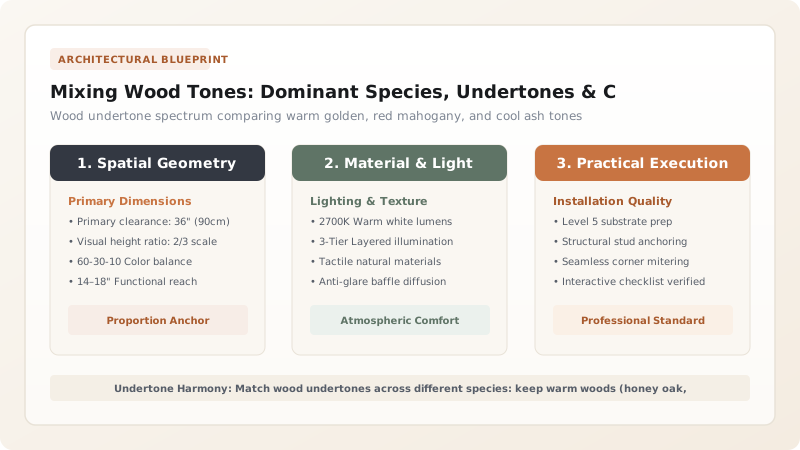
1. Identifying Dominant Undertones: Warm vs Cool vs Neutral
The fear of mixing wood tones causes many homeowners to buy matching 'furniture sets' where the bed, dresser, and nightstands are identical. In architectural design, matching sets look dated and uninspired. A designer home layers 2 or 3 complementary wood tones.
The secret to harmony is identifying the underlying undertone:
- Warm Undertones (Yellow/Orange/Amber): Teak, Natural Pine, Honey Oak, Maple.
- Cool Undertones (Grey/Ash/Taupe): Smoked Oak, Bleached Ash, Weathered Driftwood.
- Neutral / Deep Undertones (Dark Brown/Violet): American Walnut, Espresso Oak, Ebony.

Wood Species Pairing Compatibility Guide
Use this reference table to calculate exact physical dimensions, ratios, and specifications before purchasing:
| Dominant Floor Wood | Complementary Furniture 1 | Complementary Furniture 2 | Undertone Harmony |
|---|---|---|---|
| Natural White Oak (Neutral) | American Black Walnut | Black Ash / Ebonized Oak | High-contrast modern organic |
| Warm Honey / Teak | Cognac Caramel Leather | Rattan / Light Cane | Warm Bohemian Mid-Century |
| Dark Espresso Hardwood | Bleached Ash Wood | Polished Brass Accents | Crisp Transitional balance |
| Grey Weathered Oak | Matte Black Steel | Light Raw Poplar | Cool Nordic Industrial |
Wood Clashing Against Hardwood Floors
Every successful decoration project must account for physical and environmental constraints:
Near-Match Clashing
Trying to match furniture wood to floor wood and missing by 5% looks like an accidental mistake; instead, create intentional high contrast (e.g. dark walnut table on light oak floors).
How to Harmonize Mixed Wood Tones in a Room
Execute this professional sequence to achieve flawless results without backtracking:
Identify Flooring Undertone
Examine hardwood floors in natural daylight to identify warm vs cool undertone.
Choose High-Contrast Anchor
Select a dining table or coffee table 2-3 shades darker or lighter than the floor.
Lay a Buffer Area Rug
Place a woven wool or jute rug to separate table legs from the floor.
Repeat Accent Wood Twice
Repeat the secondary accent wood in a bowl, picture frame, or shelf.
Common Mistakes & Countermeasures
Avoid these costly errors that compromise aesthetics, ergonomics, and budget:
Mixing 5 Different Random Wood Species in One Room
Project Execution Checklist
Track your physical progress. Checkboxes persist automatically on this device:
Frequently Asked Questions
Can you mix light oak and dark walnut together?
Yes! Light White Oak and dark American Walnut are one of the most classic, timeless pairings in interior design. The high contrast looks deliberate and visually sophisticated.


