
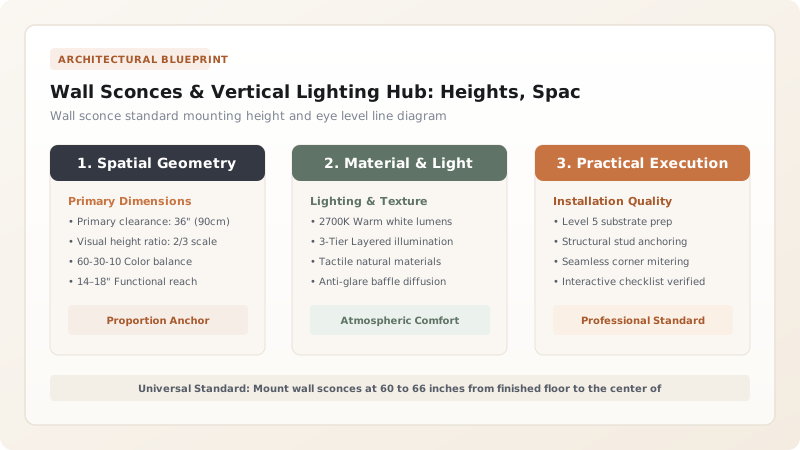
Mount wall sconces at 60 to 66 inches from the finished floor to the center of the electrical backplate. In hallways, space sconces 8 to 10 feet apart; in bathrooms, mount flanking sconces at 60-64 inches eye level on either side of the mirror.
At a Glance: Key Takeaways
- Standard Height: 60 to 66 inches from finished floor to center of backplate.
- Hallway Spacing: 8 to 10 feet apart center-to-center along corridors.
- Vanity Flanking: Mount 36 to 40 inches apart (18-20 inches from mirror centerline).
- Bedside Reading: Mount 30 to 36 inches above top mattress crown.
In-Depth Guides in this Directory
Explore specialized subtopic blueprints, technical dimensions, and execution checklists:
Wall Sconce Mounting Heights: Room-by-Room Measurement Standards
Master exact wall sconce mounting heights: 60-66 inch hallway rules, 60-inch vanity eye level, 48-inch bedside reading placement, and ceiling height adjustments.
Swing-Arm Reading Sconces: Articulating Task Lighting Ergonomics
Master articulating swing-arm reading sconces: mounting heights, extension reach formulas, plug-in vs hardwired setups, and glare-free reading angles.
Picture Lights & Art Illumination: Width Ratios & 30-Degree Angles
Master picture lights and art illumination: 1/2 to 2/3 frame width formulas, 30-degree beam angles, UV/heat-free LEDs, and rechargeable wireless lights.
1. Standard Architectural Sconce Mounting Heights
Wall sconces provide vertical plane illumination—the single most effective technique for making rooms feel spacious and architecturally dynamic. Mounting sconces at the wrong height causes direct bulb glare into standing eyes or leaves walls feeling bottom-heavy.
The standard architectural guideline places the center of the sconce junction box between 60 and 66 inches above finished floor level. This positions the light source near average standing eye level (62 inches), ensuring glare-free, flattering ambient glow.

Wall Sconce Mounting Heights by Room Zone
Use this reference table to calculate exact physical dimensions, ratios, and specifications before purchasing:
| Room Application | Mounting Height from Floor | Spacing Between Fixtures | Best Sconce Type |
|---|---|---|---|
| Hallway / Corridor | 62" - 66" to center | 8 - 10 feet apart | Low-profile ADA compliant (< 4" depth) |
| Bathroom Vanity Flanking | 60" - 64" (eye level) | 36" - 40" apart | Frosted glass cylinder / diffuse shade |
| Beside Fireplace / Artwork | 60" - 62" to center | Flanking focal feature | Articulating swing arm / candle sconce |
| Bedside Reading Nook | 42" - 48" from floor | 10" - 14" beside headboard | Directional swing-arm reading sconce |
| Staircase Wall Incline | 60" above each tread nose | Every 4 - 6 steps | Downlight recessed wall wash |
ADA Corridor Projection Constraints
Every successful decoration project must account for physical and environmental constraints:
Hallway Shoulder Strike Hazard
Sconces protruding more than 4 inches into narrow hallways violate ADA standards and catch on shoulders; choose shallow low-profile sconces under 4 inches deep.
How to Plan Sconce Junction Box Locations
Execute this professional sequence to achieve flawless results without backtracking:
Mark 64-Inch Baseline
Measure 64 inches from subfloor (or 63 inches from finished floor).
Check Backplate Center
Determine if fixture socket sits above, below, or center of the backplate.
Offset for Fixture Geometry
Adjust rough-in box height so actual light source hits 62-64 inches.
Install Dimmers
Connect to a dedicated wall dimmer with warm 2700K LED bulbs.
Common Mistakes & Countermeasures
Avoid these costly errors that compromise aesthetics, ergonomics, and budget:
Mounting Sconces at 72+ Inches High
Project Execution Checklist
Track your physical progress. Checkboxes persist automatically on this device:
Frequently Asked Questions
What is ADA compliance for wall sconces?
The Americans with Disabilities Act (ADA) requires that wall lights mounted between 27 and 80 inches above the floor in public or narrow hallways must project no more than 4 inches from the wall to prevent collisions.


