
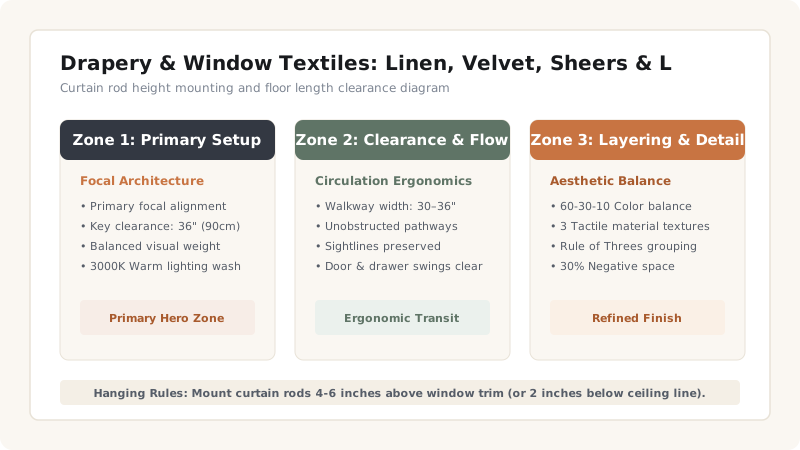
Select and hang window textiles by mounting curtain rods high (4-6 inches above window trim or 2 inches below ceiling line), extending rods 8-12 inches past window edges on both sides, choosing Belgian linen or velvet, and adding blackout or light-filtering linings.
At a Glance: Key Takeaways
- Mount curtain rods close to the ceiling line to visually heighten rooms.
- Extend curtain rods 8-12 inches past window frames so open drapes don't block glass daylight.
- Belgian linen provides airy light-filtering warmth; velvet offers acoustic and light blackout.
- Use privacy or blackout linings to protect face fabrics from UV sun fading.
1. Window Drapery Selection & Light Control
Window curtains frame exterior natural light and provide nighttime privacy. Selecting window textiles requires matching fabric weight to lighting needs.
Window Drapery Fabric Selection
Use this reference table to calculate exact physical dimensions, ratios, and specifications before purchasing:
| Fabric Type | Light Transmission | Acoustic Insulation | Ideal Room Placement |
|---|---|---|---|
| Belgian Linen | Light Filtering (50%) | Medium | Living rooms, dining rooms, sunrooms |
| Cotton Velvet | Blackout (90%+) with lining | High (Sound dampening) | Bedrooms, home theaters, drafty windows |
| Sheer Voile / Linen | Diffused Daylight (80%) | Low | Layered under heavy drapes / Sheer living rooms |
| Blackout Lined Poly-Blend | Complete Dark (100%) | High | Master bedrooms, nursery rooms |
Curtain Textile Constraints
Every successful decoration project must account for physical and environmental constraints:
UV Sun Fading
Direct sunlight bleaches unlined linen and silk drapes over time; ALWAYS install a white cotton thermal or privacy lining behind face fabrics.
How to Choose Window Drapery
Execute this professional sequence to achieve flawless results without backtracking:
Measure Window Width & Height
Measure window frame dimensions (e.g., 60" W x 72" H).
Add Rod Extension
Select a 80-84 inch rod to allow 10 inches extension past frame edges.
Select Linen or Velvet
Choose lined Belgian linen for living rooms, or lined velvet for bedrooms.
Steam Drapes Post-Hanging
Hang drapes and steam out shipping creases.
Common Mistakes & Countermeasures
Avoid these costly errors that compromise aesthetics, ergonomics, and budget:
Mounting Rods Directly on Window Frame Top
Project Execution Checklist
Track your physical progress. Checkboxes persist automatically on this device:
Frequently Asked Questions
Should curtains touch the floor?
Yes, professional curtains should touch the floor with a 1/2-inch clearance ('hover'), or pool gracefully with a 1-2 inch 'puddle' for formal rooms.


