
Style a travertine coffee table by pairing natural warm sandy tones with organic linen sofas, dark walnut accents, and sculptural black iron decor. Protect the honed limestone with impregnating sealers and use soft felt pads beneath decorative objects.
At a Glance: Key Takeaways
- Two-Piece Construction: Heavy slab top rests on two separate column plinths for easy moving.
- Warm Neutral Palette: Soft creamy beige, ivory, and walnut travertine tones.
- Organic Texture: Unfilled porous pits provide tactile authenticity.
- Styling Contrast: Pair pale travertine with dark bronze bowls and matte black art books.
1. Sizing and Weight Engineering of Travertine Tables
Travertine has become the defining centerpiece of modern organic and Japandi interiors. Its warm limestone palette softens minimalist spaces without adding visual clutter.
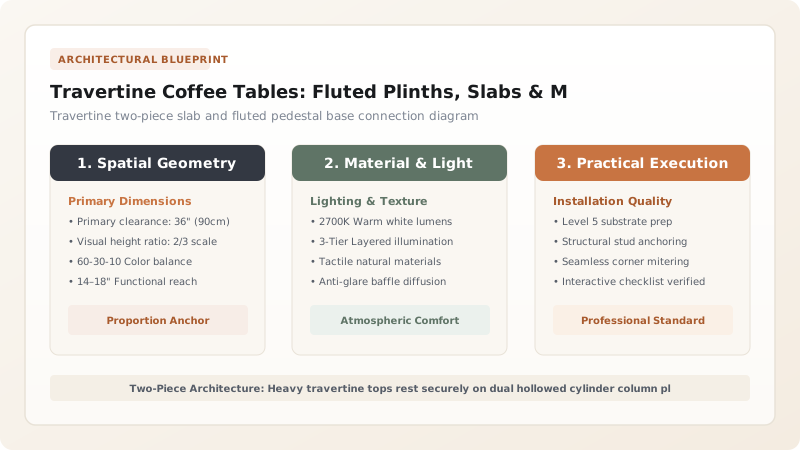
Most large travertine tables utilize a two-piece architectural design: two fluted or smooth column pedestals supporting a loose 1.25-inch thick stone slab. This allows 200-lb tables to be moved safely in manageable components.

Travertine Coffee Table Configurations
Use this reference table to calculate exact physical dimensions, ratios, and specifications before purchasing:
| Table Geometry | Base Pedestal Style | Typical Weight | Best Living Room Fit |
|---|---|---|---|
| Round Monolith (36" dia) | Single Central Fluted Column | 140 - 180 lbs | Sectionals & apartment living rooms |
| Rectangular Slab (48" × 24") | Dual Cylinder Plinths | 190 - 240 lbs | Standard 3-seater linear sofas |
| Tiered Low Square (40" × 40") | Block Platform Base | 220 - 280 lbs | Spacious formal conversation pits |
| Organic Freeform Kidney | Triple Tapered Stone Legs | 160 - 210 lbs | Organic modern and minimalist spaces |
Tip-Over & Slab Shift Constraints
Every successful decoration project must account for physical and environmental constraints:
Heavy Stone Top Sliding on Pedestals
Unattached stone slabs can slide if bumped by children; place 4 heavy-duty non-slip clear silicone grip discs on top of each pedestal before laying the slab.
How to Assemble and Position a Travertine Table
Execute this professional sequence to achieve flawless results without backtracking:
Place Rug First
Lay area rug in living room before positioning heavy stone bases.
Set Column Plinths
Space pedestals 24-30 inches apart aligned with sofa center.
Stick Silicone Grip Pads
Apply 1/8-inch clear silicone friction discs on pedestal top rims.
Lower Stone Slab
With two people, lower the top slab symmetrically onto the bases.
Common Mistakes & Countermeasures
Avoid these costly errors that compromise aesthetics, ergonomics, and budget:
Placing Wet Glassware Directly on Unsealed Travertine
Project Execution Checklist
Track your physical progress. Checkboxes persist automatically on this device:
Frequently Asked Questions
Can you use travertine coffee tables outdoors on covered patios?
Yes! Because travertine is natural limestone formed outdoors, it thrives on covered patios and terraces. In freezing winter climates, store stone tables indoors to prevent water inside pores from freezing and cracking the slab.


