
Style area rugs effectively by sizing the rug to anchor all main furniture legs (or at least front legs), leaving a 12-18 inch border of exposed floor near walls, using felt non-slip rug pads underneath, and considering rug layering (patterned rug over natural jute).
At a Glance: Key Takeaways
- Area rugs anchor furniture pieces into unified conversational groupings.
- Leave a 12-18 inch border of bare floor between outer rug edges and room walls.
- Front-Legs-On rule: place front legs of sofas and armchairs 6-8 inches onto the rug.
- Rug layering: place a patterned 6x9 vintage rug over a 9x12 natural jute base rug.
In-Depth Guides in this Directory
Explore specialized subtopic blueprints, technical dimensions, and execution checklists:
Rug Sizing Formulas: Clearances for Living Rooms, Dining & Beds
Master rug sizing formulas: 8x10 and 9x12 living room rules, 24-inch dining table extension, bedroom bed clearances, and hallway runners.
Rug Placement & Layering: Pattern Contrast over Neutral Jute
Master rug placement and layering: layering vintage kilims over natural jute, open-plan zoning, angle placement, and non-slip pad selection.
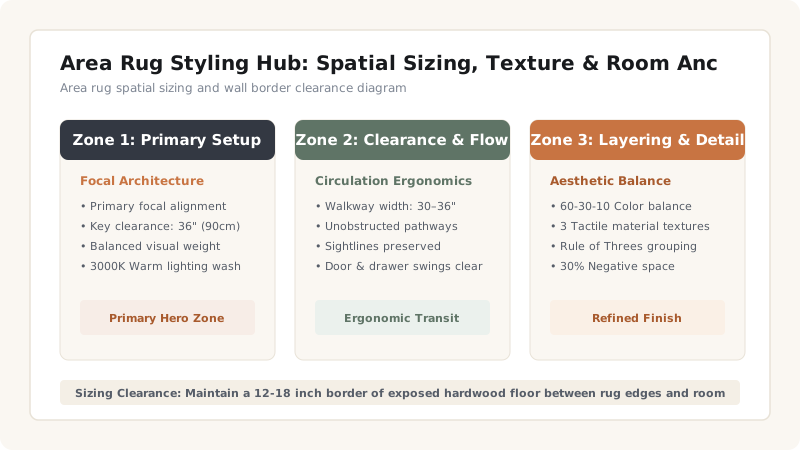
1. Spatial Anchoring & Layering Science
An area rug is the foundation of room layout design. Rugs visually ground furniture groupings, absorb acoustic noise, and define functional zones within open-plan floorplans.
Rug Selection & Placement Blueprint
Use this reference table to calculate exact physical dimensions, ratios, and specifications before purchasing:
| Room Area | Recommended Rug Dimension | Furniture Anchorage Standard | Fiber / Pile Height |
|---|---|---|---|
| Living Room (12x15 ft) | 9x12 Feet (or 8x10 Feet) | All front sofa & chair legs resting 8" on rug | Medium-pile Wool / Wool Blend |
| Dining Room (6-Seater) | 8x10 Feet | Rug extends 24" past table edges all sides | Flatweave Wool / Low-pile Polypropylene |
| Master Bedroom (Queen) | 8x10 Feet | Extends 24-36" on sides and foot of bed | Plush Cut-Pile Wool / Chenille |
| Hallway / Entryway | 2.5x8 Feet Runner | Center aligned with 4" wall borders | Flatweave Jute / High-durability Synthetic |
Rug Styling Constraints
Every successful decoration project must account for physical and environmental constraints:
Door Clearance Snagging
High-pile plush rugs placed near doors prevent doors from swinging open; use flatweave rugs near door swing radii.
How to Layer Rugs for Texture
Execute this professional sequence to achieve flawless results without backtracking:
Lay 9x12 Natural Jute Base
Position a 9x12 ft natural jute rug centered in room.
Add Non-Slip Grip Tape
Apply rug-to-rug tape on the central jute surface.
Center 6x9 Vintage Rug
Lay a 6x9 ft vintage patterned wool rug centered over the jute base.
Anchor Sofa Front Legs
Pull sofa forward so front legs rest 8 inches on the top rug.
Common Mistakes & Countermeasures
Avoid these costly errors that compromise aesthetics, ergonomics, and budget:
Floating Undersized Rugs
Project Execution Checklist
Track your physical progress. Checkboxes persist automatically on this device:
Frequently Asked Questions
What is rug layering?
Rug layering involves placing a smaller, highly patterned or colorful accent rug (such as a 5x8 vintage kilim) over a larger, neutral base rug (such as an 8x10 or 9x12 jute rug).

