
Design layered rugs by combining two contrasting textures: use a large flatweave base rug (jute, sisal, or wool loop) that anchors all seating, and top with a smaller accent rug (vintage Persian, Moroccan shag, or organic cowhide) angled at 30 to 45 degrees or centered.
At a Glance: Key Takeaways
- Texture Contrast: Always pair rough with soft (e.g. Chunky Jute Base + Plush Sheepskin/Wool Top).
- Shape Contrast: Layer organic curved cowhides diagonally across rigid rectangular base rugs.
- Proportion Rule: The top accent rug should occupy approximately 50% to 65% of the base rug area.
- Rug-to-Rug Gripper: Mandatory dual-sided felt-rubber pad prevents the top rug from curling or creeping.
In-Depth Guides in this Directory
Explore specialized subtopic blueprints, technical dimensions, and execution checklists:
Jute & Cowhide Layering: The 30-Degree Angle & Natural Texture
Master jute and cowhide rug layering: 30 to 45-degree diagonal placement formulas, natural brindle vs metallic hides, hypoallergenic care, and seating alignment.
Pattern-on-Pattern Rug Layering: Scale & Motif Mixing Rules
Master pattern-on-pattern rug layering: mixing large-scale geometric base rugs with small-scale floral runners, color grounding formulas, and maximalist styling.
Preventing Layered Rug Curling: Corner Weights & Carpet Tapes
Master layered rug stabilization: preventing corner edge curling, heavy-duty silicone corner weights, dual-sided rug-to-rug mesh pads, and carpet seam tape.
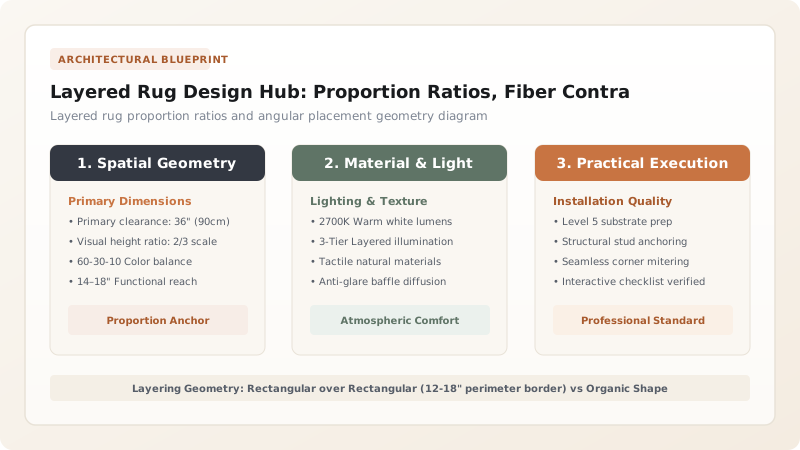
1. The 3 Architectural Rules of Layered Rug Design
Layering rugs is a favorite technique of interior designers to solve awkward room proportions, inject rich texture, and establish multi-dimensional visual warmth. Successful layering follows three core architectural rules:
- 1. Texture Opposites Attract: Never layer two identical flat weaves or two identical thick shags. Pair a structured, flat base (sisal/jute) with a high-pile, soft top (vintage wool, Moroccan Berber, or cowhide).
- 2. Scale & Border Discipline: The base rug must be large enough to touch all furniture feet; the top rug should define the central conversation core with a 12 to 18-inch reveal.
- 3. Color Harmony: Pull at least one grounding neutral color from the base rug into the background weave of the top accent rug.

Winning Rug Layering Texture Combinations
Use this reference table to calculate exact physical dimensions, ratios, and specifications before purchasing:
| Base Rug Material | Top Layer Rug Material | Visual & Tactile Dynamic | Best Interior Style |
|---|---|---|---|
| Woven Jute / Sisal (Flat) | Vintage Persian / Turkish Wool | Earthy structure meets old-world color | Transitional, Modern Traditional |
| Bleached Jute Bouclé | Natural Shaped Cowhide | Linear grid meets organic curves | Modern Farmhouse, Mountain Modern |
| Low-Pile Wool Flatweave | High-Pile Moroccan Beni Ourain Shag | Tailored base meets cozy cloud pile | Scandinavian, Bohemian, Hygge |
| Solid Charcoal Felted Wool | Geometric Silk/Viscose Accent | Matte shadow base meets luminous sheen | Modern Luxury, Contemporary Chic |
Tripping Hazard & Edge Curl Constraints
Every successful decoration project must account for physical and environmental constraints:
Top Rug Edges Curling Up and Causing Tripping
Double thickness creates a 1/2-inch raised step; if top rug edges curl, guests will trip; apply heavy-duty rug corner weight anchors or double-sided carpet seam tape under the top rug perimeter.
How to Execute a Designer Rug Layering Plan
Execute this professional sequence to achieve flawless results without backtracking:
Size Base Rug to Room
Select base rug leaving 12-18 inches of exposed hardwood to the walls.
Anchor Base Seating
Set sofa and chairs with front legs at least 8 inches onto the base rug.
Install Rug-to-Rug Pad
Position specialized dual-sided rubber-mesh pad where top rug will sit.
Angle or Center Top Layer
Place top rug centered or angled at 30 degrees to create relaxed flow.
Common Mistakes & Countermeasures
Avoid these costly errors that compromise aesthetics, ergonomics, and budget:
Layering Two Rugs of Almost Identical Dimensions
Project Execution Checklist
Track your physical progress. Checkboxes persist automatically on this device:
Frequently Asked Questions
Can you layer a rug over wall-to-wall carpet?
Yes! Layering a flatweave or vintage wool rug over neutral wall-to-wall carpet defines seating zones and hides carpet wear. Use a specialized 'Carpet-to-Carpet' stiff underlay pad to prevent creeping.


