
Decorate with Japandi style by combining Scandinavian functional minimalism with Japanese Wabi-Sabi organic textures: install vertical white oak slatted wall panels, select low-profile natural wood furniture, use a muted earthy color palette (oatmeal, sage, charcoal), and display imperfect handmade ceramics.
At a Glance: Key Takeaways
- Japandi blends Scandinavian hygge (coziness) with Japanese Wabi-Sabi (beauty in imperfection).
- Signature Feature: Vertical wood slatted acoustic wall panels (oak/walnut).
- Low-profile natural wood furniture keeps room centers open and grounded.
- Handmade ceramic vessels with organic asymmetry act as primary decor objects.
In-Depth Guides in this Directory
Explore specialized subtopic blueprints, technical dimensions, and execution checklists:
Japandi Bedroom Decor: Natural Wood, Slatted Panels & Low Beds
Decorate Japandi bedrooms: low-profile oak platform beds, slatted headboard panels, linen bedding, paper lantern lighting, and Wabi-Sabi simplicity.
Japandi Living Room Decor: Ceramics, Wood Craftsmanship & Textures
Decorate Japandi living rooms: low oak sofas, bouclé upholstery, organic Wabi-Sabi ceramics, slatted media consoles, and natural light.
1. The Japandi Philosophy: Wabi-Sabi Imperfection & Hygge Sanctuary
Japandi design is not a fleeting hybrid trend; it is a profound philosophical synthesis of two ancient aesthetic worldviews: Japanese Wabi-Sabi (the reverent acceptance of transience, natural imperfection, and organic simplicity) and Scandinavian Hygge (the pursuit of cozy domestic warmth, tactile comfort, and emotional contentment). Where traditional Japanese interior minimalism can occasionally feel austere or monastic, Scandinavian design injects soft textiles, warm natural timbers, and welcoming domesticity. Conversely, where Scandinavian decor can veer toward cluttered knickknacks, Japanese spatial discipline imposes rigorous editing, clean horizontal lines, and expansive negative space.
The foundational architectural tenet of Japandi is intentional spatial grounding. Traditional Japanese architecture operates on a lower horizon plane than Western interiors: furniture is intentionally specified with low-profile footprints that draw the human center of gravity down toward the floor line. Seating heights range between 14 and 17 inches (compared to standard Western 18-to-20 inch benchmarks), lowering sightlines and creating the psychological perception of soaring ceiling height and expansive atmospheric volume.
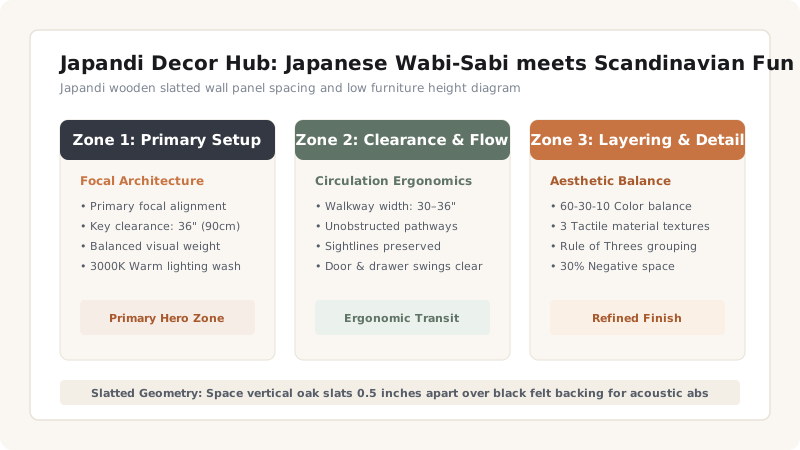
Spatial flow prioritizes uninterrupted visual serenity. Japandi spaces eschew rigid, cluttered partitions in favor of permeable architectural boundaries: sliding Shoji-inspired paper screens, vertical white oak acoustic slat screens, and low credenzas that delineate functional zones without severing light transmission. Maintain generous 36-to-42 inch unobstructed walking corridors between low-profile furniture pieces to preserve an unhurried, tranquil spatial cadence.
2. Natural Materiality, Honest Craftsmanship & Tactile Textures
In a Japandi interior, decorative interest is derived entirely from the inherent beauty and tactile honesty of raw materials rather than applied ornamentation or bright synthetic colors. Every surface invites touch, celebrating natural grain variations, knot inclusions, and organic irregularities.
Timber selection is the cornerstone of Japandi architecture. The palette balances the pale blonde warmth of Scandinavian woods (such as North American white oak, European ash, and rock maple) with the deeper, contemplative tones of Japanese traditional woodwork (such as charred Yakisugi cedar, Japanese Hinoki cypress, and stained walnut). Timbers must never be coated in glossy, synthetic polyurethane lacquers that plasticize the surface; specify ultra-matte penetrating hardwax oils (Rubio Monocoat or Osmo) that leave wood grain open, breathable, and velvety to the touch.
Complement timber foundations with authentic mineral and plant materials:
- Walls & Architectural Surfaces: Natural breathable lime plaster, mineral limewash, or microcement finishes with subtle trowel marks that catch ambient daylight gently.
- Textiles & Soft Furnishings: Heavyweight unbleached Belgian linen, raw tussar silk, organic washed cotton, curly wool bouclé, and handwoven jute or tatami rush-grass mats.
- Ceramics & Stone: Rough-hewn unglazed stoneware, raku pottery, honed volcanic basalt, and matte travertine featuring natural porous cavities.
3. The 60-30-10 Earthy Palette: Tonal Nuance & Black Accents
The chromatic foundation of Japandi design is rooted in nature's muted, grounded palette. Brilliant clinical whites and artificial neon accents are strictly prohibited; instead, color schemes rely on tonal gradients of warmth and shadow.
Implement the architectural 60-30-10 earthy color ratio:
- 60% Dominant Base: Warm muted neutrals—soft oatmeal, pale wheat, limestone greige, and warm chalk white applied across ceilings, walls, and foundational area rugs.
- 30% Secondary Secondary Tones: Muted organic earth tones—driftwood grey, pale terracotta, matcha green, mushroom taupe, and raw sand applied across large furniture pieces, drapery, and joinery.
- 10% Punctuation Accents (The Japanese Ink Element): Sharp, intentional punctuation notes of matte charcoal, sumi ink black, or blackened iron. These dark accents—found in slim table lamp stems, fine window mullions, picture frames, or ceramic vessels—ground the pale neutral tones, preventing the space from looking washed out and providing crisp graphic structure.
4. Washi Paper Lighting & The Art of Curated Minimalism
Lighting in Japandi interiors follows the celebrated Japanese aesthetic concept articulated in Junichiro Tanizaki's In Praise of Shadows: light should be gentle, filtered, and atmospheric rather than aggressive and glaring. Eliminate glaring bare bulbs and harsh high-output recessed downlights.
Deploy iconic Japanese Washi paper lanterns (such as Isamu Noguchi's Akari light sculptures or modern bamboo/paper pendants) that diffuse illumination into an ethereal, warm 2400K to 2700K ambient glow. Position low-level indirect lights—such as ceramic base floor lamps, beneath-shelf LED coving, and wall sconces washing textured plaster—to cast soft ambient shadows that celebrate room textures.
Finally, practice ruthless decluttering. In Japandi living, decorative objects are limited to singular, contemplative statement pieces: a single sculptural wild branch in an unglazed ceramic vase (Ikebana styling), a hand-turned wooden bowl, or a single framed sumi-e ink wash painting surrounded by expansive white space.
Japandi Interior Typologies & Material Specifications
Use this reference table to calculate exact physical dimensions, ratios, and specifications before purchasing:
| Typology | Primary Wood Tones | Wall Surface Finish | Seating & Bed Height | Statement Lighting |
|---|---|---|---|---|
| Scandinavian-Leaning Japandi | Light white oak, blonde ash & birch | Warm chalk white limewash | 16-18" Tailored linen upholstery | Sculptural white paper sphere pendant |
| Japanese-Leaning Wabi-Sabi | Charred Yakisugi, dark walnut & Hinoki | Hand-troweled earth clay plaster | 12-14" Low tatami bench / platform | Asymmetric bamboo & washi floor lantern |
| Modern Urban Japandi | Natural oak with matte black steel accents | Microcement or smooth greige paint | 15-17" Low modular sectional | Black wire pendant with pleated paper shade |
| Organic Rustic Sanctuary | Reclaimed timber & textured cedar | Coarse sand-textured lime wash | 14" Floor cushions & low futon | Concealed 2400K LED indirect wall wash |
Japandi Architectural Constraints
Every successful decoration project must account for physical and environmental constraints:
Low Seating Mobility Ergonomics
Ultra-low Japanese furniture (under 14 inches) can cause physical discomfort for elderly family members or individuals with knee/hip issues; maintain seating heights at 16 to 17 inches to balance Japandi low horizons with comfortable accessibility.
Washi Paper Fragility Around Children & Pets
Authentic mulberry washi paper light shades tear easily upon physical impact and absorb moisture; install paper pendants at least 7 feet above floor level or specify spun-polymer paper lookalikes in high-traffic zones.
Dust Trapping in Acoustic Wood Slat Panels
Vertical acoustic slat walls collect airborne dust between narrow 1/2-inch gaps; use vacuum brush attachments monthly to clean felt channels and prevent allergen buildup.
How to Style a Japandi Space
Execute this professional sequence to achieve flawless results without backtracking:
Install Oak Slatted Wall
Mount 8ft vertical oak slatted panels behind main sofa or bed.
Place Low Oak Platform
Set a low natural oak platform sofa or bed frame.
Dress in Oatmeal Linen
Layer washed oatmeal linen cushions and throws.
Add Wabi-Sabi Ceramic Urn
Place an unglazed handmade ceramic vessel with a single dried branch.
Common Mistakes & Countermeasures
Avoid these costly errors that compromise aesthetics, ergonomics, and budget:
Sterile Clinical Minimalism Without Hygge Warmth
Overcrowding Surfaces with Fake Wabi-Sabi Trinkets
Harsh High-Kelvin Overhead Downlights
Project Execution Checklist
Track your physical progress. Checkboxes persist automatically on this device:
Frequently Asked Questions
What is the difference between Japandi design and Scandinavian modern design?
While Scandinavian design focuses on cozy functionality (hygge) with light blonde woods and soft textiles, Japandi integrates Japanese wabi-sabi philosophy, incorporating darker contrasting timbers (like charred cedar), lower-profile furniture horizons, richer earthy textures (like clay plaster and washi paper), and stricter spatial minimalism.
What are the core color schemes used in Japandi interiors?
Japandi palettes rely on muted organic neutrals: warm oatmeal, sand, limestone greige, and soft wheat, accented by earthy secondary tones like matcha green, pale terracotta, and slate brown, with deliberate contrasting punctuation notes of matte black or charcoal ink.
What is the ideal furniture height for a Japandi living room?
Japandi furniture is intentionally lower than standard Western pieces: sofa seat heights measure 14 to 17 inches (35 to 43 cm) from the floor, coffee tables measure 12 to 14 inches high, and low platform beds measure 8 to 12 inches high. This low horizon emphasizes vertical room volume and engenders calm grounding.
How do you add decorative accents to a Japandi room without creating clutter?
Practice the art of Ikebana and negative space: display a single sculpturally pruned branch or dried blossom in an unglazed, handmade ceramic vessel, pair it with a single artisan stone or wooden tray, and leave at least 60% of table and shelf surfaces completely empty.
What types of window treatments work best in Japandi homes?
Select natural, light-filtering treatments that mimic Shoji screens: flatweave semi-sheer linen drapes, woven wood bamboo matchstick blinds, or neutral Japanese panel tracks that soften harsh direct sunlight into a gentle, diffused ambient glow.

