
Incorporate French cabriole leg furniture by selecting Louis XV style dining chairs, commodes, or console tables featuring graceful S-curved legs, carved floral knees, and natural woven cane backs. Pair with limewashed or white-waxed oak finishes.
At a Glance: Key Takeaways
- The S-Curve Anatomy: Convex upper curve ('knee') flowing into a concave lower curve ('ankle') on an escargot foot.
- Louis XV Influence: 18th-century French court design celebrated organic curves inspired by rococo shell motifs.
- Cane Webbing Integration: Hand-woven hexagonal cane backs provide flexible, breathable ergonomic back support.
- Finish Harmony: Cerused white-pore oak, distressed chalk paint, or weathered walnut patinas.
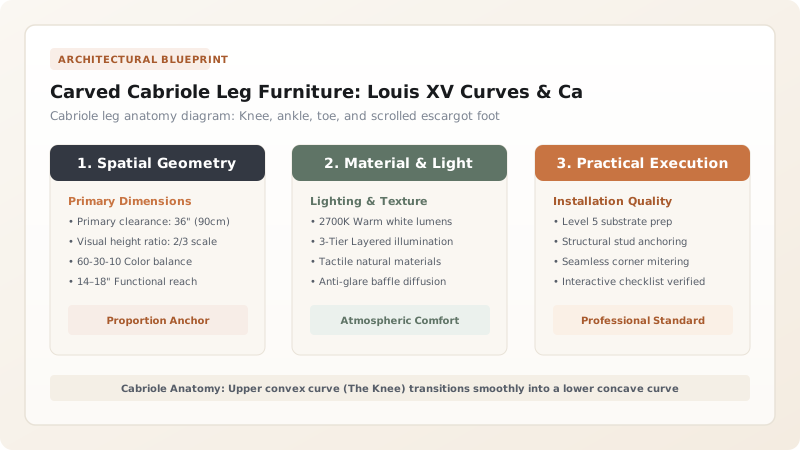
1. The Anatomy of the Louis XV Cabriole Leg
Named after the French ballet term cabriole (meaning 'to leap or bound'), the cabriole leg was perfected during the reign of King Louis XV (1715–1774). The leg is an engineered double-curve S-shape that distributes heavy marble and wood table loads through compressive cantilever physics.
In French Provençal homes, cabinetmakers simplified royal gilding, carving the knees with subtle provincial wheat sheaves, acanthus scrolls, and wild olive branches in solid French oak and walnut.

French Furniture Periods & Leg Profiles
Use this reference table to calculate exact physical dimensions, ratios, and specifications before purchasing:
| French Period Style | Leg Profile Geometry | Carving Detailing | Visual Energy |
|---|---|---|---|
| Louis XV (Rococo / Provençal) | Graceful S-Curved Cabriole Leg | Acanthus leaves, shells, scrolled toes | Feminine, organic, fluid, romantic |
| Louis XVI (Neoclassical) | Straight Tapered Fluted Column Leg | Carved rosettes, fluted vertical grooves | Architectural, disciplined, geometric |
| French Directoire | Saber / Klismos outward flare | Minimalist smooth curves | Clean, transitional, understated |
| French Provincial Farmhouse | Subtle cabriole with pad foot | Simple chamfered curves in raw oak | Rustic, sturdy, unpretentious |
Cane Back Dryness & Cracking Constraints
Every successful decoration project must account for physical and environmental constraints:
Woven Cane Chair Backs Drying Out and Snapping
Dry indoor heating makes natural cane brittle, causing woven strands to snap; mist the back of cane dining chairs with water twice a year and apply mineral oil to preserve flexibility.
How to Refinish Oak Furniture in French Limewash
Execute this professional sequence to achieve flawless results without backtracking:
Strip Old Polyurethane
Strip old orange varnish down to raw open-pore oak wood.
Open Pores with Wire Brush
Brush along the grain with a brass wire brush to open deep wood grain pores.
Apply White Liming Wax
Rub white liming wax (or diluted chalk paint) into grain with steel wool pad.
Buff Raised Surfaces Clean
Buff with a clean cotton rag; the white wax remains locked inside pores and carved details.
Common Mistakes & Countermeasures
Avoid these costly errors that compromise aesthetics, ergonomics, and budget:
Placing All-Cabriole Furniture in Every Corner
Project Execution Checklist
Track your physical progress. Checkboxes persist automatically on this device:
Frequently Asked Questions
Can cabriole leg furniture support heavy dining room marble tops?
Yes! When hand-carved from solid hardwood (oak, beech, or walnut) and joined with traditional mortise-and-tenon joints, cabriole legs easily support 200+ lb marble slabs.


