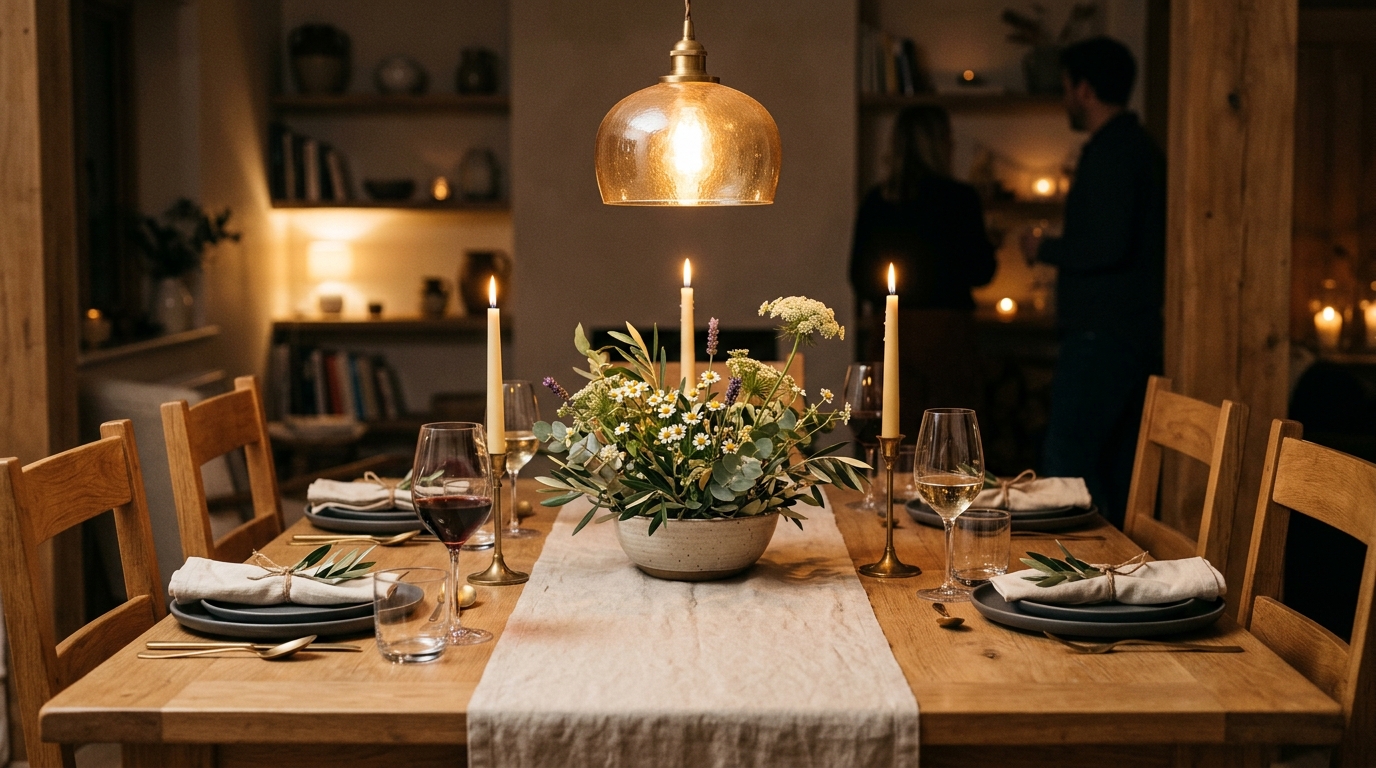
To decorate a dining table for guests, allocate 24 inches of width per place setting. Anchor each setting with a 13-inch charger plate 1 inch from the table edge, layer dinner and salad plates on top, place flatware from the outside in, position glassware at the top-right (water glass at 1 o'clock), fold natural linen napkins with place cards, and cluster unscented dripless taper candles.
At a Glance: Key Takeaways
- Allocate 24 inches of linear width per guest so diners can cut food without bumping elbows.
- Position charger plates 1 inch from the table edge; arrange flatware in order of use from outside in.
- Place water glass directly above the dinner knife (1 o'clock position), flanked by red and white wine glasses.
- Use strictly unscented dripless taper candles to preserve food aromas and prevent wax spills.
1. Multi-Course Place Setting Geometry & Anatomy
A formal guest table setting is an exercise in ergonomic logic. Every utensil and glass has a precise coordinate based on the sequence of dining:
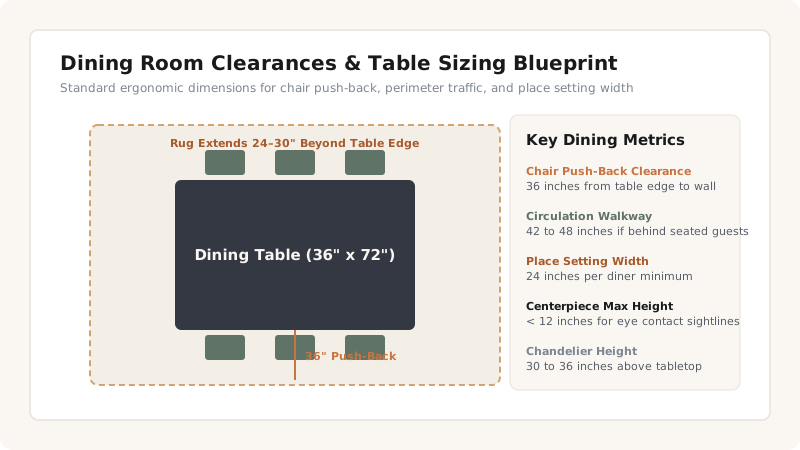
- The 24-Inch Guest Boundary: Allocate strictly 24 inches (60 cm) of table edge per seated guest. This provides ample space for a full place setting and comfortable arm movement.
- The Charger Plate Anchor: Place a 12 to 13-inch decorative charger plate (rattan, brass, or stoneware) centered in the guest's space, exactly 1 inch from the table edge. Stack the dinner plate on the charger and the salad/soup bowl on top.
- Flatware Ordering (Outside-In): Forks go on the left (salad fork on the outside, dinner fork closest to the plate). Knives and spoons go on the right (soup spoon on outside, dinner knife closest to plate with blade edge facing inward toward the plate).
- Glassware Triangle (Top-Right): The water goblet sits 1 inch directly above the dinner knife tip. The white wine glass sits to the lower right, and the red wine glass sits slightly above and between them.
2. Textile Layering, Tablecloths & Napkin Staging
Layering textiles elevates a dinner party from casual to celebratory:
- The Tablecloth Overhang Standard: A formal tablecloth should have an overhang (drop) of 10 to 12 inches (25 to 30 cm) on all four sides, falling just above guests' laps. For gala events, a floor-length 28-inch drop is used.
- 100% Pure Washed Linen Napkins: Avoid stiff, synthetic, shiny polyester napkins that slide off laps. Use 20x20 inch washed linen napkins. Fold them in a clean rectangular drape underneath the salad plate, or tie them loosely with natural jute twine and a fresh sprig of rosemary.
- Personalized Place Cards: Place handwritten calligraphed place cards on top of each napkin or slotted into a small gilded card holder. It eliminates awkward guest hesitation when sitting down.
3. The Flowing Floral Garland & Unscented Candlelight
For dinner parties, replace a single bulky centerpiece with an elongated low runner garland:
- Low Greenery Garlands: Weave fresh Italian ruscus, seeded eucalyptus, or olive branches down the center of the table (6 inches wide, under 4 inches high). It creates a lush botanical spine without blocking eye contact.
- Staggered Taper & Votive Array: Interweave 6 to 8 unscented dripless taper candles in brass holders of varying heights (6", 8", and 10"), paired with small glass tea-light votives at table level. The multi-height flickering glow creates romantic, cinematic warmth.
Guest Place Setting Element Specification
Use this reference table to calculate exact physical dimensions, ratios, and specifications before purchasing:
| Setting Component | Standard Dimension | Exact Location | Material Standard | Purpose |
|---|---|---|---|---|
| Charger Plate | 12–13" Diameter | 1" from table edge, centered | Woven Rattan / Brushed Brass | Framing base plate |
| Dinner Plate | 10.5" Diameter | Stacked directly on charger | Porcelain / Stoneware | Main course |
| Salad / Soup Plate | 8–9" Diameter | Stacked on dinner plate | Matching porcelain | First course |
| Dinner Fork | 8" Length | Left of plate (Inside) | Heavyweight 18/10 Stainless | Main course |
| Dinner Knife | 9" Length | Right of plate (Blade in) | 18/10 Stainless | Main course cutting |
| Water Glass | 12–16 oz Goblet | 1" above dinner knife tip | Clear Crystal / Ribbed Glass | Hydration throughout dinner |
Guest Dining Practical Constraints
Every successful decoration project must account for physical and environmental constraints:
Wine Spill Emergencies
Red wine spills on fine linen tablecloths happen frequently; keep a bottle of sparkling club soda, salt, and clean microfiber cloths ready in the sideboard for instant stain lifting.
Serving Platter Clearance
If serving family-style platters at the table, keep centerpiece garlands under 5 inches wide so serving bowls fit comfortably down the center of the table.
Room Temperature Rise
A dining room with 8 to 10 guests and 10 burning candles warms up quickly; lower the thermostat 2 to 3 degrees before guests arrive to maintain comfortable air.
10-Step Guest Dinner Table Staging Sequence
Execute this professional sequence to achieve flawless results without backtracking:
Iron and Lay Linen Tablecloth or Runner
Ensure tablecloth has a balanced 10–12" drop on all four sides without wrinkles.
Position Charger Plates at 24-Inch Spacing
Set chargers exactly 1 inch from table edge with 24 inches of width per guest.
Stack Dinner and Salad Plates
Center clean porcelain dinner and salad plates on each charger.
Arrange Silverware from Outside In
Place forks on left, knives (blades in) and spoons on right, 1" from table edge.
Set Water and Wine Glass Triangle
Position water goblet at 1 o'clock above knife, flanked by wine stems.
Fold Linen Napkins and Add Place Cards
Drape washed linen napkins across plates topped with handwritten name cards.
Weave Fresh Greenery Garland Down Center
Lay seeded eucalyptus and olive sprigs down the table center (under 4" high).
Distribute Unscented Taper Candles and Votives
Place 6 dripless taper candles and 8 glass votives along the greenery spine.
Chill Water Carafes and Wine
Place filled glass water carafes and opened wine bottles on sideboard coasters.
Dim Chandelier to 20% and Light Candles
Light all candles 10 minutes before guests sit down to establish an intimate golden glow.
Common Mistakes & Countermeasures
Avoid these costly errors that compromise aesthetics, ergonomics, and budget:
Crowding Guests with Under 20 Inches of Space
Lighting Scented Vanilla Candles for Dinner
Putting Flatware in the Wrong Functional Order
Project Execution Checklist
Track your physical progress. Checkboxes persist automatically on this device:
Frequently Asked Questions
What is the purpose of a charger plate?
Charger plates act as a decorative base that anchors each place setting, catches food spills, retains heat for soup and salad courses, and prevents the table from looking bare between courses.
Where does the bread plate go in a formal setting?
The bread plate (with butter knife laid across it diagonally) sits at the upper-left of the place setting (10 o'clock position), directly above the forks.
How many glasses should be at each guest's seat?
For a standard dinner party, provide 2 to 3 glasses: 1 water goblet (always present), 1 white wine glass (for first course), and 1 red wine glass (for main course).
