
Execute the color drenching technique by painting walls, trim, baseboards, doors, and ceilings in the exact same paint hue. Differentiate surfaces subtly through sheen: use Dead-Matte for ceilings, Velvet Matte for walls, and durable Satin for wood trim and doors.
At a Glance: Key Takeaways
- Unified Color: One continuous custom color formula across 100% of room surfaces.
- Sheen Hierarchy: Ceiling (Flat Matte) → Walls (Velvet Matte) → Wood Trim & Doors (Satin).
- Disappearing Trims: Baseboards and radiators blend into the wall, eliminating visual clutter.
- Dramatic Intimacy: Perfect for powder rooms, dining rooms, home offices, and media dens.
1. Why Sheen Differentiation is Essential
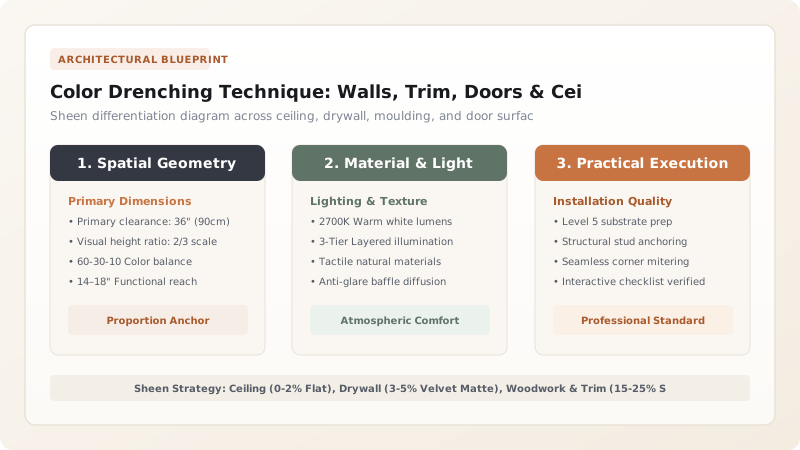
While color drenching uses one continuous paint formula, painting everything in the exact same sheen results in a flat, muddy appearance. Professional interior designers achieve depth by shifting paint sheen levels across different architectural substrates.

Color Drenching Sheen Specification Guide
Use this reference table to calculate exact physical dimensions, ratios, and specifications before purchasing:
| Architectural Surface | Optimal Sheen Level | Gloss Percentage | Reasoning |
|---|---|---|---|
| Ceiling & Crown Top | Dead-Matte / Flat | 0% - 2% Gloss | Absorbs light, hides drywall joints |
| Main Drywall Walls | Velvet / Matte Enamel | 3% - 6% Gloss | Washable, velvety depth without glare |
| Baseboards & Door Casings | Satin / Low-Lustre Enamel | 15% - 25% Gloss | Resists shoe scuffs and vacuum bumps |
| Interior Doors & Window Sash | Satin / Semi-Gloss | 20% - 30% Gloss | Withstands frequent hand oils and cleaning |
Dark Paint Coverage & Primer Constraints
Every successful decoration project must account for physical and environmental constraints:
Needing 5 Coats of Dark Red / Green
Deep saturated colors require multiple coats over white drywall; have your paint store tint your primer to a matching dark gray (P-6 gray shade) to achieve full opacity in 2 coats.
How to Color Drench a Room
Execute this professional sequence to achieve flawless results without backtracking:
Order Gray-Tinted Primer
Prime all drywall, baseboards, and ceiling with deep gray primer.
Roll Flat Ceiling Paint
Apply 2 coats of dead-matte ceiling paint in the chosen color.
Roll Velvet Wall Paint
Paint all drywall with matching velvet matte finish.
Brush Satin Trim Paint
Cut and brush matching satin trim enamel on baseboards and doors.
Common Mistakes & Countermeasures
Avoid these costly errors that compromise aesthetics, ergonomics, and budget:
Using White Plastic Outlet Plates on Drenched Walls
Project Execution Checklist
Track your physical progress. Checkboxes persist automatically on this device:
Frequently Asked Questions
Can you color drench a room with low ceilings?
Yes! Color drenching is especially powerful in low-ceiling rooms because painting the ceiling the same color as the walls eliminates the horizontal boundary line, tricking the eye into perceiving infinite vertical height.


