
Design curtain hardware by selecting French Return rods (which curve 90 degrees directly into the wall to block side light gaps) or ceiling-recessed drapery tracks for modern floor-to-ceiling ripplefold curtains. Space drapery rings 4 inches apart along the pole.
At a Glance: Key Takeaways
- French Return Rod: 90-degree curved elbow wraps fabric back to the wall, eliminating side light leaks.
- Ceiling Recessed Tracks: Aluminum track concealed flush inside a drywall ceiling pocket for seamless flow.
- Rod Diameter Scale: 1.0-inch rod for standard 8-9ft ceilings; 1.25 to 1.5-inch rod for 10-12ft high ceilings.
- Ring Spacing Formula: Space rings exactly 4 inches apart along the rod (7 rings per 50-inch panel).
In-Depth Guides in this Directory
Explore specialized subtopic blueprints, technical dimensions, and execution checklists:
French Return Curtain Rods: Curved Elbows & 100% Light Block
Master French return curtain rods: 90-degree curved wall returns, side light-blocking wrap techniques, 1.0 vs 1.25 inch diameters, and finishes.
Ceiling-Recessed Drapery Tracks: Concealed Pockets & Ripplefolds
Master ceiling-recessed drapery tracks: drywall ceiling pocket framing (4x4 inch cove), aluminum carrier channels, Ripplefold S-wave glides, and modern floor-to-ceiling curtains.
Drapery Ring Spacing & Pin Math: Heavy-Duty Hook Placement
Master drapery ring spacing and pin hook placement: 4-inch ring spacing math, 7 rings per 50-inch panel, pin insertion depths, and drapery pin hooks.
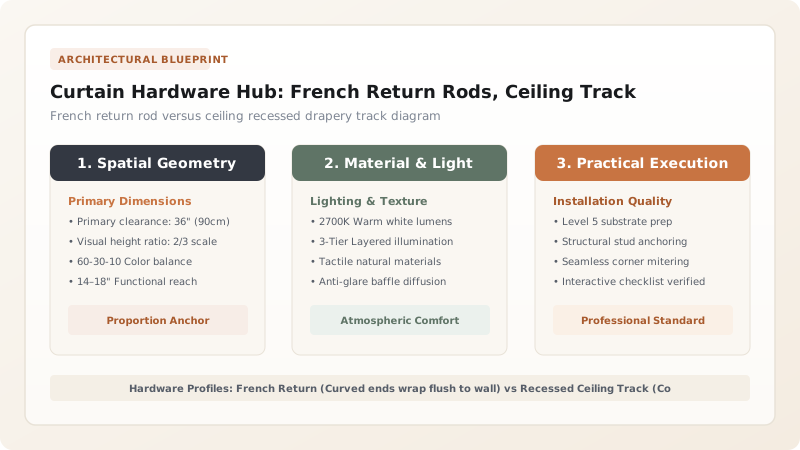
1. French Return Rods vs Traditional Finials vs Ceiling Tracks
Curtain hardware is not mere functional mounting equipment; it defines the architectural header line of the window treatment. Traditional rods with bulky round finials waste 6 to 8 inches of wall space on each side and allow light to leak out the edges.
Modern architectural design prioritizes two superior hardware profiles:
- The French Return Rod (Classic / Transitional): The metal rod curves 90 degrees back into the wall, allowing the drapery panel to wrap flush against the drywall for 100% light blockout.
- The Recessed Ceiling Track (Modern / Minimalist): Aluminum carrier tracks embedded flush into the ceiling for floor-to-ceiling Ripplefold S-Wave drapes.

Curtain Hardware Style Comparison Matrix
Use this reference table to calculate exact physical dimensions, ratios, and specifications before purchasing:
| Hardware System | Rod / Track Diameter | Light Blocking | Best Interior Aesthetic |
|---|---|---|---|
| French Return Rod (Brass/Black) | 1.0" - 1.25" solid metal | 100% (Side fabric wraps to wall) | Transitional, Parisian, Modern Classic |
| Recessed Ceiling Track | Slim 5/8" aluminum profile | 95% (Floor-to-ceiling continuous) | Contemporary, Warm Minimalist, Loft |
| Decorative Rod with End Finials | 1.25" - 1.5" with glass/ball | 75% (Leaves 4" side light gap) | Traditional Victorian, Formal Historic |
| Motorized Ripplefold Track | Heavy-duty motorized channel | 95% (Automated gliding) | High-ceiling modern luxury homes |
Heavy Velvet Drapery Weight & Sag Constraints
Every successful decoration project must account for physical and environmental constraints:
Curtain Rod Sagging in Center on 10-Foot Spans
Lined linen or velvet drapes weigh 20-35 lbs; rods over 8 feet wide will bow in the center without support; install a center support bracket for any span over 72 inches, and use heavy-duty steel drywall toggle anchors rated for 75+ lbs.
How to Install a French Return Curtain Rod
Execute this professional sequence to achieve flawless results without backtracking:
Measure 6" Above Trim & 8" Out
Mark bracket holes 6-10 inches above window trim and 8-12 inches beyond window casing.
Drive Toggle Anchors
Install zinc snap-toggle wall anchors through drywall where no studs exist.
Fasten Curved End Brackets
Screw mounting flanges tight against drywall using a level.
Slide On Rings & Lock Rod
Load drapery rings onto rod, slide pole into return elbows, and tighten set screws.
Common Mistakes & Countermeasures
Avoid these costly errors that compromise aesthetics, ergonomics, and budget:
Mounting the Curtain Rod Right on Top of the Window Trim
Project Execution Checklist
Track your physical progress. Checkboxes persist automatically on this device:
Frequently Asked Questions
How many curtain rings do you need per drapery panel?
Standard 50-inch wide drapery panels require 7 rings (spaced approximately 7 to 8 inches apart on center). Double-width 100-inch panels require 13 to 14 rings.


