
Size and place cabinet hardware using the 1/3 rule: choose pull lengths equal to 1/3 of the drawer front width (e.g. 8" pull for 24" drawers, 12" pull for 36" drawers). Place door knobs on the vertical stile aligned with the top edge of the bottom rail.
At a Glance: Key Takeaways
- The 1/3 Pull Formula: Pull Length = Drawer Width ÷ 3 (prevents tiny undersized hardware).
- Door Knob Placement: Center knob on the vertical door stile, aligned with the inner edge of the horizontal rail.
- Knobs vs Pulls: Knobs on upper cabinet doors (easy pivot twist); Pulls on lower drawers (ergonomic horizontal grip).
- Unlacquered Brass: Develops an authentic aged golden-brown living patina over 6 to 12 months.
In-Depth Guides in this Directory
Explore specialized subtopic blueprints, technical dimensions, and execution checklists:
Cabinet Pull Length Proportions: The 1/3 Rule & Appliance Handles
Master cabinet pull length proportions: the 1/3 drawer width formula, single long pulls vs dual small pulls on 36-inch drawers, and appliance pull diameters.
Knob vs Pull Placement: Height, Alignment & Shaker Stiles
Master knob vs pull placement rules: aligning knobs with horizontal rails on Shaker doors, 2.5-inch stile setbacks, vertical drawer alignment, and hybrid mixing.
Unlacquered Brass Patina Care: Living Finishes & Aging Speed
Master unlacquered brass hardware: living finish aging science, accelerating patina with liver of sulfur, restoring high shine with Bar Keepers Friend, and wax sealing.
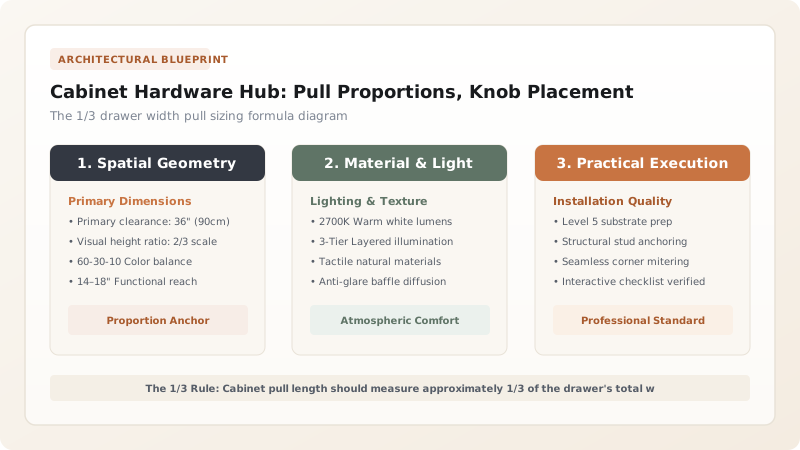
1. Mathematical Proportions: The 1/3 Drawer Sizing Formula
Cabinet hardware is the 'jewelry' of kitchen and bathroom architecture. The most frequent mistake in kitchen remodels is installing generic 3.5-inch builder pulls across massive 36-inch deep pot drawers, which looks cheap and strains wrist tendons.
The universal architectural proportion standard is the One-Third (1/3) Rule: the center-to-center pull length should equal approximately 30% to 35% of the drawer's total width.

Drawer Width vs Recommended Pull Sizing Guide
Use this reference table to calculate exact physical dimensions, ratios, and specifications before purchasing:
| Drawer Front Width | Recommended Pull Length (C-to-C) | Single vs Double Pulls | Ergonomic Pull Force |
|---|---|---|---|
| 12" - 16" (Narrow spice drawer) | 4" - 6" Pull (or Single Knob) | 1 Centered Pull / Knob | Light fingertip pull |
| 18" - 24" (Standard utensil drawer) | 6" - 8" Pull | 1 Centered Horizontal Pull | Single hand comfortable grip |
| 26" - 32" (Medium cookware drawer) | 8" - 10" Pull | 1 Centered Pull | Two-finger strong pull |
| 34" - 42" (Heavy 36" pot drawer) | 12" - 15" Appliance Pull | 1 Long Pull (or 2 matching 6" pulls) | Full two-hand ergonomic pull |
Drilling Hole Template Drift Constraints
Every successful decoration project must account for physical and environmental constraints:
Crooked Holes Drilled into $500 Custom Cabinet Doors
Freehand drilling causes drill bits to wander on hardwood stiles; strictly use an adjustable metal cabinet hardware drilling jig (like True Position Tools) clamped tight to doors.
How to Install Cabinet Hardware with a Jig
Execute this professional sequence to achieve flawless results without backtracking:
Configure Drilling Jig
Set jig stop collar for exact stile setback (typically 2.5" from edge).
Clamp Jig Tight to Door
Clamp metal template tight against door corner with rubber-padded clamp.
Drill 3/16" Pilot Holes
Drill through hardened steel bushings at high speed to prevent wood tear-out on back.
Fasten 8-32 Machine Screws
Insert 8-32 truss head screws from inside and tighten pull with hand screwdriver (not impact gun).
Common Mistakes & Countermeasures
Avoid these costly errors that compromise aesthetics, ergonomics, and budget:
Overtightening Screws with an Electric Impact Driver
Project Execution Checklist
Track your physical progress. Checkboxes persist automatically on this device:
Frequently Asked Questions
Should knobs be installed horizontally or vertically on cabinet doors?
Knobs are always centered vertically on the door stile (typically 2.5 to 3 inches from the bottom corner on upper cabinets, and 2.5 to 3 inches from the top corner on base cabinets).


