
Decorate with bohemian style by layering tactile natural materials (woven rattan, macramé, jute, hand-knotted wool), creating an earthy color palette (terracotta, mustard, sage, warm cream), cascading lush indoor plants (pothos, monstera), and overlaying vintage rugs.
At a Glance: Key Takeaways
- Bohemian design embraces organic imperfection, warmth, and relaxed comfort.
- Material Signature: Rattan furniture, jute rugs, macramé wall hangings, and terracotta pottery.
- Botanical Integration: Group indoor plants at varied heights (hanging macramé planters, floor pots).
- Layer vintage oriental/kilim rugs over natural jute carpet bases.
In-Depth Guides in this Directory
Explore specialized subtopic blueprints, technical dimensions, and execution checklists:
Bohemian Bedroom Decor: Rattan Headboards, Macramé & Botanicals
Decorate boho bedrooms: woven rattan headboards, macramé wall hangings, linen bedding, floor cushions, and cascading plants.
Bohemian Living Room Decor: Vintage Layered Rugs & Gallery Walls
Decorate boho living rooms: layered vintage kilim rugs, floor cushion seating, gallery walls, rattan furniture, and botanical cascades.
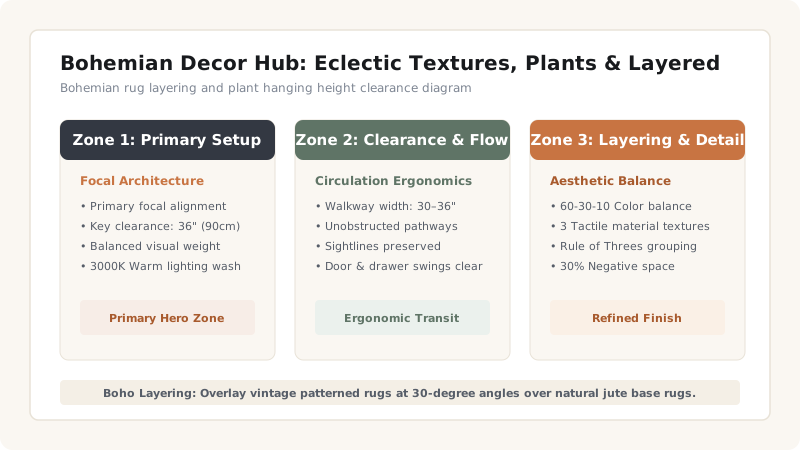
1. The Bohemian Philosophy: Nomadic Soul, Curated Eclecticism & Layered Warmth
Bohemian interior design—affectionately known as 'Boho'—is a rich, expressive decorative philosophy rooted in nomadic freedom, artistic unconventionality, and unrestrained sensory layering. Emerging from 19th-century Parisian artistic enclaves and enriched by global textile traditions across North Africa, India, Turkey, and Central Asia, authentic Bohemian decor rejects rigid mass-market homogeneity. Instead, it celebrates personal curation, cultural travel artifacts, organic botanical abundance, and tactile surface warmth.
However, an authentic, high-end Bohemian interior is fundamentally different from careless, chaotic clutter. While amateur bohemian styling often devolves into an overwhelming thrift-store jumble, professional Bohemian design adheres to strict underlying structural discipline: the art of curated maximalism. Every layered rug, woven wall hanging, and hand-beaten brass vessel is orchestrated around an underlying chromatic foundation, deliberate focal hierarchies, and balanced negative space that prevents sensory overload.
Spatial flow in a Bohemian interior prioritizes relaxed, informal hospitality. Seating arrangements eschew rigid formal rows in favor of circular, conversational clusters incorporating low-slung modular sectionals, rattan papasan chairs, vintage leather poufs, and oversized floor cushions that invite casual lounging, barefoot comfort, and intimate storytelling.
2. Floor-Upward Textile Layering: Kilims, Moroccans & Jute Foundations
The defining hallmark of authentic Bohemian decor is the mastery of textile layering, beginning directly at the floor plane. A bare, single-rug floor lacks the depth, warmth, and acoustic softness essential to the bohemian sanctuary.
Execute the professional floor-layering formula across three distinct strata:
- The Architectural Foundation (Base Rug): An expansive, neutral base rug constructed from chunky natural braided jute, sisal, or bleached seagrass. This oversized foundation anchors the entire room footprint, adds rich coarse texture, and insulates against cold flooring.
- The Cultural Accent Layer: Layered diagonally or overlapping 25% to 40% across the jute base, introduce one or two smaller authentic vintage tribal rugs: a geometric Moroccan Beni Ourain wool rug with thick shaggy pile, a flatwoven Turkish Anatolian kilim, or a colorful Persian Heriz rug. The visual tension between the raw neutral jute and the intricate hand-dyed wool produces instant artistic richness.
- The Informal Floor Cushion Tier: Clustered around the perimeter of low coffee tables, position vintage Moroccan leather poufs, embroidered Suzani floor cushions, and tufted velvet pillows that encourage grounded seating.
Textile layering extends vertically onto furniture and wall planes: drape handmade cotton Indian block-print throws over sofa arms, hang intricate macramé wall tapestries woven from unbleached cotton cord, and dress windows with flowing, unlined raw linen draperies that catch gentle afternoon breezes.
3. Biophilic Jungle Integration & Natural Woven Materials
A Bohemian space without lush, thriving botanicals feels lifeless and synthetic. Living plants are not optional decorative accessories in Boho design; they are primary architectural materials that introduce oxygen, vibrant organic emerald color, and kinetic natural shadow play.
Incorporate botanical diversity across every vertical tier of the room envelope:
- Canopy Tier (Ceiling & High Walls): Suspend trailing golden pothos, string of pearls, and Boston ferns from heavy-duty ceiling hooks using knotted macramé cotton plant hangers.
- Mid-Level Tier (Shelves & Consoles): Cluster architectural foliage—such as split-leaf Monstera Deliciosa, cascading Satin Pothos, and textured Calatheas—in hand-thrown terracotta pots and glazed artisan ceramic planters.
- Ground Tier (Floor Accents): Anchor empty room corners with massive, structural plants: a 6-foot Fiddle-Leaf Fig, an indoor Olive Tree, or a hardy Bird of Paradise planted inside large woven seagrass or belly baskets.
Balance botanical greens with warm, organic natural materials: peeled natural rattan furniture, hand-caned cabinet doors, woven wicker light shades, raw unlacquered brass hardware, and hand-beaten copper planters that develop rich, natural patinas over time.
4. Jewel-Tone & Earthy Color Harmony with Warm Twilight Lighting
To prevent a Bohemian interior from becoming visually chaotic, calibrate color palettes with disciplined harmony. The most sophisticated Boho interiors unite warm desert earth tones (terracotta, desert sand, raw ochre, and warm rust) with saturated bohemian jewel accents (deep sapphire, peacock teal, ruby red, and rich mustard gold).
Lighting should evoke an enchanting, warm twilight bazaar. Extinguish cold overhead ceiling fixtures completely. Illuminate the room with layered pools of warm 2200K to 2700K light: pierced Moroccan brass filigree pendant lamps that cast intricate, dancing lace-like shadows across plaster walls, amber glass bedside lamps with pleated fabric shades, dimmable warm fairy light strands tucked along bookshelves, and clusters of dripless pillar candles inside glass lanterns.
Bohemian Design Typologies & Architectural Palette Matrix
Use this reference table to calculate exact physical dimensions, ratios, and specifications before purchasing:
| Boho Sub-Genre | Dominant Palette | Key Textile Architecture | Furniture Materiality | Botanical Density |
|---|---|---|---|---|
| Desert Bohemian | Terracotta, rust, desert sand & soft cream | Vintage Turkish kilims & woven leather poufs | Light white oak, peeled rattan & raw plaster | Medium (Cacti, snake plants & dried grasses) |
| Urban Jungle Boho | Deep emerald, olive green, warm gold & black | Heavy shaggy Berber wool rugs & block prints | Dark stained timber, brass wire & velvet | Maximum (Monstera, hanging pothos, ferns) |
| Moroccan Earthy Luxe | Saffron, cobalt blue, spice ochre & ivory | Embroidered wedding blankets (Handira) & Suzani | Hammered brass, carved cedar & zellige tiles | Moderate (Olive trees & potted palms) |
| Eclectic Vintage Boho | Mustard, jewel plum, sage & burnt orange | Overlapping Persian runners & crewel embroidery | Mid-century teak, cane webbing & bamboo | High (Pothos, rubber trees & philodendrons) |
Bohemian Decor Constraints
Every successful decoration project must account for physical and environmental constraints:
Water Damage from Hanging Plant Overflow
Watering overhead hanging plants without deep drip saucers causes dirty water to drip onto delicate vintage rugs and fabric sofas; always use deep plastic interior liners inside decorative cachepots and water using a precision long-spout watering can.
Severe Visual Dust Trapping on Macramé & Wicker
Intricate knotted macramé fibers and porous wicker weave trap airborne dust and pet dander rapidly; use an upholstery vacuum attachment and an electric canned-air duster monthly to clean textile fibers.
Rug Slippage on Layered Floors
Placing lightweight vintage kilims directly over jute carpets causes hazardous bunching, rippling, and trip hazards; place specialized rug-to-carpet dual-sided non-slip grip pads between the jute base and upper wool rugs.
How to Style a Boho Living Room
Execute this professional sequence to achieve flawless results without backtracking:
Layer Jute & Kilim Rugs
Lay a 9x12 jute rug, overlaying a 6x9 vintage kilim rug at a slight angle.
Place Rattan Armchair
Set a woven rattan accent chair with a plush sheepskin throw.
Hang Macramé Plant Holder
Mount ceiling hook for a trailing pothos in a macramé hanger.
Add Terracotta Pottery
Group 3 terracotta pots with dried pampas grass on coffee table.
Common Mistakes & Countermeasures
Avoid these costly errors that compromise aesthetics, ergonomics, and budget:
Lack of Color Cohesion Leading to Thrift-Store Clutter
Using Cheap Plastic Fake Plants
Over-Reliance on Fragile Novelty Furniture
Project Execution Checklist
Track your physical progress. Checkboxes persist automatically on this device:
Frequently Asked Questions
How do you achieve a bohemian interior look without it looking messy or cluttered?
The secret to elevated bohemian decor is disciplined curation and color harmony: choose a cohesive palette of 3 to 4 complementary tones (such as terracotta, olive green, cream, and warm brass), layer rugs using a large neutral jute base beneath smaller vintage kilims, and preserve clean walking pathways through the room.
How do you layer rugs in a bohemian living room properly?
Start with an oversized neutral base rug made of woven jute or sisal that extends beneath all main furniture legs. Then, layer a smaller, high-character vintage wool rug (such as a Moroccan Berber or Turkish kilim) on top, placed either at a subtle 15-degree angle or centered under the coffee table, secured with non-slip rug pads.
What plants are best suited for an indoor bohemian aesthetic?
Choose lush, fast-growing plants with dramatic foliage: Monstera Deliciosa, Golden Pothos (for hanging macramé planters), Snake Plants (Sansevieria), Fiddle-Leaf Figs, Rubber Trees, and cascading String of Pearls. Group plants in odd-numbered clusters at varying floor, shelf, and ceiling heights.
What lighting creates the most authentic bohemian ambiance?
Use multi-source, low-kelvin (2200K-2700K) illumination: pierced Moroccan metal lanterns that cast intricate shadow patterns on walls, woven rattan pendant shades that diffuse warm golden glows, string fairy lights along ceiling perimeters, and numerous candles in glass or brass holders.
What are the essential materials used in authentic Bohemian decor?
Authentic Bohemian design celebrates raw, tactile organic materials: natural rattan, peeled wicker, solid mango or reclaimed teak wood, unbleached cotton macramé cord, hand-woven wool rugs, washed European linen, terracotta pottery, and hand-beaten warm metals like raw brass and copper.

