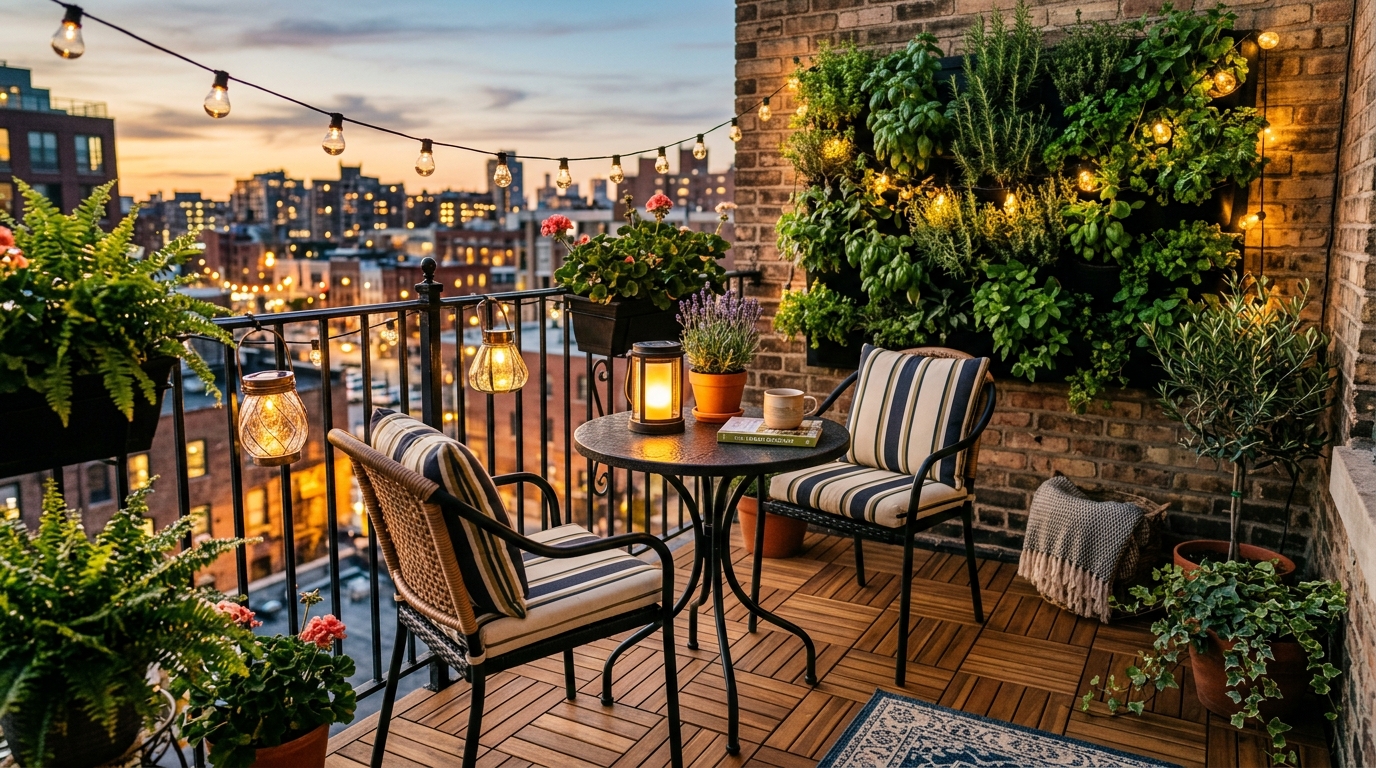
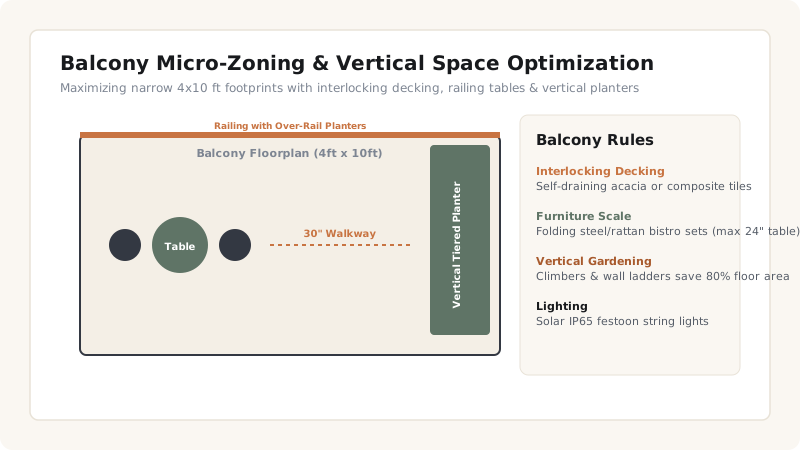
To transform balcony flooring and greenery, install snap-together interlocking acacia or composite deck tiles over an outdoor rubber underlay to ensure proper water drainage. Use secure over-rail planter boxes with drainage plugs to save floor space, and apply exterior UV/water sealant to all wooden elements twice annually.
At a Glance: Key Takeaways
- Interlocking deck tiles install without glue or screws, making them 100% renter-friendly.
- Over-the-rail planter boxes maximize greenery while preserving 100% of usable floor area.
- Select wind-tolerant plants (lavender, boxwood, ornamental grasses) for upper-floor balconies.
- Ensure balcony floor drainage weep holes remain completely unobstructed by tiles or planters.
1. Balcony Flooring Options & Drainage Science
The concrete slab of an outdoor balcony is exposed to rain, UV rays, and temperature fluctuations. Covering builder-grade concrete with modern interlocking deck tiles immediately creates a warm, residential ambiance.
Compare the top outdoor flooring systems:
- Interlocking Hardwood Tiles (Acacia/Teak): Natural grain warmth, pre-treated with exterior oil. Features a plastic grid base that elevates wood 0.5 inches off concrete to permit rainwater runoff.
- Composite Deck Tiles: Made from recycled wood fiber and high-density polyethylene. Highly resistant to rot, splintering, and fading with zero re-oiling requirements.
- High-Density Artificial Turf: 30mm pile height with latex drainage backing; soft underfoot and ideal for children or pets.
2. Railing Planters & Vertical Greenery Systems
On narrow 3-to-5 ft wide balconies, large round floor pots consume precious circulation space. Instead, take advantage of vertical planes:
- Over-Rail Saddle Planters: Fit securely over 2-to-4 inch wide balcony railings, stabilized with adjustable brackets to withstand wind gusts.
- Trellis & Slat Wall Systems: Mount a freestanding cedar or powder-coated aluminum trellis against the solid party wall for climbing jasmine, ivy, or potted herb rings.
Balcony Flooring Material Comparison
Use this reference table to calculate exact physical dimensions, ratios, and specifications before purchasing:
| Flooring Type | Durability | Water Drainage | Maintenance | Rental Friendliness |
|---|---|---|---|---|
| Acacia Interlocking Tiles | 5–8 Years | Excellent (Grid base) | Annual teak oil coat | 100% Snap-off portable |
| Composite Deck Tiles | 15+ Years | Excellent (Non-porous) | Soap & water wash only | 100% Snap-off portable |
| Artificial Turf (30mm) | 5–7 Years | Good (Perforated) | Rinse & brush vacuum | Easy roll-up |
| Outdoor Polypropylene Rug | 2–4 Years | Moderate (Requires dry-out) | Spot clean | Instant roll-up |
Balcony Gardening & Flooring Constraints
Every successful decoration project must account for physical and environmental constraints:
Balcony Weight Limits
Standard residential balconies are rated for 30–50 lbs per sq. ft. Use lightweight fiberglass or resin planters with perlite-rich potting soil rather than heavy solid terracotta or concrete pots.
Wind Exposure on High Floors
Balconies above the 5th floor experience high wind shear; secure all railing planters with heavy-duty zip ties or locking brackets.
Building HOA Rules
Check HOA guidelines regarding hanging exterior planters or altering visible exterior flooring colors.
How to Install Balcony Interlocking Decking
Execute this professional sequence to achieve flawless results without backtracking:
Deep Clean Balcony Concrete
Sweep, scrub, and allow the concrete slab to dry thoroughly; verify existing drainage slope.
Locate Floor Drain
Plan tile layout so that the primary drainage grate remains accessible and unobstructed.
Snap Tiles from Corner Outward
Align male and female loop connectors and press firmly until they click into place.
Trim Perimeter Tiles
Use a jigsaw to cut plastic backing around balcony railing posts for a seamless custom fit.
Mount Weatherproof Railing Planters
Attach saddle planters with safety brackets and fill with lightweight potting blend.
Common Mistakes & Countermeasures
Avoid these costly errors that compromise aesthetics, ergonomics, and budget:
Blocking Floor Drainage Weep Holes
Project Execution Checklist
Track your physical progress. Checkboxes persist automatically on this device:
Frequently Asked Questions
Do interlocking wood tiles damage balcony concrete underneath?
No. The raised plastic mesh base prevents wood from contacting concrete directly and allows water and air to circulate freely.
What are the best wind-resistant plants for high-rise balconies?
Ornamental grasses, lavender, rosemary, dwarf conifers, and boxwoods are extremely resilient against high-velocity winds and temperature swings.